

Direct Answer
The most effective arrangements for long, narrow living rooms typically feature sofas that are either positioned away from the walls or arranged in an L-shaped configuration. These designs help reduce the perceived length of the space, enhance movement flow, and prevent the common "hallway effect" caused by lining furniture along both walls.
In real-world settings, floating sofa layouts or segmented two-zone designs often outperform traditional furniture placement flush against walls.
Quick Takeaways
Introduction
One of the frequent challenges in interior design is organizing a long, narrow living room. Many clients instinctively place the sofa against a wall and align other furniture accordingly.
While this seems logical on paper, it can actually make the room feel even more elongated and cramped.
From years of experience addressing awkward floor plans, I’ve found that the key factor in the success of narrow rooms is sofa placement.
An improperly placed sofa creates a tunnel-like effect, whereas a thoughtfully positioned one defines functional areas, improves circulation, and visually expands the room.
When exploring different layouts, using tools like Homestyler can simplify decisions by allowing you to visualize furniture arrangements in an accurate 3D room setting before making changes.
In this article, I’ll review popular layout methods for long narrow living rooms, revealing when each is effective and when it falls short.
save pin
Why Sofa Placement Matters in Long Narrow Living Rooms
Key Insight: The sofa’s location is crucial in determining if a narrow living space feels balanced or corridor-like.
People often instinctively push furniture against the walls in narrow rooms, which unfortunately accentuates the room’s length.
Interior designers aim to visually compress the space instead.
Sofa placement addresses three spatial challenges:
The American Society of Interior Designers recommends keeping at least 30–36 inches of walkable clearance along main pathways; in narrow rooms, this guideline shapes every design choice.
Parallel Layout vs L-Shaped Layout
Key Insight: Parallel furniture layouts maximize seating capacity, whereas L-shaped arrangements visually shorten the narrow room’s length.
These two configurations are the ones most homeowners test first.
Parallel Layout
Pros:
Cons:
L-Shaped Layout
Pros:
Cons:
save pin
Floating Sofa Layout vs Wall-Aligned Layout
Key Insight: Floating sofas tend to make narrow rooms feel more open by generating breathing space around the furniture.
Many owners hesitate because floating furniture feels counterintuitive when accustomed to wall alignment.
However, for long narrow rooms, designers often float the main sofa for three key reasons:
A typical example layout might be:
When homeowners want to experiment safely, I recommend digital floor planning with platforms like Homestyler to test multiple furniture layouts in a 3D environment before physically rearranging pieces.
save pin
Two-Zone Living Room Layout Strategy
Key Insight: For living rooms longer than about 18 feet, splitting the area into two distinct zones is generally more effective than stretching one large seating area.
This approach is surprisingly underutilized.
Rather than forcing a single oversized seating group, the space transforms into two smaller functional areas.
Examples include:
A common zoning approach involves:
Real estate staging professionals favor this since it prevents long rooms from feeling empty or awkwardly extended.
save pin
Pros and Cons of Each Layout Style
Key Insight: Choosing the optimal layout depends more on circulation flow than on style preferences.
Here is a comparison of the most prevalent layouts.
From my projects, floating sofas or two-zone designs solve about 70% of issues in long narrow living rooms.
How to Choose the Right Layout for Your Room Size
Key Insight: Room length, traffic patterns, and furniture size primarily dictate the best layout.
Use this practical guideline.
If you want to try proportions before purchasing furniture, tools like Homestyler allow mapping your exact room dimensions and testing sofa placement interactively, avoiding expensive mistakes such as buying oversized sectionals that overwhelm narrow rooms.
Answer Box
The most successful sofa arrangements for long narrow living rooms include floating sofas, L-shaped seating, and two-zone setups. These methods curb the hallway effect and enhance movement paths. Wall-aligned parallel furniture works best only in wider spaces.
Final Summary
FAQ
What is the best sofa placement for a long narrow living room?
Positioning the sofa away from the wall or forming an L-shaped seating area typically works best for long narrow room layouts.
Can a sectional work in a narrow living room?
Yes, but it should be compact. Oversized sectionals can block circulation in narrow spaces.
Should furniture be placed against the wall in a narrow room?
Not always. Floating furniture often improves visual harmony and flow.
What size rug is ideal for a narrow living room?
Choose a rug large enough to anchor the sofa and chairs together, generally at least 8×10 feet.
How do you avoid the hallway appearance in a long room?
Break the space up using floating furniture, area rugs, or dividing it into two functional zones.
Is a floating sofa beneficial for narrow spaces?
Yes. Floating sofa arrangements can make long narrow rooms feel wider and more purposeful.
How much walking space should be maintained in a narrow living room?
Allow for 30–36 inches to ensure comfortable movement.
Can you split a long living room into two areas?
Certainly. Designers often create separate zones, such as a media section and a reading corner, in longer rooms.
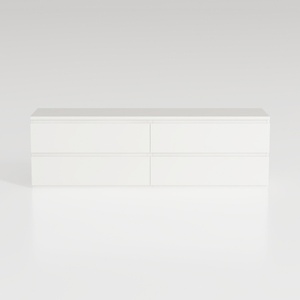
Minimalist White Solid Wood Dresser 4 Drawer Storage Cabinet 3D Model
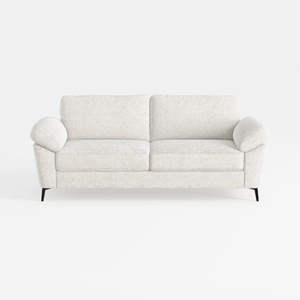
Minimalist Fabric Loveseat Sofa with Black Metal Legs 3D Model
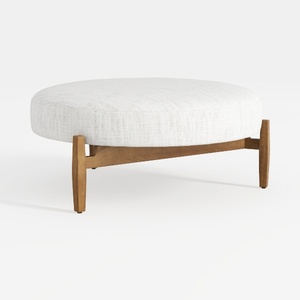

Minimalist Mid Century Fabric Round Ottoman 3D Model
Homestyler offers an easy-to-use online design tool packed with stunning 3D renderings, inspiring design projects, and helpful DIY video tutorials. It’s the perfect platform to bring your home decorating ideas to life effortlessly.
Projete agora para LIVRE
































