


Direct Answer
A Bill of Quantities (BOQ) in interior design varies notably between sectors due to differences in project scope, procurement approaches, and risk factors. While residential interiors emphasize personalized details and unique materials, commercial, hospitality, and retail spaces require standardization, coordination among contractors, and adherence to strict timelines. Recognizing these distinctions allows teams to budget precisely and prevent scope-related issues.
Quick Takeaways
Introduction
Through experience in diverse interior projects—from private residences to expansive office floors—it becomes clear that a BOQ cannot be uniformly structured. The specifications for a residential apartment differ greatly compared to those for a hotel or retail fit-out.
Often, designers perceive a BOQ merely as a list of required materials and their costs. However, it fundamentally supports procurement workflows, contractor collaboration, and budget management. If the BOQ’s format doesn’t align with the specific industry, it can lead to omissions, inconsistent vendor quotes, and budget blowouts.
Many organizations adopting digital design workflows utilize visualization and planning technologies, such as AI-powered concept generation in tools like Homestyler, aiding early-stage quantity estimations before full documentation is completed.
Below, we explore how BOQ methodologies differ among residential, commercial, hospitality, and retail interiors, based on authentic project procedures.
Role of BOQ in Residential Interior Design Projects
Key Insight: Residential BOQs focus on tailored finishes and detailed specifications rather than bulk quantity standardization.
In residential interiors, the BOQ generally acts as an in-depth specification document. Unlike commercial projects which involve repetitive materials over large areas, homes often incorporate unique elements like custom cabinetry, decorative lighting, specialty tiles, and bespoke furniture.
Thus, the Bill of Quantities must accurately detail materials beyond mere quantity counts.
Common Residential BOQ Sections
A frequent oversight among designers
Residential BOQs often become negotiation platforms among designers, contractors, and homeowners; precise descriptions help minimize disputes regarding finish quality or product substitutions.
BOQ Requirements in Commercial Office Interiors
Key Insight: Commercial office BOQs prioritize scalability, repeatability, and multitier contractor coordination.
Office interior projects pose scale-related challenges, often encompassing thousands of square feet with workstations, partitions, flooring, and mechanical systems.
Structured planning solutions—such as digital layout modeling or interactive workspace planning via platforms like Homestyler—enable design and quantity synchronization.
Typical Commercial Interior BOQ Components
Key Distinction from Residential BOQs
In commercial settings, BOQs frequently guide contractor bidding, since larger volumes allow suppliers to estimate supply chain costs more accurately.
Hospitality and Hotel Interior BOQ Practices
Key Insight: Hospitality BOQs must guarantee design uniformity across numerous near-identical rooms while managing procurement expenses effectively.
Hotel interiors represent some of the most intricate BOQ scenarios. A single property might include:
The core challenge lies in balancing repetition with uniqueness, as guest rooms replicate across the hotel but public areas require customized design elements.
Typical Hospitality BOQ Framework
An often-overlooked expense is logistics—hospitality BOQs usually encompass packaging, shipping, and installation sequencing due to rigid timelines before hotel openings.
Retail and Fit-Out Industry BOQ Practices
Key Insight: Retail BOQs concentrate intensely on fixtures, brand elements, and expedited installation needs.
Retail spaces demand speed and consistency with branding, frequently aligning store openings with tight marketing schedules.
Thus, retail BOQs emphasize modular, rapidly manufacturable components.
Retail BOQ Priorities
Coordination between design, production, and logistics teams is crucial. Many designers generate detailed visual models or photorealistic renderings in Homestyler to verify materials and layouts before locking down quantity lists.
Industry Standards Affecting BOQ Preparation
Key Insight: Procurement regulations often shape BOQ structures more profoundly than design choices.
Various sectors adhere to specific documentation rules that dictate how quantities are measured and presented.
Examples of Relevant Standards
For instance, hospitality developers usually separate FF&E schedules from construction BOQs, while commercial offices might integrate furniture costs within the overall budget.
How Industry Needs Influence BOQ Design
Key Insight: Each industry’s BOQ structure mirrors its primary operational risks and priorities.
Reviewing BOQs across industries reveals that their frameworks align with the project’s main risk factors.
Why BOQ Templates from Other Sectors Often Fail
Copying a BOQ layout from an unrelated industry tends to cause confusion; structures must reflect specific procurement processes, building sequences, and operational needs.
Answer Box
A Bill of Quantities is inherently variable depending on the industry, as each sector emphasizes different workflows and risk elements. Residential projects center on customization, commercial offices on scalable quantities, hospitality on uniform room packages, and retail on swift fitting and fixtures.
Final Summary
FAQ
What is a BOQ in interior design?
A Bill of Quantities catalogs materials, components, and labor necessary for an interior project, enabling contractors to prepare accurate costings.
How do BOQs differ between residential and commercial interiors?
Residential BOQs highlight customized elements and finishes, while commercial BOQs focus on standardized, scalable quantities.
Why do hospitality projects require unique BOQs?
Hotels need standardized materials for hundreds of rooms; structured hospitality BOQs assure design uniformity and procurement accuracy.
What typically comprises a retail fit-out BOQ?
Retail BOQs generally list display fixtures, counters, signage, lighting, wall panels, and modular shelving units.
Who usually prepares BOQs—designers or contractors?
Both parties may collaborate: designers specify requirements, while quantity surveyors or contractors finalize detailed quantities.
How detailed should a BOQ be in interior projects?
Each entry should provide descriptions, units of measurement, quantities, and sometimes installation instructions to ensure clarity during bidding.
What leads to BOQ errors in interior design?
Typical mistakes include omitted items, vague specifications, or incorrect measurement units.
Can BOQ structures vary based on project type?
Absolutely. BOQ structures change in accordance with procurement approaches, industry norms, and construction complexities.
References
RICS New Rules of Measurement (NRM)
Construction Specifications Institute MasterFormat
Interior Design Handbook by Corky Binggeli
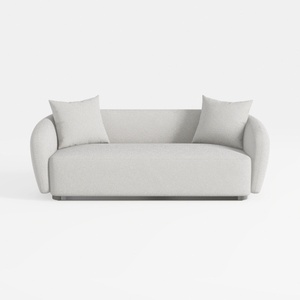
Minimalist Boucle Fabric Living Room Sofa 3D Model


Modern Minimalist Cream Leather Metal Frame Sofa 3D Model
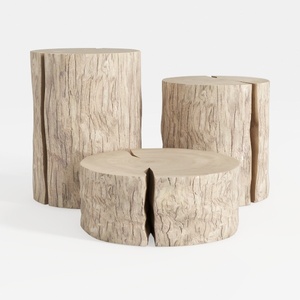
Rustic Solid Wood Stump Side Tables Set 3D Model
Homestyler offers an easy-to-use online design tool with stunning 3D renderings, a vast collection of interior projects, and helpful DIY video tutorials. It’s perfect for anyone looking to create and visualize beautiful home designs effortlessly.
Projete agora para LIVRE
































