

Building a 3D Bohr model of a neon atom is a fascinating and informative endeavor for anyone looking to deepen their comprehension of atomic structures. With an atomic number of 10, neon features two energy levels, or shells: the first shell accommodates 2 electrons, while the second shell contains 8 electrons. To successfully create a realistic 3D representation, you must accurately depict the nucleus (which consists of protons and neutrons) alongside the two electron shells filled appropriately. Here’s a guide to help you assemble it:
As a designer, I always emphasize the importance of clarity and visual equilibrium in educational models. If you encounter challenges while arranging atomic components, or if you want to visualize your model prior to crafting it, utilizing digital tools such as Homestyler can provide you with accurate layout control and allow you to preview your results in a virtual environment. This approach not only guarantees precision in educational displays but also enhances the optimization of spatial relationships, similar to planning a room design.
Tips 1:
For a polished finish, consider using transparent acrylic rings for the electron shells and distinctly color-coding your components. Modular parts can be a great option as they allow you to rearrange the model for other elements easily.
FAQ
Q: How many protons, neutrons, and electrons does neon possess?
A: Neon contains 10 protons, 10 neutrons (in its most common isotope), and 10 electrons.
Q: What causes the existence of two shells in the Bohr model of neon?
A: The initial shell (K) of neon accommodates 2 electrons, while the subsequent shell (L) supports 8, adhering to the principles outlined by the Bohr atomic model.
Q: Is it feasible to craft a 3D Bohr model using items found at home?
A: Certainly! Everyday materials like beads (for electrons), clay (representing protons/neutrons), and hoops or wire (for shells) can be effectively utilized.
Q: Why is the spacing of shells significant in the model?
A: Proper spacing visually represents energy levels and electron configuration, which are essential concepts in understanding atomic structure.
Q: Can digital modeling be advantageous for atomic structures?
A: Definitely; digital platforms such as Homestyler enable you to play around with design, scale, and labeling before you construct a physical model, providing significant benefits in terms of precision and visualization.

Minimalist Glass Top Solid Wood Base Irregular Coffee Table 3D Model
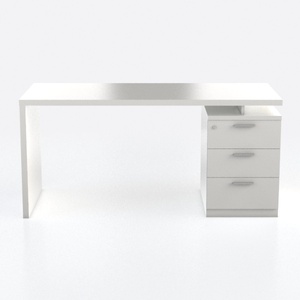
Lufeiya White Desk with 4 Drawers - 47 inch Gaming
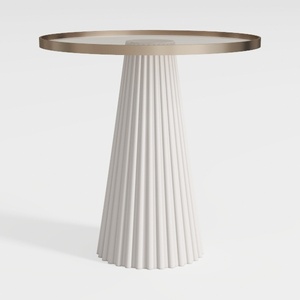
Modern Minimalist Fluted Base Glass Top Side Table 3D Model
Homestyler is your go-to platform for home design! Its user-friendly online design tool allows you to create stunning spaces effortlessly. Enjoy impressive 3D renderings, explore inspiring design projects, and learn through DIY video tutorials. Transform your vision into reality with Homestyler today!
Projete agora para LIVRE
































