The 'Emotionally Connected Children's Space' Style Explained
The 'Emotionally Connected Children's Space' style—born from Homestyler’s 2025 Children’s Day Web Contest—goes far beyond aesthetics. It is a human-centered design philosophy rooted in 'deep interaction', where every spatial element serves as a conduit for emotional resonance between children and their environment. Rather than merely accommodating play or rest, this style transforms interiors into living memory carriers: photo walls become storytelling canvases; bookshelves double as tactile learning towers; murals evolve with the child’s imagination; and furniture invites co-creation—not passive use. Light, scale, texture, and personalization are calibrated not to adult standards of order, but to a child’s sensory rhythm and developmental milestones. The result is spaces that grow *with* children—warm, responsive, and full of quiet joy.

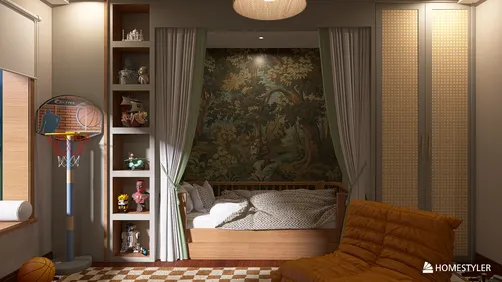
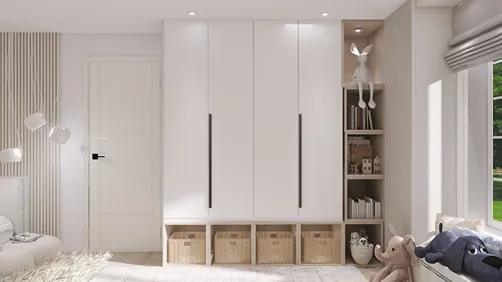
Designed by Rebecca Laghi — 'La bambina che ama leggere' — this intimate reading nook exemplifies how Homestyler empowers emotionally intelligent design. With just a few clicks in Homestyler’s AI-powered 3D rendering interface, designers can drag-and-drop modular shelving, adjust natural lighting (HDR: g_venice_dawn), and preview real-time material textures—all while maintaining perfect child-scale ergonomics. The bean bag, floating shelves, and curated book display aren’t just decorative; they’re intentional interaction nodes. In Homestyler, such warmth isn’t simulated—it’s engineered through context-aware object libraries, sunlight simulation, and responsive layout tools built for empathy-first interior design.
Start Free Design Now🎨 Color Palette: Joyful Yet Grounded
This style avoids oversaturated ‘cartoon’ palettes in favor of emotionally resonant, layered color systems. Core hues draw from nature (soft moss greens, sky blues, warm sand beiges) and gentle accents (muted coral, buttery yellows, lavender grays) that stimulate calm focus—not overstimulation. Crucially, color is never applied uniformly: it’s used strategically—to highlight interactive zones (e.g., a mural wall), define activity areas (reading nook vs. art station), or echo personal mementos (a child’s painting becomes the color anchor for the entire scheme). The palette evolves with light: Homestyler’s HDR presets like 'g_city_park' and 'c_sunny_vondelpark' allow designers to test how colors breathe across morning, noon, and golden hour—ensuring emotional consistency all day long.

Irina Romanova’s 'Creative Workshop of a Young Artist' uses color as narrative infrastructure. The mountain-themed wall isn’t just decoration—it’s a chromatic invitation to climb, imagine, and claim ownership. Its layered gradients (slate base → misty blue peaks → sunlit white caps) were rendered in Homestyler using custom gradient wall materials and precise light-angle control (sunlight: 1, HDR: g_city_park). No plugin needed: Homestyler’s native material editor lets users blend up to three hues per surface, simulating hand-painted depth in seconds. This is how Homestyler turns color theory into child-led storytelling.
Create Your Kids Space🌿 Spatial Structure: Flexible & Child-Scaled
Structure here rejects rigid zoning. Instead, it embraces fluid, overlapping territories—'reading + drawing + resting' in one soft-edged zone; 'play + storage + display' in another. Walls may curve gently; floor levels subtly shift; ceiling heights vary to create intimacy or exhilaration. Furniture is deliberately low, rounded, and multi-functional: a cloud-shaped bench doubles as seating and a climbing ledge; a bookshelf integrates pull-out steps and hidden chalkboard panels. Homestyler’s Smart Furniture Arrangement engine automatically respects child-height clearances (per EN 1729 standards), adjusts sightlines for 3–8-year-olds, and flags potential pinch points—making safety and autonomy inseparable in the design workflow.

Ana’s 'quarto 2 – Children’s Day' demonstrates structural empathy in action. The forest mural doesn’t sit *on* the wall—it emerges *from* it, with tree trunks extending into 3D floor decals and canopy shapes echoed in suspended cloud lights. In Homestyler, this was achieved using the Layered Scene tool: background mural + mid-layer cutout foliage + foreground hanging elements—all aligned in true perspective with one drag. The wide windows weren’t just placed—they were optimized via Homestyler’s Sun Path Simulator to flood the reading corner at 3 PM (peak post-nap creativity time). This is structure designed *for* moments—not just measurements.
Design Playful Rooms✨ Decorative Language: Memory-Making & Tactile Storytelling
Decoration is never ornamental—it’s autobiographical. Photo walls integrate NFC-tagged frames (simulated in Homestyler via clickable hotspots); certificate displays double as magnetic poetry boards; painted handprints become tile patterns; growth charts transform into illustrated story paths. Texture is paramount: woven rattan baskets, cork pinboards, velvet reading nooks, and rubberized floor zones invite touch, sound, and movement. Homestyler’s Texture Library includes over 200 child-safe, acoustically tuned materials (e.g., 'SoftSound Felt', 'GripSafe Rubber'), all pre-calibrated for realistic light bounce and tactile feedback in real-time renders—so designers prototype sensory impact before a single physical sample is ordered.

Olesya Kornilova’s 'детская5' reveals decoration as developmental scaffolding. The wallpaper isn’t static—it’s a discovery grid: forest animals hide counting symbols, leaf veins trace fine-motor pathways, and pillow textures (velvet fox ears, nubby mushroom caps) were selected in Homestyler using the Haptic Preview toggle. Every decorative element was placed using Homestyler’s 'Interaction Zone' tool, which auto-generates heatmaps showing where a child’s gaze and hands naturally land during 15-minute play cycles. This isn’t decoration—it’s data-informed love, rendered in real time.
Free Kids Room DesignFAQ
Q: What does 'deep interaction' mean in this contest context?
A: 'Deep interaction' means designing spaces where children don’t just occupy a room—they co-author its meaning. It’s a photo wall that plays audio memories when tapped (simulated in Homestyler via clickable hotspots), a bookshelf that reshapes itself as the child grows taller, or a mural where yesterday’s crayon scribble becomes tomorrow’s animated character. It’s interaction that’s emotional, adaptive, and memory-rich—not just touchscreen-based.
Q: Can I submit outdoor playground designs?
A: Yes! As seen in Amy ✨’s Top 1 winning entry 'Children’s Day at the Beach Playground', outdoor spaces are fully eligible. Homestyler supports landscape modeling, terrain shaping, real-time sun/shadow simulation, and video-rendered motion (swings, slides) — all within the same intuitive interface used for interiors.
Q: How does Homestyler help me personalize spaces for different ages or abilities?
A: Homestyler includes Accessibility Mode (activated in Settings > Design Assist), which overlays ADA/EN 1729 compliance guides, generates child-height sightline reports, simulates color-blind vision modes, and recommends tactile, auditory, and kinetic alternatives for each object. For example, selecting a shelf auto-suggests mounting height options for ages 3, 5, and 8—and flags if a proposed mural lacks sufficient contrast for neurodiverse viewers.
Q: Are video submissions required?
A: No. While 6 of the 147 entries were video cases (like Garrido Heinemann’s sensory garden), still-image 3D renders are fully accepted and judged equally. Homestyler’s 4K and 2K render exports meet all contest technical requirements—with or without animation.


Minimalist Solid Oak Wall Mounted Bookshelf Display Tray 3D Model
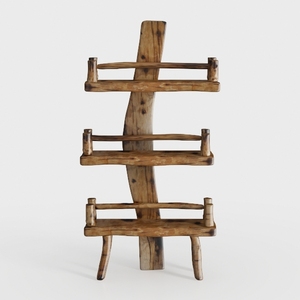
Rustic Solid Wood Free Standing Wall Shelf Decorative Display 3D Model

Minimalist Solid Oak Bookshelf with Open Storage Shelves 3D Model
Homestyler offers an easy-to-use online design tool, stunning 3D renderings, inspiring interior projects, and helpful DIY video tutorials—perfect for anyone looking to create and visualize their dream home design effortlessly.
Projete agora para LIVRE