Fitness-Embedded Living Space Design
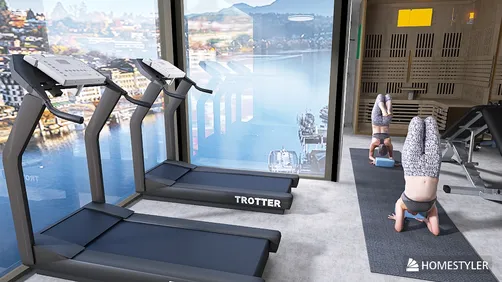
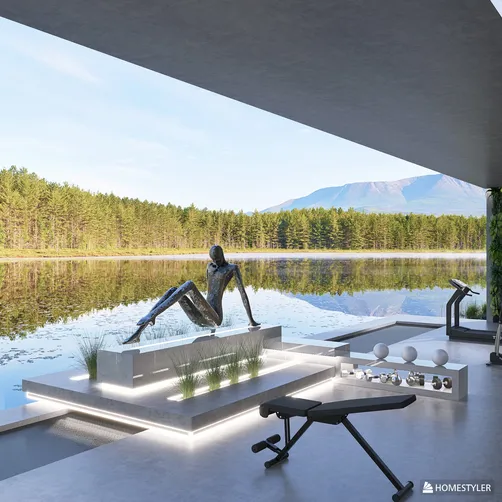
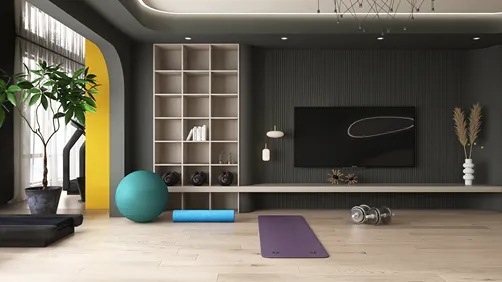
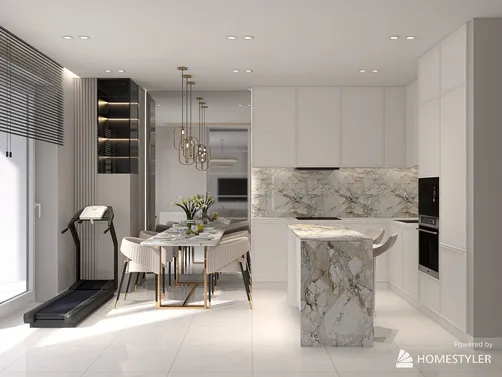
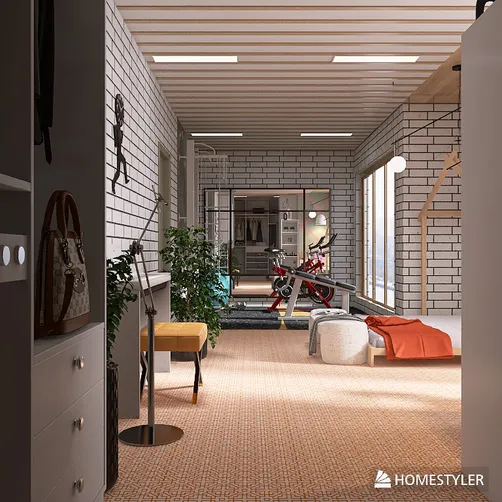
The 'Fitness-Embedded Living Space' is a contemporary interior design paradigm that seamlessly integrates functional fitness equipment into everyday residential environments—such as living rooms, bedrooms, balconies, or multipurpose zones—without compromising aesthetics or spatial comfort. Rather than relegating exercise gear to a dedicated, isolated gym room, this approach treats fitness tools as intentional furniture pieces: yoga mats double as textural rugs; foldable treadmills tuck beneath minimalist consoles; resistance bands hang like curated wall art; and Pilates reformers blend with Scandinavian-style daybeds. Rooted in the principle of 'movement as lifestyle', this scene prioritizes flexibility, visual harmony, and psychological wellness—transforming passive interiors into active, responsive habitats. It reflects evolving user needs for holistic well-being, compact urban living, and AI-augmented indoor space planning via tools like Homestyler.
Design Challenges and Common Pitfalls
Designing a fitness-embedded living space presents unique spatial, functional, and perceptual challenges. First, spatial conflict arises when bulky equipment (e.g., stationary bikes, squat racks) competes with circulation paths, seating zones, or natural light access—especially in small apartments (<60 m²). Second, visual clutter is a frequent issue: mismatched finishes, exposed cables, or unstyled gear disrupt cohesion and undermine the 'furniture-as-fitness' narrative. Third, acoustics and vibration transfer are often overlooked—treadmill footfall or weight-dropping noise can disturb cohabitants or neighbors. Fourth, scalability is problematic: many users install gear reactively without considering future activity evolution (e.g., shifting from yoga to strength training), leading to costly reconfigurations. Finally, poor integration with smart home systems or AI-powered interior space planning tools results in static, non-adaptive layouts that fail to support long-term habit sustainability.
✅ Prioritize Dual-Function Furniture & Seamless Integration
Select pieces where fitness utility and domestic function coexist organically—e.g., ottomans with hidden resistance band storage, sofa bases with built-in pull-up bars, or coffee tables with adjustable-height surfaces for seated Pilates. Avoid standalone 'gym pods'; instead, layer fitness elements into existing typologies. Use consistent material palettes (e.g., warm oak, matte black steel, natural linen) to unify gear with surroundings. Homestyler’s real-time 3D rendering allows rapid iteration of furniture swaps—test how a wall-mounted fold-down bike affects sightlines before committing.

Designer ♡Yellow Mellow ♡’s 'Zen Yoga fitness Room' exemplifies dual-function integration: a compact yoga zone coexists with a lounge-ready sectional sofa and a functional coffee bar—all under one cohesive neutral palette. Using Homestyler AI design tools, she precisely modeled sun-path alignment (via HDR 'g_sea_sky') to ensure morning light highlights the mat area while preserving ambient softness. The treadmill is visually recessed behind a floating shelf unit, transforming equipment into architecture—a masterclass in indoor space planning that proves fitness need not dominate, but rather dialogue with daily life.
Start Free Design🌿 Optimize Spatial Flow & Zonal Layering
Define movement zones—not by walls, but by floor treatments, lighting layers, and furniture orientation. Use area rugs to demarcate yoga or stretching zones; pendant lights over cardio areas; and recessed LED strips along baseboards to guide flow at night. Maintain minimum 90 cm clearance around all equipment for safe motion arcs. In open-plan spaces, deploy low-profile dividers (e.g., plant-filled shelving, sliding linen screens) to create acoustic and visual buffer zones—enabling simultaneous relaxation and exertion without interference. Homestyler’s drag-and-drop zoning tools help simulate traffic patterns and validate ergonomics before construction.

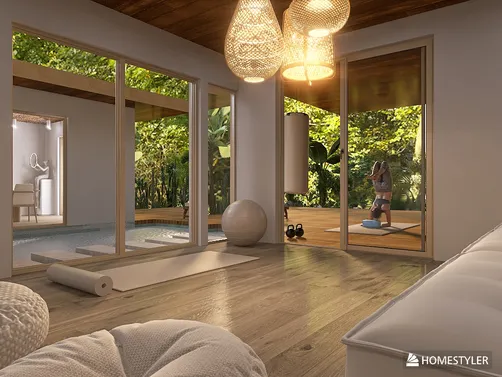
Alice Bresolin’s 'A Zen Villa' demonstrates intelligent zonal layering: expansive glazing floods the space with daylight, while a raised timber platform defines the yoga mat zone—physically and psychologically distinct from the adjacent lounge. She used Homestyler’s sunlight simulation ('g_sunny_vondelpark') to verify optimal solar angles for morning practice, and placed potted olive trees along the perimeter to soften transitions between activity zones. This is not just decoration—it’s strategic indoor space planning using AI-driven environmental modeling to enhance both usability and serenity.
Begin Your Free Plan🎨 Curate Sensory Harmony & Material Consistency
Fitness-embedded spaces must engage all senses—not just sight. Choose sound-absorbing materials (e.g., cork flooring, felt-wrapped wall panels) to dampen impact noise. Integrate tactile variety: smooth stone weights beside nubby wool throws; cool metal dumbbell stands next to warm rattan baskets. Limit color palette to ≤3 primary hues + neutrals to prevent visual fatigue during extended use. Leverage Homestyler’s material-swapping AI to instantly preview how bamboo flooring interacts with matte-black equipment frames—or how linen upholstery softens the perception of steel supports—ensuring sensory coherence across function and form.

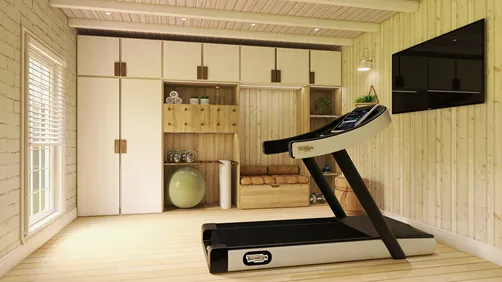
Cecilia Botha’s 'A Sanctuary of Movement' achieves sensory harmony through restrained material storytelling: a pale oak treadmill deck echoes the same grain as nearby shelving; soft linen curtains diffuse harsh light; and recessed cove lighting emits warm 2700K tones—reducing eye strain during evening sessions. Using Homestyler Design Tips, she tested over 12 finish combinations virtually, selecting textures that absorb sound *and* reflect calm—proving that effective indoor space planning balances biomechanics with biophilic psychology.
Launch Free DesignFAQ
Q: How do I choose the right fitness equipment for a small living room without sacrificing style?
A: Prioritize foldable, wall-mounted, or multi-use items—e.g., resistance band wall anchors disguised as art hooks, or a yoga mat that doubles as a jute rug. Use Homestyler’s AI-powered space planner to simulate footprint overlays and test sightlines before purchasing. Focus on unified finishes (matte black steel, walnut veneer) to maintain visual continuity.
Q: Can I integrate strength training gear into a bedroom without making it feel clinical?
A: Yes—embed gear into furniture: a bed frame with integrated dip bars, under-bed storage for kettlebells in woven baskets, or a mirror-backed headboard that doubles as a functional reflection surface for form checks. Irina Romanova’s 'Challenge “Fitness at home”' uses Homestyler’s real-time rendering to prove how even a full guest-room gym feels residential when anchored by warm lighting and textile layers.
Q: What Homestyler design tips help avoid clutter when combining fitness and living functions?
A: Use Homestyler’s 'Smart Grouping' tool to assign equipment to custom categories (e.g., 'Hidden Storage', 'Daily Use'), then apply filters to toggle visibility during layout review. Also leverage the 'Material Match' AI to auto-suggest finishes that harmonize gear with existing furniture—reducing visual dissonance and supporting cohesive indoor space planning.
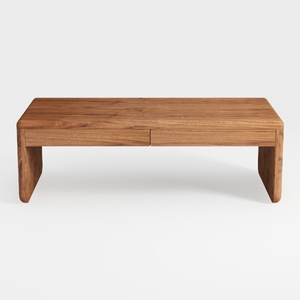
Minimalist Solid Wood Two Drawer Coffee Table 3D Model

Minimalist Two Tone Irregular Shaped Coffee Table 3D Model
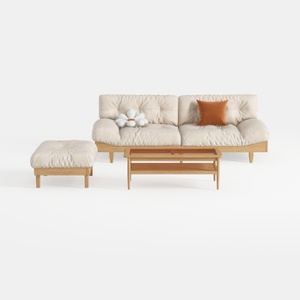
Minimalist Solid Wood Fabric Sofa Ottoman Coffee Table Set 3D Model
Homestyler offers an easy-to-use online design tool, stunning 3D renderings, and a wealth of interior design projects. With helpful DIY video tutorials, it’s perfect for bringing your home design ideas to life, whether you’re a beginner or an experienced designer.
Projete agora para LIVRE