


Quick Answer
For most compact dining areas, a dining bench typically offers the most efficient use of space, while chairs provide greater adaptability, and a dining sofa delivers superior comfort. The optimal choice depends on the room layout, placement against walls, and how frequently the area is used for social gatherings.
In smaller homes, the best outcomes often arise from combining two seating styles rather than selecting only one.
Summary Highlights
Introduction
When clients ask whether a dining sofa, bench, or chairs are better suited for small spaces, my response rarely boils down to simply choosing the smallest furniture piece.
After designing numerous compact apartments in cities like Los Angeles and New York, I've observed that the real challenge lies in circulation, positioning along walls, and everyday usage of the dining table rather than furniture size alone.
Though a sofa may feel inviting, it can hinder movement. Chairs might appear less bulky but sometimes contribute to visual chaos. Meanwhile, benches can preserve floor space but may be less comfortable during extended meals.
Before deciding, I typically draft a room layout. Even a brief planning session—such as creating a dining room layout with a tool like Homestyler—can reveal which seating solution fits the available area best.
In this article, I’ll analyze how dining sofas, benches, and chairs perform in limited dining spaces and clarify which option tends to excel based on different layouts.
Overview of Dining Seating for Small Spaces
Important Point: Each seating type addresses distinct spatial concerns. Thus, the best pick hinges on whether your primary limitation is width, walking space, or seating capacity.
In compact apartments, dining seating usually falls into three categories: sofas, benches, and chairs.
A common oversight in many design guides is the misconception that table size is the main issue—when the real constraint is the clearance space around seating.
According to respected interior planning standards, such as those cited by the National Kitchen & Bath Association, dining areas require roughly 36 inches of clearance for comfortable circulation. Unfortunately, many apartments lack this space.
This explains why choosing seating that saves space is often more crucial than the table's dimensions.
Dining Sofas: Comfort and Aesthetic Benefits
Key Insight: Dining sofas function best when placed against a wall or window, transforming the dining nook into a lounge-like seating zone.
From a design perspective, sofas provide continuous visual flow, unlike chairs which break up space into individual seats. This can make a small room appear calmer and more cohesive.
Advantages of dining sofas include:
Yet, they do come with certain limitations:
I generally recommend dining sofas only if the table is positioned along a wall or window bench. If the table is freestanding, sofas tend to feel awkward.
Dining Benches: Space-Saving Advantages
Insight: Dining benches are often the most space-efficient option because they can slide entirely beneath the table.
In constrained apartments, the ability to tuck a bench fully under the table can free up to two feet of valuable walkway space.
This explains why benches are popular in restaurant booth seating and small kitchen designs.
Common benefits of benches include:
However, benches also have drawbacks.
In narrow dining zones, especially adjacent to kitchens, I often pair a bench on one side with chairs opposite. Planning layouts with platforms like Homestyler can clearly show how much circulation space this combination preserves.
Traditional Dining Chairs: Mobility and Versatility
Key Insight: Dining chairs are the most versatile because each seat can move independently.
Chairs are sometimes underrated for small areas because benches are assumed to save more space. In truth, chairs can appear visually lighter and offer functional mobility.
Benefits of chairs include:
The main disadvantage is their larger footprint.
Unlike benches, chairs usually cannot slide completely under tables due to their angled backs, permanently occupying circulation space.
Nevertheless, chairs generally outperform benches and sofas for small round dining tables.
Space Efficiency Comparison in Compact Homes
Key Insight: Employing a hybrid seating arrangement often provides the best use of space rather than relying on a single furniture type.
Here's how sofas, benches, and chairs commonly compare in tight living spaces:
Typical space footprint around a 48-inch table includes:
In my experience, the most effective layouts usually feature:
This setup maximizes seating capacity without sacrificing circulation.
Best Seating Solution Summary
Optimal seating for small dining rooms often combines two types: a bench or sofa along a wall paired with movable chairs, striking a balance between comfort, capacity, and flow.
Choosing Seating Based on Layout
Central Idea: The dining area's configuration typically drives seating decisions more than the furniture itself.
My approach during design projects involves considering:
Narrow dining nooks
Open-concept living and dining rooms
Compact square dining areas
For challenging layouts, I prefer testing furniture placement in digital room models. Using interactive floor plan tools like Homestyler helps identify circulation issues before making purchases.
Conclusion
Frequently Asked Questions
Is a dining sofa suitable for small areas?
Yes—if positioned against a wall. Dining sofas can reduce visual clutter and enhance comfort but shouldn't obstruct walkways.
Which is better for tight spaces: dining sofa or dining bench?
Dining benches generally save more room by sliding under tables, while sofas improve comfort but take up more floor area.
Are benches practical for dining tables?
Definitely, especially in narrow rooms where they accommodate multiple diners and can be pushed under tables when unused.
Do benches really save space?
They do when placed on one side against a wall, keeping pathways clear.
Are chairs preferable over benches for dining?
Chairs offer better ergonomics and easier access, making them more comfortable for everyday use.
What is the best seating setup for small dining rooms?
A combination of a bench or sofa along one side and chairs on the other works best.
Can a sofa replace dining chairs?
Yes, especially in banquette-style layouts where the table is adjacent to a wall.
How much clearance is needed behind dining seats?
Ideally 36 inches, though smaller apartments may accept as little as 24 inches.
References
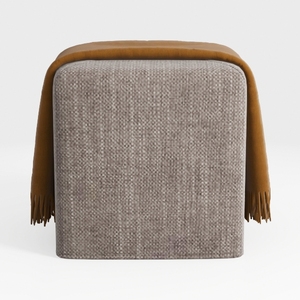


Tov Furniture Marla Chocolate Brown Upholstered Bo

Minimalist Solid Wood Fabric Armchair with Throw Blanket 3D Model
Homestyler offers an easy-to-use online design tool, stunning 3D renderings, and a vast collection of interior design projects. With helpful DIY video tutorials, it’s perfect for anyone wanting to create beautiful home designs effortlessly. Give your space a fresh look today!
Projete agora para LIVRE
































