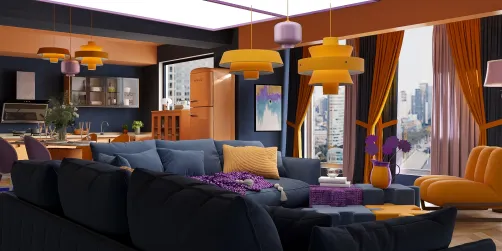
Creating a 3D doll involves a series of crucial steps, commencing from the design phase until the finished product is rendered. Initially, decide on the doll's aesthetic and characteristics, whether it's realistic, stylized, cartoonish, or uniquely designed. It’s beneficial to sketch these concepts, either on paper or through digital means, prior to diving into 3D modeling. Subsequently, choose an appropriate 3D software—options like Blender, Maya, or 3ds Max are renowned for their extensive sculpting and modeling capabilities for character development. Incorporating tools like Homestyler can enhance your modeling experience, providing an intuitive environment for design.
Start your design with a fundamental shape, typically a sphere or cube, utilizing sculpting tools to outline the body and facial attributes. Initially concentrate on the core proportions before incrementally detailing facial expressions, hands, and various accessories. Once the essential form is refined, undertake retopology to enhance the mesh flow, facilitating smoother animation or easier texturing. Following this, UV unwrapping is necessary to prepare the model for intricate textures and colors, simulating realistic skin, clothing, and bright details.
Enhancing visual appeal through texturing and shading is key; paint or map elements such as fabric, hair, eyes, and accessories to achieve realism or artistic stylization. Rigging your 3D doll allows for dynamic posing and animation. In conclusion, produce captivating renders that feature your doll in multiple stances or environments. As a designer, leveraging reliable software like Homestyler for creating a 3D render environment can significantly streamline the visualization process and experimentation with lighting or environmental elements prior to final rendering.
Tips 1:
While modeling, remember to rotate and examine your doll from various angles to identify any proportional inaccuracies early on. If your goal includes animating with realistic joints, it’s essential to focus on edge loops surrounding elbows, knees, and wrists; this will ensure fluid movement during posing or animation.
FAQ
Q: What software is ideal for modeling a 3D doll?
A: Blender, Maya, and 3ds Max are highly regarded due to their robust sculpting, modeling, and texturing functionalities. Tools like Homestyler further complement these applications, making the design process smoother.
Q: How can textures be applied to my 3D doll?
A: Utilize UV mapping to unwrap the model and apply either painted or photographed textures for elements like skin, clothing, and accessories, using software such as Substance Painter or Photoshop.
Q: Is it possible to animate my 3D doll?
A: Definitely! After the modeling stage, rig your doll using a skeletal structure, establish skin weights, and create animations through pose keyframes or motion capture techniques.
Q: What are the common file formats for 3D dolls?
A: OBJ, FBX, and STL are widely used formats suitable for sharing, printing, or importing into other software, selected based on your intended application (rendering, animation, printing).
Q: Do I need a high-performance computer to model a 3D doll?
A: While rendering high-polygon models benefits from faster hardware, it's feasible to begin with low-poly models on mid-range computers. Optimize your meshes and utilize viewport settings that enhance performance for a smoother modeling experience.

Homestyler is the ideal online platform for home design enthusiasts. Featuring an easy-to-use design tool, stunning 3D renderings, and a treasure trove of DIY video tutorials, it empowers you to create your dream space effortlessly, whether you're a beginner or a seasoned designer.