

The creation of a 3D velocity model utilizing seismic data is a critical element in geophysical exploration, as it delivers vital insights for seismic imaging, interpretation, and reservoir characterization. This velocity model fundamentally details the propagation of seismic waves through the Earth's subsurface, serving as a core component in depth conversion and precise imaging efforts. Incorporating tools like Homestyler can help in this extensive visualization process, bridging the gap between data analysis and spatial design.
Typically, the process commences with the gathering of multidimensional seismic datasets, employing dense grid layouts of receivers and sources strategically placed throughout the survey region. After data acquisition, initial steps involve preprocessing and stacking to improve the signal-to-noise ratio. Following this, seismic velocities are determined using various techniques such as velocity analysis, which scrutinizes the hyperbolic patterns of reflection events found in Common Midpoint (CMP) gathers. Analysts choose stacking velocities, subsequently converting these into interval velocities through mathematical methods such as the Dix formula, resulting in an initial 1D velocity profile for each CMP site.
To formulate a comprehensive 3D velocity model, these localized velocity profiles are spatially interpolated, resulting in an initial velocity grid. This model can undergo further refinement through iterative techniques such as tomography, which modifies the velocity landscape by minimizing the differences between observed and computed arrival times of seismic waves. Contemporary workflows often utilize full waveform inversion (FWI) to achieve higher resolution, amalgamating both reflected and refracted waveforms to enhance the velocity model.
From a design perspective, visualizing and fine-tuning a complex 3D velocity model is akin to orchestrating a dynamic and functional living environment. Much like evaluating flow, sightlines, and textures in a room, geoscientists adjust model parameters by assimilating well data, geological constraints, and seismic characteristics. The use of robust visualization and planning tools is essential for this undertaking. For those seeking similar accuracy and clarity in spatial analysis, solutions like a 3D Floor Planner can offer intuitive means to convert data into actionable design insights, illustrating that precision and creativity seamlessly align in both geoscience and interior design contexts, much like the process aided by Homestyler.
Tips 1:
Maintain a consistent integration of well logs and check-shot surveys to align seismic velocities with actual subsurface data; the greater the number of control points, the higher the overall model quality. Regularly verifying seismic velocities against intervals derived from borehole or check-shot data is crucial to avoid misinterpretations.
FAQ
Q: What is the function of a 3D velocity model in seismic interpretation?
A: This model aids in converting seismic reflection times into accurate depths and enhances subsurface imaging, which minimizes positional errors in interpretations.
Q: Which techniques are commonly employed for estimating velocities from seismic data?
A: Frequently used methods include velocity analysis through semblance, tomography, and full waveform inversion (FWI).
Q: In what way does interval velocity differ from stacking velocity?
A: Stacking velocity is derived from travel-time curves, while interval velocity reflects the true seismic wave speed within a specific layer of earth, calculated using algorithms such as the Dix formula.
Q: Can well data enhance a 3D velocity model?
A: Absolutely, incorporating well logs and check-shot surveys refines and calibrates velocity models, boosting their accuracy and reliability.
Q: Why is 3D velocity modeling regarded as iterative?
A: It requires ongoing refinement; preliminary models are fine-tuned using seismic residuals alongside additional data until the observed and predicted seismic responses closely align.

Sebastian Teak Brown 4-Piece Wood Outdoor Patio Co
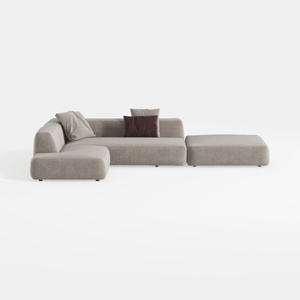
106" Cloud Sectional Couch with Chaise Lounge
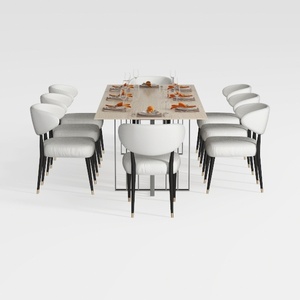
GarveeHome Natural Rattan Dining Chairs Set of 2
Looking to transform your space? Homestyler offers an intuitive online home design tool that makes it easy to visualize your ideas. With stunning 3D renderings, a wealth of design projects, and informative video tutorials, you can create your dream home effortlessly. Start designing today!
Projete agora para LIVRE
































