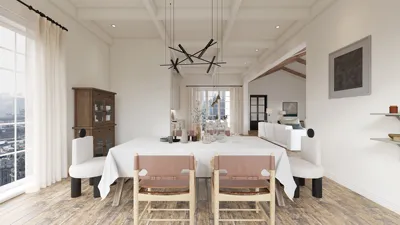


On one occasion, I opted to paint a rough garden stone wall a bright white hue after a client insisted that it would 'open up the patio.' However, after applying three coats and investing a lot of effort into scrubbing, we both recognized that the interplay of texture and light can deceive when it comes to paint. This small misadventure highlighted to me how small spaces can inspire significant creativity, and now I always begin by planning a small room before selecting a finish for a stone wall. Utilizing tools like Homestyler can greatly enhance this planning phase.
1. Embrace Whitewashing for a Soft, Weathered Appearance
Whitewashing is one of my favorite techniques as it maintains the visible texture of the stone while soothing the overall ambiance of the room. It effectively brightens the space without obscuring its character. However, be cautious as it can become streaky if the stone is highly porous; it's always wise to test a small section first.
save pin
2. Use Selective Color Blocking to Refresh a Nook
By painting only a framed section of the wall, you can achieve a built-in appearance that is budget-friendly. I once implemented this technique to transform a tiny breakfast area into a more purposeful space. While it's a bold and rapid method, aligning edges on uneven stone can be tricky, requiring precise taping or a thin reveal trim to ensure a neat finish.
save pin
3. Employ Stains or Glazes for Added Depth Near Active Spaces
Using a tinted glaze not only preserves the stone's texture but also enhances its richness, which is particularly ideal for stone located near kitchens or dining areas. When I manage such projects, I often integrate glaze with practical finishes — if the stone is near cabinetry, creating mockups within your kitchen layout helps assess the final harmony and flow without unexpected outcomes. Note that glazes can be labor-intensive, so it's advisable to involve a contractor experienced with layered finishes.
save pin
4. Introduce Contrasting Trim and Integrated Shelving
Applying a muted color on the wall and adding dark floating shelves can instantly modernize the stone and enhance functionality. In a previous project, I installed slender oak shelves into a painted stone alcove, cleverly concealing the mounting hardware while the color made the stone stand out. This method requires careful installation points and occasionally, additional anchors for uneven stone surfaces.
save pin
5. Go Bold with a Mural or Matte Black Accent
For a compact entryway or media wall, I’ve successfully utilized a matte dark paint or a straightforward geometric mural to ensure the stone acts more like a backdrop instead of a focal point. This approach is quite dramatic and photographs beautifully when I document the work. For difficult visual assessments, I frequently create a quick 3D render of my space using tools like Homestyler to preview how light and color will interplay before applying any paint. However, be aware that dark finishes necessitate good lighting and may show dust easily.
save pin
FAQ
Q1: Is it possible to paint natural stone on my own? I often suggest DIY for sealed, indoor stone after proper cleaning and priming. Nevertheless, for uneven or exterior stone, hiring a professional may be beneficial to ensure proper adhesion and weatherproofing.
Q2: Which primer works best on stone? A high-adhesion masonry or bonding primer is ideal; it enhances coverage and prolongs the performance of the topcoat. Not using a primer is a common cause of paint peeling off stone surfaces.
Q3: What is the longevity of painted stone? Indoors, a well-prepared and painted stone wall can last a decade or longer; in outdoor settings, its lifespan may be shortened due to exposure and might require touch-ups every few years based on climate and finish.
Q4: Does paint obscure stone texture? It depends on the finish used. Heavier paints can cover texture, while washes and glazes retain it. Generally, I favor techniques that highlight texture unless a sleek, modern appearance is desired.
Q5: Is using black paint a poor choice for stone? Not at all — black can introduce drama and depth, especially in small, well-illuminated areas. Just keep in mind that it may show dust and scuffs readily and could absorb light, necessitating pairing it with adequate lighting.
Q6: What steps should I take to prepare an old, dirty stone wall? Start by scrubbing with a stiff brush and mild detergent, rinse thoroughly, allow it to dry completely, and then apply a masonry primer. For tougher stains, professional cleaning or reprofiling may be the best approach.
Q7: Are there breathable paints suitable for stone? Yes — masonry and mineral paints are designed to be vapor-permeable. According to Sherwin-Williams, acrylic-latex masonry paints offer excellent adhesion while allowing substrates to breathe, which helps mitigate moisture issues (Sherwin-Williams Technical Data).
Q8: How can I effectively test a color on stone? Always apply a 2x2 foot test patch under various lighting conditions and observe it over several days. For greater confidence, create a digital mockup of the scene or take photos of the test under morning and evening light to visualize its true behavior.
save pin
Discover the ease of home design with Homestyler! This user-friendly online platform offers a powerful design tool, stunning 3D renderings, and a wealth of DIY video tutorials. Whether you're a novice or a seasoned designer, you can effortlessly bring your vision to life and explore endless possibilities for your space!
Projete agora para LIVRE
































