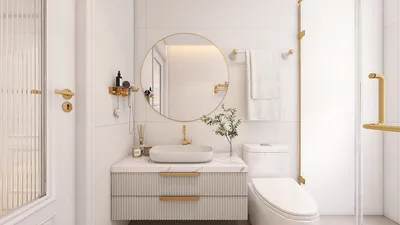


There was a time I entered a client's living room and felt that the popcorn ceiling had somehow found its way onto the walls — it was a textured wall that seemed to absorb all the light. I lightheartedly remarked that the wall was experiencing an identity crisis, leading the client to ask for a way to ‘calm it down’ without the need for complete sanding. This experience highlighted to me how minor changes could yield significant visual effects, and often a well-crafted visualization can alter the entire plan — take a look at this 3D design example I used to persuade them.
1. Introduce contrast with a sleek painted stripe
I enjoy the technique of painting a smooth stripe vertically or horizontally over a textured wall, creating a striking focal point. It’s an efficient approach: just skim the area with joint compound, lightly sand it, and then apply primer and paint. The stark difference between the textures provides a modern and purposeful aesthetic — perfect for situations where you prefer not to resurface the entire wall, especially with tools like Homestyler for planning.
Advantages include low cost, high visual impact, and ease of reversal. The challenge lies in ensuring your patches are tidy; using painter’s tape and a reliable primer enhances adhesion.
save pin
2. Apply a glaze to soften the texture while maintaining its presence
For clients who appreciate the unique quality of textured walls but desire a more muted appearance, I often recommend using a tinted glaze. By applying a thin layer of glaze and then wiping or brushing it off, the raised sections can absorb more of the color while keeping the deeper parts subdued. This method offers a layered, luxurious look without any major renovations, and can be visualized beautifully through Homestyler.
Why do I endorse this method? It retains the wall’s texture while enhancing its depth and is far less expensive than full retexturing. A slight drawback is that applying glaze requires precision and a test area — anticipate dedicating one afternoon for this project plus drying time.
save pin
3. Accentuate texture using low-sheen paints and directional washing
Utilizing directional paint washing, where you brush in a consistent direction with a low-sheen finish, offers an elegant way to highlight the texture. I applied this technique in a narrow hallway with harsh lighting; the low sheen masked imperfections while the brushwork imparted a warm, inviting aesthetic.
Pros include its forgiving nature towards flaws and ease for DIY enthusiasts, but the downside is that you might need to refresh it in high-traffic zones sooner than you would with semi-gloss. Pro tip: always conduct a test in the room’s actual lighting before making a commitment.
save pin
4. Design a striking mural or geometric overlay
A daring geometric paint overlay can transform a textured wall into a statement piece rather than a flaw. I previously painted a terrazzo-inspired mural over a textured wall; the design effectively draws attention away from the roughness, creating a deliberate appearance. Stencils or clean painter's tape make this approach feasible even for those without an artistic background, and tools like Homestyler can aid in visualization.
Benefits include a high design impact while camouflaging unevenness; however, it does require additional time and careful taping. Budget wise, the complexity can be adjusted to fit your financial plan — simpler shapes are cost-effective, while intricate murals will be pricier.
save pin
5. Repaint using specialized primers and finishing coatings
At times, the most advantageous strategy is to use a bonding primer paired with a top-quality coat designed for textured surfaces. Though this option may seem unexciting, it produces a uniform finish and durability — ideal for rental properties or households with high activity.
What makes this method effective? Its longevity and low maintenance afterward. A downside is the initial cost of materials and added prep work — however, it ultimately saves time on frequent touch-ups. If you're aiming for coordinated textures in a modern kitchen, combining painted textures with thoughtfully designed layouts — perhaps by leveraging Homestyler — can unify the space effortlessly.
Halfway through a project, I often incorporate AI-enhanced concepts to quickly preview potential results; these visuals aid clients in imagining finish options and help avert unexpected costs. For instance, an AI-driven design scenario once encouraged a family to opt for a more subtle glaze instead of a complete retexturing, thereby conserving both money and time.
save pin
FAQ
Q1: Is it possible to paint over textured walls without any preparation?
A1: You can paint directly, but I always advise cleaning, patching any loose areas, and applying primer first — it enhances adhesion and ensures a uniform finish.
Q2: What paint finish is most suitable for textured walls?
A2: Low- to mid-sheen finishes (like eggshell or satin) effectively hide imperfections while maintaining vibrant color; in contrast, high-gloss finishes highlight every uneven spot.
Q3: Is sanding necessary for textured walls?
A3: Only if you're addressing flaking texture or need a smooth finish. Light sanding in specific areas typically suffices for most paint applications.
Q4: What are the costs associated with retexturing or smoothing?
A4: Prices differ based on location and project scope — simple skim-coat repairs can be affordable, while full retexturing or removal tends to be more expensive. I routinely seek 2 to 3 quotes for larger jobs.
Q5: Can texture effectively conceal wall flaws?
A5: Yes, texture can cover minor imperfections, although deep cracks or structural issues require proper repair beforehand.
Q6: Are there health risks associated with older textured walls?
A6: Certainly — walls textured prior to 1978 may have lead. The U.S. EPA recommends testing and adhering to lead-safe practices; please refer to the EPA’s guidance on lead for more information (https://www.epa.gov/lead).
Q7: What is the expected lifespan of a painted textured wall?
A7: With proper preparation and quality paint, anticipate a lifespan of 5 to 10 years before needing cosmetic touch-ups, depending on wear and sunlight exposure.
Q8: Can I implement these techniques myself, or should I hire a professional?
A8: Many of these techniques are beginner-friendly (such as glazing, washing, and stripes), but for larger areas, intricate glazing, or lead-related concerns, hiring a professional is advisable to avoid complications and ensure safety.
save pin
Homestyler is your go-to online design platform for transforming your home. With its user-friendly design tool, stunning 3D renderings, and a wealth of DIY video tutorials, you can effortlessly create your dream space. Explore endless design possibilities and bring your vision to life today!
Projete agora para LIVRE
































