


As technology continues to shape our daily routines, the latest developments like the $135 million Google Android settlement remind us of the growing importance of integrating smart gadgets into our living spaces. Designing home interiors that accommodate various devices seamlessly enhances both functionality and comfort, ensuring our environments support the evolving digital lifestyles we lead.
Direct Answer
Real estate agents, architects, and developers utilize 3D floor plans to clearly illustrate spatial arrangements before construction or renovation begins. These visual representations help clients grasp room relationships, scale, and furniture placement much better than conventional 2D drawings. In practice, they expedite decision-making, boost marketing effectiveness, and minimize expensive design errors.
Quick Takeaways
Introduction
Over more than ten years involved in residential interior design, I've seen a visualization tool evolve from a luxury to a necessity: the 3D floor plan. Nowadays, these plans are ubiquitous, featured in architectural presentations, property listings, and development proposals alike.
The explanation is straightforward. While traditional architectural drawings may be clear to professionals, they often confuse buyers or investors. Transforming a layout into a realistic 3D floor plan immediately makes the entire space comprehensible.
Many professionals now depend on platforms like Homestyler, which enable fast conversion of basic layouts into fully visualized 3D floor plans. What once required days from rendering studios can now be achieved during early design discussions.
However, the true value of 3D floor plans extends beyond aesthetics. They shape buyer perception, assist in design choices, and even improve chances of obtaining project financing. Let’s explore how various industries integrate them into real workflows.
The Growing Role of 3D Floor Plans in Real Estate Marketing
Insight: In real estate, 3D floor plans allow prospective buyers to virtually experience a property before physically visiting it.
Standard listing photographs highlight rooms but rarely clarify the home's overall flow. Buyers often ask questions like:
A 3D floor plan provides instant answers to these inquiries.
According to the National Association of Realtors, buyers increasingly expect spatial context in online listings. Agents have observed that listings featuring clear layout visuals receive longer engagement and more showing requests.
Common real estate applications include:
An error some agents commit is showcasing entirely empty layouts. Using a lightly furnished 3D floor plan better conveys scale than an unfurnished version.
How Architects Utilize 3D Floor Plans During Early Design
Insight: Architects rely on 3D floor plans early to test spatial logic before committing to complex models.
Initial design choices often dictate project success or costly revisions later in architecture firms.
A rapid 3D plan aids architects in assessing:
In my collaborations with architects, these detailed spatial visuals uncover issues hidden by 2D drawings.
For instance, a corridor that appears adequate on paper may feel cramped once doors and furnishings are visualized in 3D.
Early visualization reduces the risk of expensive redesigns, a principle emphasized by the American Institute of Architects.
Interior Designers and Spatial Arrangement Planning
Insight: Interior designers leverage 3D floor plans to experiment with furniture layouts before producing full interior renderings.
In interior design, circulation and layout decisions often outweigh decoration. An exquisite sofa is of little use if it hampers movement.
Before crafting photorealistic images, I typically develop a quick spatial layout using a visual planning workflow such as Homestyler, which maps furniture and traffic flow. This process enables clients to approve the spatial framework first.
Key questions addressed during layout testing include:
A frequently overlooked benefit is reducing furniture purchasing mistakes. Clients often realize early that a large sectional may overwhelm a room.
3D Floor Plans in Property Development Presentations
Insight: Developers employ 3D floor plans to communicate projects under construction or in planning to investors and clients.
When properties exist only on paper or are under construction, clear visual communication is critical.
Developers frequently incorporate 3D floor plans in:
Compared to complex architectural models, 3D floor plans distill the message. Investors focus more on layout efficiency and usability than construction nuances.
In several multi-unit developments I analyzed, simplified furnished floor plans demonstrated how compact apartments remained highly functional.
Benefits for Client Communication and Visualization
Insight: The primary advantage of 3D floor plans is bridging misunderstandings between professionals and clients.
Misinterpretations are common across design and real estate projects.
Clients frequently misjudge spatial dimensions and flow.
Visual floor plans effectively close this communication gap.
Teams often pair spatial models with photorealistic imagery produced from workflows supported by platforms like Homestyler. This combination offers both spatial clarity and emotional resonance.
Answer Box
Professionals favor 3D floor plans because they translate technical blueprints into comprehensible visuals. Buyers and investors can instantly understand spatial functionality without architectural expertise.
Future Trends in 3D Floor Plan Visualization
Insight: Emerging 3D floor plans will be interactive, data-driven, and integrated with AI-enabled design workflows.
Current trends shaping the future include:
Instead of static images, future 3D floor plans offer interactive experiences allowing users to toggle furniture, change materials, and adjust lighting.
For real estate agents and architects, this promises accelerated decision cycles and enhanced client involvement.
Final Summary
FAQ
1. What is a 3D floor plan?
A 3D floor plan is a spatial representation showing a property's rooms, walls, and furniture from a three-dimensional perspective, providing depth and scale.
2. Why are 3D floor plans important for real estate listings?
They help potential buyers quickly comprehend room connections and the overall spaciousness, increasing property interest.
3. Do architects use 3D floor plans during design?
Yes, architects often use simplified 3D plans to assess circulation, proportions, and furniture placement in early phases.
4. Are 3D floor plans superior to traditional blueprints?
While blueprints remain crucial for construction, 3D floor plans communicate spatial layouts more effectively to non-experts.
5. How do developers benefit from 3D floor plans?
Developers use them to clarify layouts for investors and buyers before building commences.
6. Can 3D floor plans boost property sales?
Listings with clear spatial visuals tend to generate higher engagement as buyers better envision living in the space.
7. Which industries rely on 3D floor plans?
Real estate, architecture, interior design, property development, and hospitality sectors frequently use 3D floor plans.
8. What differentiates a 3D floor plan from a full 3D render?
3D floor plans emphasize layout and spatial relationships, whereas renders focus on detailed materials, lighting, and ambiance.

Minimalist White Fabric Tufted Armchair 3D Model
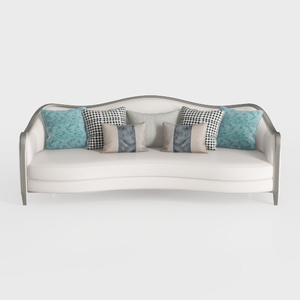
Modern White Leather Upholstered Curved Living Room Sofa 3D Model

Minimalist White Fabric Three Seater Sofa 3D Model
Homestyler is an easy-to-use online home design platform offering powerful 3D rendering, a vast collection of design projects, and helpful DIY video tutorials. It’s perfect for anyone looking to visualize and create beautiful interior spaces effortlessly.
Projete agora para LIVRE
































