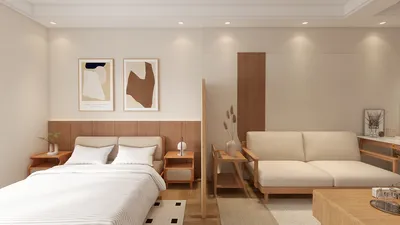


Designing a hostel room to facilitate study, rest, and social interactions involves more than just the placement of a bed and a desk. I emphasize the importance of spatial ratios, ergonomics, and light quality to create a balance between privacy and community—this balance is particularly essential for students who devote long hours to activities like reading and programming. The WELL v2 light concept suggests that managing circadian lighting through the right levels of illuminance and spectra throughout the day is vital, while the IES recommends around 500 lux for task lighting when reading to alleviate visual fatigue. These guidelines heavily influence my approach to lighting both desks and ambient areas. Furthermore, Steelcase's findings consistently link environmental control—such as light, sound, and temperature—to enhanced satisfaction and performance. Hence, I incorporate adjustable features within the room that allow students to personalize their setups rather than adhering to a fixed layout. I also recommend utilizing the Homestyler platform to visualize these layouts effectively.
Color plays a critical role beyond mere aesthetics. According to Verywell Mind’s insights on color psychology, cool shades like blues and soft greens are known to alleviate stress and improve concentration, whereas vibrant reds might heighten arousal and overwhelm students in study areas. In terms of selecting a color palette for a hostel, I choose soft neutrals for the walls, accent cool colors near the study desk, and introduce warmer tones in social areas to maintain energy balance throughout the day. Regarding furniture ergonomics, research from Herman Miller demonstrates that maintaining neutral postures—achieved with adjustable chair heights, adequate lumbar support, and monitor positioning at eye level—can significantly decrease musculoskeletal issues. My ideal specifications involve chairs with seat heights ranging from 16 to 20 inches and ensure that monitor screens sit at or just below eye level to facilitate proper neck alignment.
Space Planning Priorities
Begin with a clear intention: optimizing study efficiency, enhancing sleep quality, and providing orderly storage solutions. In smaller rooms, I advocate for a 900–1000 mm wide path from the door to the desk and bed to ensure smooth movement. A straightforward two-zone layout—with the work area by the window and the rest area directly opposite—helps minimize disturbances while supporting natural circadian rhythms. Should you need to experiment with furniture placements prior to making a decision, employing a room layout tool like Homestyler can be invaluable for simulating configurations for bed orientation, desk clearance, and wardrobe access.
Bed Placement and Sleep Quality
Position the bed away from direct light and high-traffic areas. Place the headboard against a solid wall to provide psychological reassurance and sound dampening. It’s important to maintain at least 600 mm of clearance on one side to facilitate easy bed sheet changes. If space permits, orient the bed so it is perpendicular to the window; this allows diffused morning light to help awaken without overwhelming glare. A breathable mattress along with cotton-blend bedding is essential for reducing heat buildup, especially in humid environments.
Study Desk Ergonomics
Ideally, place the desk near a window to take advantage of natural daylight, but position the monitor perpendicular to the window to mitigate reflective glare. The ideal height for the desk is approximately 720–740 mm, paired with an ergonomic chair that allows for adjustable height and is equipped with lumbar support. The monitor should rest at eye level, maintaining a distance of 500–700 mm. I recommend a tri-layer lighting setup: ambient lighting at 200–300 lux, task lighting at 500 lux on the workspace, and a warm reading lamp with a color temperature of 2700–3000K for late-night wind-downs. Including cable management under the desk, glare-controlled lamps, and comfortable desk mats further enhances office usability.
Storage and Organization
Creating visual calm is crucial. Allocate closed storage for larger items (like textbooks and lab kits) and open shelving for frequently accessed items to keep the room organized. I suggest a split of approximately 70% closed storage and 30% open to minimize visual clutter. For overhead cabinets, safety stops are necessary; wardrobes should provide approximately 800–900 mm of hanging space alongside drawer stacks for small items. Implementing labeled bins, vertical dividers for notebooks, and a tech drawer dedicated to chargers and accessories helps keep clutter in check.
Lighting Layers and Glare Control
Implementing layered lighting solutions helps reduce eye strain while enhancing focus. Ambient lighting can come from an indirect ceiling fixture; add a task lamp with a CRI of 90+ for precise notes, with a color temperature around 4000K for daytime tasks. When winding down, switch to bedside lighting of around 2700K. Position lighting fixtures to prevent specular reflections on glossy textbooks. Blackout curtains aid in sleep, while sheer blinds provide daytime privacy while allowing natural light in.
Color Psychology and Material Choices
Maintain a uniform base: warm greige or soft white tones for walls, paired with muted blue or sage accents near the study desk. These colors foster calm cognition and mitigate overstimulation. In terms of materials, opt for low-VOC paints, FSC-certified plywood, and fabrics that are both durable and easy to clean. A loop pile rug can absorb sound while preventing excessive dust accumulation. Select matte finishes around the desk to reduce glare, and utilize powder-coated metals or hardwood for durability.
Acoustic Comfort in Shared Hostels
Managing acoustics can significantly enhance concentration and sleep quality. Incorporating soft textiles—such as curtains, rugs, and upholstered headboards—can improve sound absorption. A cork pinboard can serve as a double function by acting as a diffuser behind the desk. Should corridor noise become an issue, seal door gaps with a sweep and deploy a heavy curtain behind the door. Additionally, keeping a small fan available may serve as white noise to mask intermittent sounds, although it’s advisable to avoid loud music during late hours to maintain respect for community norms.
Small-Room Strategies
In rooms measuring less than 9–10 m², it's essential to emphasize vertical stacking and multi-functional furniture. A loft bed can create additional study space beneath it—ensure a headroom clearance of 900 mm above the mattress. If circulation is constrained, consider fold-down tables and choose slim-profile wardrobes with sliding doors to conserve space. Placing mirrors opposite windows can enhance the perception of depth, but avoid positioning them so they reflect the bed directly, as this can be disconcerting for some students.
Shared Room Etiquette and Zoning
In double-occupancy rooms, it's crucial to establish quiet hours and define layout boundaries. Divide the space into mirrored study areas, utilizing sound-absorbing panels between desks. Providing individual task lamps and lockable drawers for personal effects is ideal. A small central rug can create a neutral shared zone for brief conversations, while ensuring the remainder of the space remains private. Maintain unobstructed access to windows for adequate airflow for both occupants.
Safety, Maintenance, and Sustainability
Ensure pathways remain clear, avoid overloading power strips, and use certified surge protectors for laptops to promote safety. Selecting LED lighting improves energy efficiency and generates less heat. Regularly wipe down surfaces with gentle cleaners and conduct monthly decluttering sessions to responsibly recycle paper and electronic waste. Choosing durable materials reduces the need for replacements, making this approach economically advantageous for students while lightening its environmental impact.
For more comprehensive information on lighting and wellbeing, refer to WELL v2 (Light) and the IES recommended practices regarding task lighting. For ergonomics in workspace setups, consult the Herman Miller research on seating and monitor arrangements.
FAQ
Q1: What is the recommended desk lighting level to minimize eye strain during study?
A1: Target around 500 lux on the workspace, supplemented by ambient lighting at about 200–300 lux to reduce contrast. A task lamp equipped with glare control and a CRI above 90 will ensure text remains readable.
Q2: Which wall colors are most conducive to maintaining focus?
A2: Soft neutrals complemented with cool accents—like muted blues or sage greens—are associated with calming effects that support concentration, as highlighted in color psychology studies.
Q3: How should I position the bed in a compact hostel room?
A3: Position the headboard against a solid wall while ensuring it’s away from direct sunlight. Maintain at least 600 mm of clearance on one side. Orienting the bed perpendicular to the window allows for gentle morning light without excessive glare.
Q4: What is the ideal monitor height and viewing distance?
A4: Place the monitor top at or slightly below eye level, maintaining a viewing distance of 500–700 mm to promote neutral neck posture and reduce strain during extended study sessions.
Q5: What are some effective ways to manage acoustics without major renovations?
A5: Introduce textiles—such as curtains and rugs—and upholstered panels. Furthermore, sealing gaps in doors along with a small fan producing gentle white noise can help mask disruptive sounds.
Q6: What storage configuration helps maintain visual serenity in the room?
A6: Aim for approximately 70% closed storage for less frequently accessed items and 30% open shelving for daily necessities. Additionally, labeling storage bins and dedicating a tech drawer can curb cable clutter.
Q7: How can I effectively balance daylight exposure and privacy?
A7: Use sheer blinds to diffuse light during the day combined with blackout curtains for nighttime. Positioning the desk perpendicular to the window helps maximize the benefit from natural light while limiting glare.
Q8: Are warm lights beneficial for studying at night?
A8: Using warm lighting at 2700–3000K can assist in transitioning towards rest, but for intensive study periods, a neutral color temperature around 3500–4000K is preferable, switching to warm lighting when finished.
Q9: What types of furniture are best for saving space in small rooms?
A9: Consider loft beds, sliding-door wardrobes, wall-mounted shelves, and foldable tables to create free circulation space. Always ensure pathways maintain clearances of 900–1000 mm and sufficient headroom above loft beds.
Q10: How can two students effectively share a bedroom without conflict?
A10: Create mirrored areas in the layout, set quiet hours, provide individual task lamps and secure storage for personal belongings, and provide a small central space for quick conversations to minimize intrusion.



Discover Homestyler, the ultimate online home design platform that makes creating stunning spaces easy and enjoyable! With its user-friendly design tool, extensive 3D rendering, inspiring design projects, and helpful DIY video tutorials, transforming your home has never been simpler—unleash your creativity today!
Projete agora para LIVRE
































