


Double doors command attention while enhancing circulation and framing views in ways that single doors rarely achieve. When I design modern interiors—whether they are compact apartments or expansive residences—paired doors serve as a multifaceted tool for managing privacy, light, and movement. They function like a pivotal element in the spatial narrative, linking rooms while establishing an elegant threshold.
Successful double-door design is built on three key factors: proportions, light control, and user ergonomics. The WELL v2 Light concept emphasizes that access to daylight and glare control are crucial for visual comfort and occupant satisfaction; managing glare and ensuring appropriate lighting levels are essential for healthy living environments. Research from Steelcase further indicates that workplaces with better access to natural light and visual management lead to higher employee satisfaction and productivity, demonstrating the importance of effective light management on focus and energy. These insights apply directly to home and hospitality designs: well-designed double doors that enhance natural light while mitigating glare will improve both mood and functionality.
Understanding Proportion and Presence
Proportion is fundamental to the design. In spaces with ceiling heights between 2.7 to 3.0 meters, I typically select double doors ranging from 2.2 to 2.4 meters in height, employing a slender stile-and-rail design that maintains a contemporary look. If your room features generous height, consider opting for taller doors to elongate sightlines and enhance the experience of arrival. It’s important to keep a harmonious rail-to-panel ratio so that the doors appear as serene architectural elements rather than cluttered decorations. While symmetry is a default approach, a hint of asymmetry—such as pairing a wider main door with a slimmer secondary door—can effectively address clearance challenges around built-ins without sacrificing visual coherence.
Glazed Pairs for Light and Privacy
Frameless glass pairs or slim steel-framed double doors represent a modern essential, providing transparency without complete visibility. Opt for low-iron glass to maintain a neutral aesthetic, and strategically choose privacy levels: clear for spaces transitioning from living to dining areas, acid-etched for bedrooms or studies, and reeded or fluted glass to diffuse glare and soften views. The WELL v2 guidelines on glare mitigation support using textured or treated glazing to balance contrast, whereas IES standards advocate for consistent vertical and horizontal brightness to minimize hotspots. When facing bright outdoor environments, incorporate ceiling perimeter lighting and matte finishes around the door to ensure comfortable luminance levels.
Swing, Pocket, or Sliding: Choosing the Right Mechanism
The choice of mechanism affects usability. Swinging double doors convey a sense of grandeur and provide better acoustic sealing compared to most sliding variants. In tight circulation spaces, pocketed double doors maximize floor space while maintaining wall area. Bypass sliders are ideal for closets or secondary pathways where occasional overlap is permissible. For open-concept lofts, large bi-parting sliders enhance flexibility—fully open for entertaining or closed to zone sound and temperature. If you are designing a multifunctional layout, a room layout tool, such as Homestyler, can assist in visualizing sightlines, swing arcs, and furniture spacing before final decisions.
Acoustics and Hardware Selection
Acoustic comfort is vital in contemporary homes where work and leisure coexist. Solid-core doors with perimeter seals and drop-down thresholds significantly reduce sound transfer compared to hollow-core alternatives. For glass pairs, opt for laminated glass; the interlayer dampens vibrations, improving the door's ability to handle low-frequency sounds. Select high-quality hinges with bearings for effortless operation and concealed closers if you desire controlled closure mechanisms that don’t disrupt aesthetics. Lever handles should range from 32 to 38 mm backset to ensure comfort, aligning with ergonomic guidelines for grip and wrist positioning. For enhanced privacy, consider double rebates or magnetic latching systems to create an effective seal without cluttering the visual space.
Color, Material, and Finish Strategy
Double doors can either blend seamlessly into the environment or stand out as statement pieces. For a tranquil gallery effect, paint the doors the same color as adjacent walls with a slight sheen variation to subtly indicate the opening. To create a focal point, consider staining oak, walnut, or ash to emphasize the grain, complemented by satin black hardware. From a psychological perspective, neutral shades like warm greige or soft off-white foster calmness, whereas deeper blues or muted greens add richness without overwhelming the space. For metal frames, powder-coated finishes offer durability and consistent color; stainless or bronze accents add contemporary flair when used thoughtfully.
Framing Views and Behaviors
Paired doors orchestrate behaviors within spaces. In living areas, position the opening to frame the most captivating view—be it a fireplace, an art wall, or a garden—transforming the threshold into a focal lens. In family settings, doors can manage noise: open them during lively hours for greater connection and close them for focused activities, such as homework or virtual meetings. Research by Steelcase and Herman Miller consistently illustrates the connection between environmental control and improved performance; in residential terms, this translates to doors that empower inhabitants to adjust openness and sound throughout their daily routines.
Contemporary Profiles: Minimal, Industrial, and Soft-Modern
Minimal designs highlight thin stiles, distinct shadow gaps, and hidden hinges. Industrial-style pairs adopt slender steel frames with divided lights—keep mullion designs simple to avoid an overly cramped look. Soft-modern introduces rounded corners and tactile hardware to create a smooth transition between spaces. In all styles, the thickness and edge detailing of the doors impact their perceived quality; a leaf thickness of 40 to 45 mm provides substance without bulkiness, and a micro-bevel edge maintains clean lines while accommodating various finishes.
Thresholds, Transitions, and Flooring
Carefully plan the floor seam under the doors. Flush thresholds create visual continuity and ensure accessibility, while slim metal transitions protect edges in high-traffic zones. When mixing materials—such as stone and wood or tile and carpet—align the junction beneath the door line to complete the transition when the doors are closed. From an acoustic perspective, a dense underlayment beneath wooden floors at the doorway minimizes footfall noise transfer between rooms.
Daylight, Glare, and Layered Lighting
Double doors significantly impact light distribution. When a bright room spills light into a darker area, introduce layered lighting techniques: utilize indirect cove lighting at 2700 to 3000 K for warmth, wall grazing at lower luminosity to enhance vertical lighting, and task lighting as needed. The WELL v2 guidelines stress the importance of managing contrast and enabling occupant control—dimmers or smart lighting solutions allow for quick adjustments. In my work, pairing reeded glass with ambient backlighting near the adjacent room mitigates harsh contrasts, ensuring visual comfort.
Smart Integration and Security
Modern doors can seamlessly incorporate technology. Magnetic contact sensors and discreet strikes can be linked to smart systems for real-time notifications. For internal doors adjacent to the exterior, consider multi-point locking systems to enhance security and sealing. Soft-close tracks on sliding doors minimize impact noise, and dampers safeguard fragile finishes—particularly critical for tall, heavy doors.
Sustainability and Durability Choices
Opt for FSC-certified wood whenever possible, and choose low-VOC finishes to promote indoor air quality. Laminated glass containing recycled materials, powder coatings, and robust hardware enhance longevity, decreasing replacement frequency. In moisture-prone areas (such as laundry rooms or bathrooms), select moisture-resistant cores and marine-grade finishes to prevent warping.
Space Planning with Double Doors
Before finalizing plans, outline circulation patterns, furniture placement, and storage considerations. Double doors typically require clearer wall space; avoid positioning tall storage directly next to the opening. For compact rooms, you might opt for an asymmetrical pair with one active leaf to reduce swing conflicts. Utilizing an interior layout planner such as Homestyler allows for testing door placements against daily use patterns, from morning routines to hosting scenarios.
Design Details That Elevate
A few thoughtful refinements can significantly enhance the overall design: incorporating shadow gaps around door casings for a modern aesthetic; using concealed magnetic stops; slim flush bolts for inactive panels; and top-guided hardware on sliders to maintain clean floor lines. When privacy is essential, consider applying a minimalist surface seal on the meeting stiles—it's nearly invisible yet highly effective.
Common Pitfalls to Avoid
Steer clear of over-glazing bedrooms that require darkness by selecting treated glass or solid-core materials. Pay attention to luminance balances around brightly lit openings—mitigate issues with matte wall finishes and controlled, indirect lighting. Ensure consistent hardware scaling: oversized pulls can overwhelm minimalistic doors, while overly small levers may appear flimsy on taller models. Confirm adequate structural support for heavy doors, especially those using ceiling-mounted tracks.
FAQ
For ceilings with heights around 2.7 to 3.0 meters, door heights of 2.2 to 2.4 meters offer a balanced and modern appearance. Widths between 1.4 and 1.8 meters provide comfortable passage without overwhelming smaller spaces.
Yes, by selecting privacy glass. Choose acid-etched or reeded options and ensure robust blackout solutions are installed on windows. Laminated privacy glass enhances acoustics more effectively than standard tempered glass.
Utilize textured or low-reflectivity glazing, apply matte finishes around openings, and incorporate layered lighting to ensure stable luminance levels. The WELL v2 guidelines emphasize glare control as critical for visual comfort.
Swinging pairs with solid cores, perimeter seals, and drop thresholds provide superior performance over most sliding variants. Laminated glass and magnetic latching features enhance acoustic isolation.
Match door colors to walls with a slight sheen variation, employ slim stiles and hidden hinges, and select satin black or brushed stainless hardware with understated profiles.
Absolutely; they facilitate adaptable zoning—fully open for social engagement and closed for focus and sound isolation. Research from Steelcase and Herman Miller establishes a connection between environmental control and enhanced occupant satisfaction and performance.
In many cases, yes, provided the wall is non-load bearing or if structural reinforcements and pocket kits are feasible. Be sure to account for potential electrical rerouting and the increased thickness of the wall.
Solid-core wood with durable veneer or powder-coated steel frames are ideal choices. Ensure you select high-quality hinges with bearings and consider multipoint latches for taller, heavier leaves.
Employ flush thresholds for accessibility and align material transitions beneath the door centerline. In busy areas, slim metal trim can offer protection for the edges.
Certainly. Concealed strikes, magnetic sensors, and soft-close dampers can seamlessly integrate with the door's design. Ensure proper power access and compatibility with the door's operational mechanism.
Warm neutrals (such as greige and soft whites) with low-gloss finishes work well. Deep, muted colors like blue-grey or forest green create impactful statement doors without visual clutter.
Yes, they do. Check for adequate sizing of headers, hinge counts, and anchoring for the door frame. Heavy doors may require three to four hinges per side or concealed pivots rated for their load capacity.
Homestyler's roots trace back to Autodesk, the global leader in design and engineering software. That heritage lives on in every feature we build. Today, with a community of more than 18 million users worldwide, Homestyler continues to make professional-quality interior design accessible to everyone — from first-time decorators to seasoned architects.
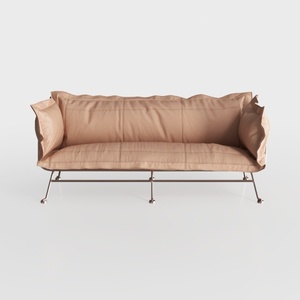

Modern Minimalist Leather Metal Frame Sofa 3D Model

Minimalist Fluted Solid Wood 6 Drawer Dresser 3D Model

Vintage Brown Leather Modern Sofa With Contrast Stitching 3D Model
Looking to transform your space? Homestyler is your go-to online design platform! With its easy-to-use design tool, stunning 3D renderings, and an abundance of DIY tutorials, you can effortlessly create and visualize your dream home. Dive into inspiring design projects and unleash your creativity today!
Projete agora para LIVRE
































