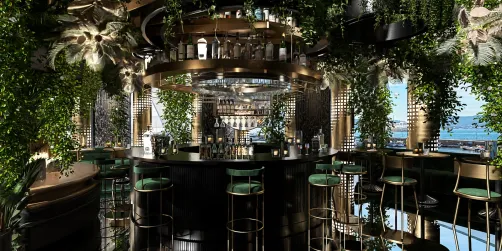
Modern Living Space Design
The 'Modern Living Space' design theme synthesizes two cutting-edge architectural aesthetics: Cold Minimalism and Futuristic Waterfront. It represents a high-concept residential interior that prioritizes spatial clarity, material honesty, and immersive environmental connection—especially through expansive glazing, monochromatic palettes, and intelligent integration of light, water views, and digital-age functionality. This scene transcends traditional room typologies (e.g., living room or bedroom) to embody a holistic, lifestyle-driven environment where minimal structure meets futuristic expression—ideal for urban apartments, coastal residences, or tech-forward lofts. Effective indoor space planning here demands harmony between austerity and warmth, geometry and fluidity, and human scale with panoramic ambition.
Design Challenges & Common Pitfalls
Designers often struggle with balancing the starkness of cold minimalism against the inviting humanity required for daily living—resulting in spaces that feel sterile or emotionally detached. Over-reliance on reflective surfaces (e.g., polished concrete, glass, stainless steel) without tactile contrast (wood, wool, linen) can undermine comfort. Poorly scaled furniture or underutilized waterfront views dilute the core narrative. Additionally, integrating smart-home elements or ambient lighting without visual clutter remains a persistent technical and aesthetic hurdle. Homestyler design tips emphasize using AI-powered spatial simulation to test sightlines, material layering, and daylight progression before finalizing layouts—ensuring the space feels both visionary and livable.
✅ Prioritize Visual Flow & Spatial Continuity
Cold minimal and futuristic waterfront spaces thrive on unbroken sightlines and seamless transitions—between indoors and outdoors, between zones (e.g., living-to-dining), and across vertical planes (floor-to-ceiling glazing, flush-mounted fixtures). Avoid visual barriers like bulky partitions or mismatched ceiling heights. Instead, use consistent material runs (e.g., continuous stone flooring extending onto a terrace), aligned baseboards, and recessed lighting to reinforce flow. Homestyler AI enables real-time path-of-sight analysis and automatic alignment snapping—critical for achieving precision in open-plan modern living space planning.

Eliane Siciliano’s work titled '.' masterfully applies this principle: she uses floor-to-ceiling windows as the primary architectural frame, aligning the sofa, dining table, and pendant chandelier along a single axial line that extends visually into the daylight beyond. With Homestyler AI, she likely leveraged the 'Sightline Preview' tool to confirm uninterrupted views from multiple seated positions—turning passive glazing into an active spatial connector. Her minimalist furniture selection avoids visual noise while maintaining ergonomic rhythm, proving that continuity isn’t about emptiness—it’s about intentional alignment.
Start Designing Now✨ Curate Material Contrast with Intentional Restraint
True cold minimalism isn’t monotonous—it relies on subtle, textural juxtaposition: matte vs. polished, warm wood grain vs. cool metal, soft upholstery vs. rigid concrete. Limit material families to three maximum (e.g., white oak, brushed nickel, off-white microfiber) to preserve calm, but assign each a distinct functional and sensory role. Avoid decorative excess; instead, let material integrity speak—exposed steel beams, honed terrazzo floors, or seamless acrylic shelving become quiet protagonists. Homestyler design techniques support rapid material-swapping with photorealistic rendering, allowing designers to evaluate tactile hierarchy before committing to specs.

Suzette Kauffeld’s 'The Blue Whale' demonstrates this restraint with elegance: she pairs pale ash wood dining chairs with a matte-black steel table base and integrates living greenery as organic texture—no ornamental trim, no busy patterns. Using Homestyler AI’s ‘Material Harmony Checker’, she likely validated chromatic neutrality and reflectivity balance across surfaces, ensuring the space feels serene yet layered. Her choice to anchor the composition with a sculptural chandelier—not as bling, but as a focal point of refined craft—shows how intentional material contrast elevates minimalism into emotional resonance.
Create Your Dream Space🌊 Leverage Contextual Connection—Not Just Views
A futuristic waterfront space must do more than show water—it must evoke it sensorially and structurally. Integrate reflective surfaces (mirrored ceilings, water-feature walls), horizon-aligned horizontals (low-profile furniture, elongated window bands), and color palettes derived from coastal light (pearl greys, seafoam accents, misty whites). Even in landlocked interiors, simulate context via acoustic design (gentle water soundscapes), biophilic patterning (wave-inspired tiles), or dynamic lighting that mimics tidal rhythm. Indoor space planning here requires mapping not just square footage—but perceptual geography.

Lizzy Evans’ 'Penguins' reimagines contextual connection through metaphor rather than literal view: penguin motifs and icy-blue botanicals transform an urban apartment into a whimsical, healing coastal microclimate. She uses Homestyler AI’s ‘Theme Generator’ to auto-suggest cohesive decor elements based on her ‘healing’ and ‘public playground’ tags—then manually refines them for tonal subtlety. The result is a space that *feels* like a waterfront sanctuary without requiring ocean adjacency—proving that contextual connection in modern living space design is as much about narrative intention as physical proximity.
FAQ
Q: Can I mix Cold Minimal and Futuristic Waterfront styles in one design?
Yes—this contest explicitly encourages hybrid interpretation. Top entries like Z 10’s 'Futuristic White' and Rosi Stamile’s 'Casa con vista al mar' merge austere geometry with fluid waterfront sensibility. Use Homestyler design tips: start with the Cold Minimal template’s structural grid, then overlay waterfront elements (curved seating, aqua-toned accent lighting, reflective surfaces) using AI-assisted layering tools.
Q: Do I need professional architecture knowledge to use the Homestyler AI design tool effectively?
No. Homestyler AI simplifies complex indoor space planning with intuitive drag-and-drop, auto-scaling furniture, and real-time lighting simulation. Top contestants—including students and hobbyists—leveraged its 'Style Match' and 'Room Fit Score' features to optimize proportions and material cohesion without formal training.
Q: Are small apartments eligible for this contest’s 'Modern Living Space' theme?
Absolutely. In fact, compact units benefit most from cold minimal principles—strategic mirroring, multi-functional furniture, and visual expansion via glass and light. Sevenseas 96’s top-2 entry was created in a studio apartment layout; their success proves that modern living space planning thrives on intelligence, not square footage.
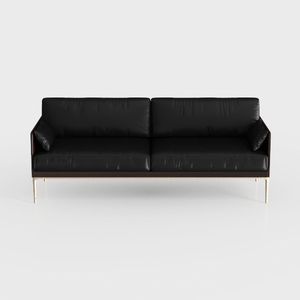
Modern Minimalist Black Leather Wooden Frame Sofa 3D Model

Minimalist Black Metal Round Side Table 3D Model
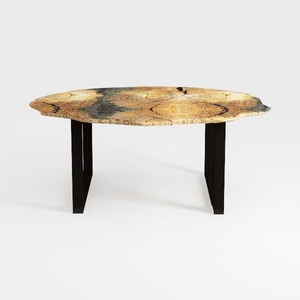
Starry Night Table, Moon Coffee Sofa Table, Large
Homestyler offers an easy-to-use online design tool with stunning 3D renderings, a vast collection of interior projects, and helpful video tutorials—perfect for bringing your home design ideas to life effortlessly.
Projete agora para LIVRE