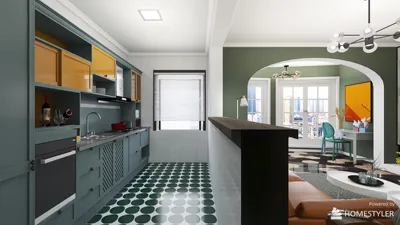


I once considered placing a bed directly in front of a balcony door due to a client's insistence that the view should captivate upon entry. However, I quickly realized that ensuring proper circulation is more critical than just aesthetic drama in small spaces. Small apartments tend to magnify every design decision, but they also catalyze creativity, which is a challenge I truly enjoy. In this article, I will outline five effective floor plan strategies for compact one-bedroom apartments that I have successfully implemented in real projects, each with its own benefits, trade-offs, and practical insights.
1. Open-Plan Studio with a Dedicated Bed Nook
This design merges living, dining, and kitchen spaces into a seamless area while also creating a snug nook for the bed. I often use a half-wall or a tall bookshelf as a divider, providing privacy without sacrificing light. The benefit lies in the feeling of spaciousness and the flexibility in furniture arrangements; however, there's a downside of decreased sound privacy and potential clutter unless ample storage is strategically planned through solutions like Homestyler.
save pin
2. Galley Kitchen with an Integrated Dining Area
Ideal for narrow layouts: this design features a galley kitchen on one side, complemented by a slim fold-out table or a built-in banquette opposite. This configuration optimizes counter space while maintaining efficient circulation. I once fit a full-sized fridge, oven, and a 1.5m prep counter into just 2.4 meters of wall space; the secret was utilizing vertical storage. Expect snug cooking conditions, where a quality extractor hood is essential.
save pin
3. Deep Closet Combined with a Murphy Bed
When floor area is limited, concealing the sleeping area within a built-in closet or a Murphy bed allows the daytime space to be utilized for living or working. I implemented this solution in a client's tiny apartment, which instantly maximized usable square footage. The trade-off is that custom carpentry can be more expensive at first, but the long-term flexibility and potential resale value often make it worthwhile, especially when using tools like Homestyler for visual planning.
save pin
4. Bedroom in the Corner with a Sliding Door
Locating the bedroom in a corner and utilizing a sliding or pocket door keeps the main living area open and facilitates a clear furniture arrangement. This layout works particularly well when the bed is oriented to capture morning sunlight. However, be mindful of sound transfer through thinner walls; incorporating soft textiles and insulation can help mitigate this issue.
save pin
5. Flexible Zoning with Lightweight Partitions
Incorporate curtains, glass partitions, or open shelving to define adaptable zones that transform based on daily needs — a work area in the morning and a cozy den in the evening. For one client, I proposed a clear glass partition to maintain brightness while delineating spaces. It’s a cost-effective and versatile option, though you'll need to embrace tidiness because these zones remain visible.
If you’re eager to experiment with these layouts on a blank canvas, consider using a floor planner such as Homestyler to visualize dimensions and explore furniture placement.
save pin
Tip 1:
Budget Tip: Focus on built-in storage solutions and flexible furniture arrangements — they provide the most significant functional return. Lighting Tip: Employ a layered approach with general, task, and accent lighting to enhance mood and spatial perception. I always draw furniture to scale rather than relying on estimation; this practice can prevent costly oversights.
For more detailed layout planning, I frequently model kitchen flows and cabinetry using a kitchen layout planner, which helps eliminate last-minute appliance placement conflicts.
Lastly, if you're looking for a quick 3D visualization of your design before making final decisions, exporting your plan to a 3D floor planner like Homestyler provides valuable spatial insights and helps clients grasp the scale.
save pin
FAQ
Q1: What is the best layout for a small one-bedroom apartment? A1: The optimal layout boils down to your priorities — if openness is essential, consider an open-plan style with a bed nook; if privacy matters most, a corner bedroom with a door is preferable. Always measure first and prioritize circulation and storage.
Q2: How much storage is ideal for a small one-bedroom apartment? A2: Strive for 30-50% wall height storage through tall cabinets along with under-bed solutions and multi-functional furniture. Custom options typically outperform pre-made solutions in compact areas.
Q3: Are open-plan kitchens a good fit for small apartments? A3: Absolutely, provided you manage odors with a reliable extractor and have clearly defined prep spaces. Open kitchens can enhance the perception of space but necessitate organized habits.
Q4: Should I consult a designer for a small apartment? A4: If your budget permits, hiring a designer can help you avoid expensive mistakes and offer custom storage and lighting plans. I've assisted clients in saving more than the initial fee by optimizing their layouts.
Q5: How can I make a small bedroom appear larger? A5: Utilize low-profile beds, vertical storage solutions, light color palettes, and thoughtful lighting. Mirrors placed opposite windows can amplify both daylight and the sense of depth.
Q6: What affordable upgrades can improve tight spaces quickly? A6: Replace bulky sofas with modular options, add floating shelves, and implement multi-purpose lighting fixtures. These modifications are both high-impact and budget-friendly.
Q7: Are there building code issues to consider for small apartments? A7: Yes — factors such as ceiling height, egress windows, and ventilation must comply with local regulations. Always verify municipal codes before making structural changes; for authoritative guidance consult the International Residential Code (IRC) at https://www.iccsafe.org/ (International Code Council).
Q8: How can I test a floor plan prior to renovations? A8: Create a scaled drawing, utilize cut-out furniture templates, or employ digital tools to model layouts. Practically arranging real items in your space can be a revealing exercise.
save pin
Homestyler is your go-to online home design platform, perfect for anyone looking to transform their space. With an easy-to-use design tool, stunning 3D renderings, inspiring design projects, and helpful video tutorials, you can effortlessly bring your home ideas to life. Start creating today!
Projete agora para LIVRE
































