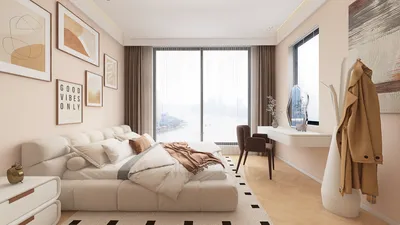


The evolving landscape of travel emphasizes streamlined experiences with cleaner interfaces, posing challenges for existing hotels that grapple with issues like noise, privacy, and inefficient operational layouts. Industry research consistently highlights a trend: AIA and NAHB data indicate that users prioritize versatile, multi-functional spaces over sheer square footage, a concept that a four-room floor plan can effectively showcase. As we move towards the future, it's essential to recognize the potential of such designs, particularly through tools like Homestyler, which assist in visualizing these innovative layouts.
Linear Bar, Shared Service Spine
Design Concept: Four rooms align beside a south-facing bar, while a centralized service spine on the north efficiently integrates plumbing, HVAC, and housekeeping pathways to enhance energy efficiency and adaptability.
Flow: The entry corridor serves as a guide: arrival → doorways → shared linen area → exit path; staff operate parallel to guests, maintaining separate pathways for efficiency.
Sightlines: The staggered positioning of room doors helps to mitigate direct facial glare; windows are aligned like layers of a user interface to highlight the city or garden views, softening the corridor experience.
Storage Solutions: The service spine accommodates storage for towels, carts, and vertical housekeeping supplies; each room is designed with a wardrobe measuring 600–800 mm and under-bed compartments for added convenience.
Furniture Arrangement: The queen bed measures 60" × 80" and serves as the principal component; a desk of 48" × 24" is incorporated fluidly, while a lounge chair is comfortably situated; bathroom modules measuring 5' × 8' align with the service spine grid.
Conclusion: This design serves as a robust framework for midscale hotels, promising resilient services, a serene guest experience, and maintenance requirements that remain predictable over five years.
save pin
Paired Suites with Central Junction
Design Concept: Two front and two rear rooms converge at a central junction, featuring a space for vertical circulation and a flexible micro-lobby that can adapt for co-working during slower periods.
Flow: Guests enter through the junction into their respective rooms, while staff utilize a discreet door within the junction to access service routes—maintaining two distinct paths that harmonize operational efficiency.
Sightlines: The junction introduces a carefully managed reveal: an art wall as the focal point, complemented by directional lighting and wayfinding features to ease navigation.
Storage Solutions: The junction includes a closet for supplies; every room features a 24" deep wardrobe and luggage shelf, along with a shared linen area concealed behind a flush panel.
Furniture Arrangement: A mix of king and queen beds with modular headboards is utilized, maintaining clearances of 30" for circulation; a convertible bench can serve dual purposes as additional seating or luggage storage.
Conclusion: This configuration is ideal for boutique hotels, translating vibrant social dynamics into tranquil rooms—flexible junctions ensure operational agility while guests appreciate the thoughtful design.
save pin
Courtyard Cluster, Quiet Perimeter
Design Concept: Four rooms encircle a small light court; the perimeter walls are reinforced for sound insulation, fostering a peaceful environment with natural light contributing to well-being.
Flow: A looped corridor wraps around the light court; room entrances are strategically offset to prevent congestion; staff can move through discrete service entrances outside this main corridor, ensuring a clean separation of movement paths.
Sightlines: Upon entering each room, guests experience a visual progression of soft walls, textured plants, and a view of the sky; these layered visuals reduce distractions and guide guests toward relaxation.
Storage Solutions: The shared cache at the courtyard level contains housekeeping lockers and fold-down workspaces; in-room built-ins provide ample linear storage (10–12 ft) without bulkiness.
Furniture Arrangement: Low-profile beds and 18" nightstands conform to the acoustic design, while slim desks (40") and wall-mounted consoles facilitate open pathways.
Conclusion: This cluster meets the anticipations of wellness-oriented travelers—favoring less square footage with increased clarity; the coming years will benefit quiet spaces supported by effective service channels.
save pin
Final Thoughts
A four-room hotel layout emerges as an efficient hospitality model, transforming corridors into functional pathways and service spines into reliable frameworks. Variants of this four-room configuration—from bar to courtyard—offer privacy, optimal flow, and operational clarity without unnecessary expansion. The hotels that successfully thrive will be those adapting their room designs like modular software, progressively evolving over time; in my view, the most intelligent hospitality spaces won’t necessarily be larger—just more thoughtfully designed, showcasing tools like Homestyler for optimized layout planning.
Homestyler is your go-to online platform for transforming home design dreams into reality. With its user-friendly design tool, stunning 3D renderings, and a wealth of inspiring DIY video tutorials, you'll master your interior design projects effortlessly. Start your creative journey today!
Projete agora para LIVRE
































