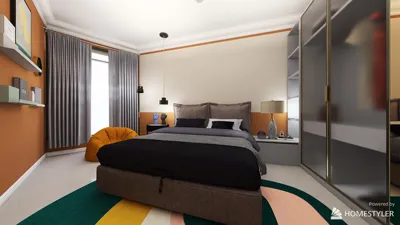


In today’s digital age, immersive experiences like those offered by virtual reality platforms such as Stranger Than Heaven invite us to rethink how our living spaces can support new forms of entertainment and interaction. As technology integrates seamlessly into everyday life, designing home environments that accommodate cutting-edge gadgets and promote comfortable, engaging experiences becomes essential. Thoughtful spatial planning and adaptable furniture can transform any room into a personal sanctuary for both relaxation and innovative digital exploration.
There’s a unique kind of frustration that arises when you rearrange furniture only to realize it makes the space less functional. The sofa might block a window, the rug could look awkward from certain viewpoints, or the natural traffic flow might get disrupted, making daily movement inconvenient. This often happens after spending a considerable amount of time physically moving pieces around without a clear plan.
To avoid such trial-and-error, using a furniture layout planner provides a clear advantage. Before physically shifting any furniture, these tools allow you to visualize arrangements from a bird’s-eye 2D perspective to check spatial clearances, and from an eye-level 3D view to experience how the room will feel. What typically takes nearly an hour of trial can be accomplished in a matter of minutes with such digital solutions.
This article explores the mechanics behind furniture layout planners, highlights the top free options available, and offers detailed strategies for spacing and positioning furniture by room type to make planning more effective.
The Core Challenge in Furniture Arrangement
Most errors in furniture placement stem from insufficient planning rather than the act of moving pieces. Usually, people form a mental picture of a new setup and test it blindly, often resulting in issues like cramped walkways or awkward sightlines.
Humans are notoriously poor at visualizing spatial dimensions accurately—how much floor area a couch takes up compared to the room, or the clearance needed for chairs being pulled out, or the viewing angle relative to a TV. Misjudgments lead to discomfort and poor room functionality.
Furniture layout planners serve as verification tools—highlighting spatial conflicts before any furniture is moved. Their value lies in confirming whether your envisioned arrangement is truly practical rather than simply stimulating creativity.
What to Expect from a Quality Free Furniture Layout Planner
Free planning tools differ widely in utility. The best ones share these crucial attributes:
- Furniture rendered to accurate, real-world dimensions, reflecting sizes of standard sofas, beds, chairs, etc., enabling precise space planning rather than generic placeholders. - Ability to input exact room measurements, not just approximated shapes, ensuring clearance calculations are reliable. - Inclusion of a 3D visualization feature in the free tier to assess the room’s feel and sightlines alongside the essential 2D overhead view. - No restrictive limits on the number of primary furniture pieces per room, allowing realistic layouts that truly represent furnished spaces.
Among free options, Homestyler stands out by meeting these criteria: it provides accurate dimensioning, supports precise room outlines, offers full 3D viewing without additional cost, and imposes no caps on furniture items, making it highly practical for comprehensive planning.
Room-Specific Guidelines for Furniture Placement
Each room demands unique considerations when arranging furniture:
- Living Room: Define a focal point such as a TV, fireplace, or window and orient seating accordingly. Maintain a conversational distance no greater than 8 feet between seats and ensure clear traffic paths of at least 36 inches in main walkways. - Bedroom: Position the bed so it’s visible from the entrance but not directly in line with the door, maintaining at least 24 inches clearance on each side for circulation and about 36 inches on the dressing side. Consider fixed elements like wardrobes before deciding. - Dining Room: Allow at least 36 inches clearance around the dining table—18 inches for the chair and 18 inches for movement behind seated guests. Sometimes table size is dictated by such clearance needs rather than room size alone. - Home Office: Place the desk near a side window for natural light without screen glare, and face forward or sideways toward the door to minimize distractions. Arrange storage and seating based on the desk’s position.
Maximizing the Use of Furniture Layout Planners
A common pitfall is treating these planners simply as a way to confirm existing ideas rather than tools for exploration. To get the most out of them:
- Begin by mapping out fixed constraints—room size, door swings, window placement, and immovable elements. - Experiment with at least three different furniture configurations to discover optimal flow and function. - Use the 3D view to assess spatial feel, openness, and sightlines rather than focusing on decorative aspects like color or texture.
Frequently Asked Questions
Can I determine if new furniture will fit using a layout planner? Absolutely. By entering the exact dimensions of new pieces, you can test potential placements and clearances before buying, reducing the likelihood of returns due to sizing errors.
Are furniture dimensions precise in free tools? With platforms like Homestyler, furniture items reflect real-world measurements, and many even allow manual resizing to match specific items you may own or consider purchasing. Always cross-reference with manufacturer specifications.
Do I have to draw walls for these planners? Most require outlining the room to create accurate spatial data, which typically takes only a few minutes but ensures all clearance measurements are reliable.
Starting Smart Yields Better Results
The optimal furniture layout is rarely the arrangement conceived without considering spatial constraints. Successful setups balance room measurements, traffic flow, sightlines, and how the environment feels from a person’s viewpoint—not just a simple overhead plan.
Using a furniture layout planner like Homestyler enables you to finalize designs confidently in the browser before moving any physical pieces, saving time and improving satisfaction with your living spaces.
Ready to begin designing? Use Homestyler’s free room layout tools to draw your space, add your furniture, and preview your arrangement in realistic 3D before lifting a single item.
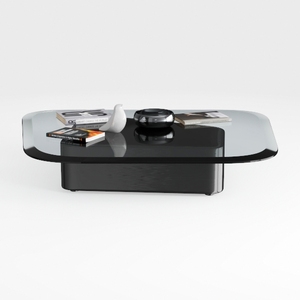
Modern Black Glass Top Solid Wood Base Coffee Table 3D Model
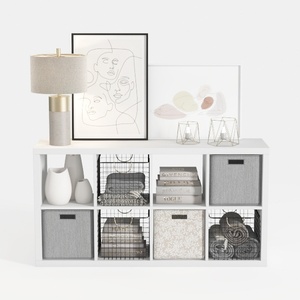

Modern Marble Top Fluted White Solid Wood Round Coffee Table 3D Model
Homestyler offers an easy-to-use online design tool with stunning 3D renderings, a vast collection of interior design projects, and helpful DIY video tutorials—making it simple and inspiring to create your perfect home space.
Projete agora para LIVRE
































