


Direct Answer
Heavy materials like quartz and granite demand reinforced support for laundry room countertops employing closely spaced brackets, wall studs, or cabinet bases to safely bear their substantial weight. Stone countertops usually weigh between 18 and 25 pounds per square foot, so unsupported areas must be minimized to avoid sagging or damage from vibrations above washers and dryers.
The durability of laundry countertops hinges on three critical factors: proper bracket spacing, secure stud anchoring, and effective vibration isolation. These determine whether the countertop remains intact for decades or develops cracks and loosens within a few years.
Quick Takeaways
Introduction
Having designed numerous laundry rooms over the last decade, I've observed a common trend: homeowners often desire quartz or granite countertops over washers and dryers but rarely consider structural support until problems arise such as sagging.
The core issue is straightforward. Laundry countertops often stretch across two large appliances, resulting in a significant unsupported span that must bear considerable weight. Quartz and granite countertops can weigh over 200 pounds across a typical laundry setup. Without appropriate reinforcement, this weight strains brackets, wall anchors, and drywall over time.
In renovation projects I've been involved with, initial installations appeared stable for the first year. However, small cracks in backsplash caulk or noticeable flexing during washer spin cycles indicated that the structural design was insufficient.
Planning a layout first is essential. Tools like Homestyler allow you to visualize appliance spacing and countertop arrangements before construction, simplifying the identification of where support points are necessary.
This article delves into the engineering principles behind heavy laundry countertops, including load calculations, bracket positioning, vibration mitigation, and reinforcement strategies used by professionals.
save pin
Weight Differences Between Laminate, Wood, Quartz, and Granite
Key Insight: The load-bearing needs of a laundry countertop vary greatly depending on the material’s weight.
Installation errors often stem from assuming all countertops require similar support. Actual weight disparities between laminate and granite can exceed fourfold.
Typical weights per square foot for various countertop materials:
For a standard six-foot laundry area, this translates to:
Additionally, vibrations from front-load washers spinning at up to 1,200 RPM increase stress. The support system must withstand both static weight and dynamic movement.
The Natural Stone Institute advises robust mechanical support and strict span limits for natural stone because, while it has impressive compressive strength, its resistance to bending is comparatively low.
Calculating Span Limits for Laundry Countertops
Key Insight: For stone countertops over laundry appliances, the safe unsupported span generally falls between 24 and 36 inches depending on thickness.
The most frequent unsupported span in laundry rooms occurs above washers and dryers combined, typically measuring 54 to 60 inches wide—too wide for unsupported stone surfaces.
Recommended maximum span lengths:
Professionals often address this by:
For longer countertops, using tools like Homestyler that map appliance placement and countertop spans in 3D can highlight where additional support is essential before starting construction.
save pin
Best Brackets and Support Hardware for Heavy Countertops
Key Insight: Steel brackets concealed beneath the countertop offer the most dependable support for heavy stone slabs placed over laundry appliances.
Over time, lighter L-brackets tend to loosen because washer vibrations gradually enlarge the screw holes.
Better options include:
Recommended spacing between brackets for stone countertops is:
Common mistakes include placing brackets only at the edges, leaving the center unsupported—exactly where vibration stress is greatest.
save pin
Answer Box
The safest method to support quartz or granite laundry countertops involves anchoring steel brackets directly into wall studs every 16 to 24 inches and limiting unsupported spans above appliances. Combining these brackets with cabinet bases or wall cleats creates the most stable, long-lasting setup.
Stud Placement and Wall Reinforcement Strategies
Key Insight: The strength of stud anchoring is critical since drywall alone cannot support the heavy loads from stone countertops.
While drywall anchors might hold lightweight shelves, they fail quickly under the combined load of washer vibrations and heavy stone.
Effective reinforcement methods include:
In cases where stud locations don't align with bracket spacing, inserting wood blocking between studs is a reliable remedy.
Reducing Vibration Transfer From Washing Machines
Key Insight: Without isolation measures, washer vibrations gradually weaken countertop supports.
Many guidelines overlook this factor. Even well-installed stone countertops can loosen over time because rapid spin cycles transmit vibration through walls and brackets.
Techniques to reduce vibration transfer include:
Manufacturers like Whirlpool and LG note that front-load washers can generate significant vibration if loads become unbalanced during spin cycles, highlighting the importance of structural reinforcement above these appliances.
Designing Supports for Long Laundry Countertop Runs
Key Insight: Long countertops benefit most from multiple layers of support rather than relying on a single structural element.
In expansive laundry rooms, countertops often span 8 to 10 feet across several appliances or folding stations. A single type of support seldom suffices over such lengths.
A robust structural combination I recommend includes:
For complex layouts, using planning software like Homestyler helps create precise laundry room floor plans before installation, facilitating accurate placement of supports where loads concentrate.
save pin
Final Summary
FAQ
Can quartz countertops be installed directly over washers and dryers?
Yes, but strong support brackets must be anchored into wall studs, and unsupported spans must be limited to carry the weight safely.
How much weight does a quartz laundry countertop generally add?
Quartz typically weighs between 18 and 22 pounds per square foot, meaning a six-foot countertop can weigh over 200 pounds.
What is the safest bracket spacing for heavy stone countertops?
Professionals usually install brackets every 16 to 24 inches to prevent sagging in granite or quartz installations.
Is center support needed for laundry countertops?
When the span above appliances exceeds 36 inches, center supports such as a divider cabinet or reinforcement bar are strongly recommended.
Which brackets are best for supporting quartz countertops over washers and dryers?
Heavy-duty steel floating brackets anchored into wall studs are the most reliable choice.
Is granite stronger than quartz for laundry countertop use?
Both materials are strong, but granite can be slightly more brittle under bending stress, making proper support even more vital.
Can drywall anchors securely hold granite laundry countertops?
No, stone countertops must be anchored directly into studs, blockings, or structural framing.
What are standard support requirements for granite laundry countertops?
Granite installations typically call for stud-mounted brackets spaced between 16 and 20 inches, with restricted unsupported spans.
References
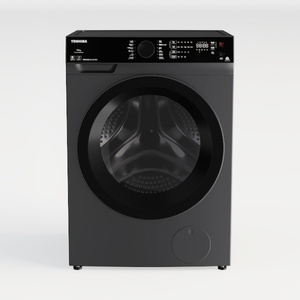
Kenmore 4.5 Cu. Ft. Front Load Washer with Stain

LG WM6998HBA Ventless Washer/Dryer Combo LG

Euhomy Portable Dryer, 1300w, 2.65 Cu.Ft. Clothes
Homestyler offers an easy-to-use online design tool paired with stunning 3D renderings, a variety of interior design projects, and helpful DIY video tutorials—perfect for bringing your home design ideas to life with confidence and creativity.
Projete agora para LIVRE
































