

Direct Answer
The Harry S. Truman Building's offices are arranged more by their bureau functions than by a strict hierarchical order. Different wings and floors host regional diplomatic bureaus, policy offices, and administrative units, striking a balance between security, teamwork, and operational efficiency. In effect, closeness between related groups often takes precedence over formal departmental ranking.
Quick Takeaways
Introduction
Many assume that the State Department offices within the Truman Building are set up with leadership on upper floors and other staff below; however, after examining several government building layouts and engaging in institutional floor planning, it becomes clear that working relationships influence space allocation more than job titles.
Located in Washington, DC, the Harry S. Truman Building is the headquarters of the U.S. Department of State. Hosting numerous bureaus responsible for diplomacy, regional affairs, and global policy management, it spans over two million square feet and resembles a small city more than a typical office environment.
One common misconception among analysts and researchers is to think that departments are strictly divided by fixed boundaries. Instead, offices are deliberately located to promote collaboration, akin to how large organizations model internal pathways when planning building layouts and departmental interactions prior to construction or renovations.
In the following sections, we will explore the general organizational structure of the headquarters, identify key bureaus’ locations, and explain how the layout mirrors the realities of modern diplomatic operations.
save pin
Overview of the State Department Headquarters Structure
Key Insight: The Truman Building's design clusters functions to support diplomatic work rather than creating isolated departmental towers.
Situated on a full city block in Foggy Bottom, the building has expanded several times since its initial construction in the 1940s. Its layout integrates long administrative corridors with specialized office areas devoted to policy-making, diplomatic coordination, and international initiatives.
Functionally, the building operates on several structural levels:
From an architectural standpoint, it was conceived with vast connecting corridors instead of separated towers. This approach, according to the U.S. General Services Administration, enables the building to adapt to shifting departmental needs without frequent major redesigns.
Major Bureaus Located in the Truman Building
Key Insight: Most core diplomacy bureaus are based within the Truman Building, making it central to U.S. foreign policy coordination.
Several influential bureaus hold their principal offices here, encompassing both regional and thematic units shaping foreign policy.
For example:
Alongside regional teams, functional bureaus share the space, such as:
This organizational mix clarifies why the distribution of offices in the U.S. State Department headquarters initially seems intricate. Proximity allows regional policy experts to work closely with issue-centered specialists for swift coordination.
save pin
How Office Locations Reflect Department Functions
Key Insight: Office placements inside the Truman Building typically reflect workflow connections more than official ranking.
In large institutions, how close teams are situated directly impacts productivity. This principle strongly influenced the internal arrangement of the State Department offices.
Common layout patterns include:
From a planning view, this resembles strategies used by big organizations that create collaborative zones when designing complex workplaces. Digital tools for modeling office interactions and circulation paths are often employed to minimize communication barriers.
Interestingly, some of the most dynamic spaces are informal—shared conference rooms and lounges positioned between bureaus encourage spontaneous diplomatic coordination.
save pin
Administrative vs. Diplomatic Office Zones
Key Insight: Administrative units tend to be located in separate clusters supporting diplomatic functions without interfering with them.
Not every office in the building is involved directly with diplomacy. Thousands of staff members provide essential services like logistics, IT, security, and personnel management.
Administrative areas typically include:
Maintaining a buffer between these zones and the diplomatic bureaus protects sensitive activities like briefings and negotiations from disruptions.
This arrangement aligns with a wider government facility planning principle: vital operational infrastructure should be accessible but unobtrusive.
How Interdepartmental Collaboration Influences Layout
Key Insight: The Truman Building's interior intentionally fosters teamwork among policy teams that must respond quickly to global events.
Diplomatic challenges rarely fall within a single bureau. For instance, a crisis in Eastern Europe may require synchronized efforts among regional experts, economic advisors, and security personnel.
To accommodate this, planners have emphasized:
This strategy explains why the building’s layout can appear intricate to visitors. The seemingly complex design is a deliberate network optimized for seamless collaboration.
Examples of Key Offices Within the Building
Key Insight: Several prominent offices within the Truman Building serve as hubs for operational and diplomatic coordination.
Although staff assignments evolve, certain offices remain central anchors in the building's structure.
Examples include:
These spaces act as decision centers where diplomatic strategies are coordinated across multiple bureaus.
For researchers mapping such complex environments, examining detailed floor plans and departmental diagrams can clarify how the State Department organizes internal movement and collaboration.
save pin
Answer Box
The Truman Building arranges offices mainly on diplomatic roles and collaboration requirements. Regional bureaus, policy specialists, and administrative staff are positioned to facilitate rapid communication rather than rigid hierarchical separation.
Final Summary
FAQ
What offices are located inside the Harry S. Truman Building?
The building houses the Secretary of State’s office, regional diplomatic bureaus, policy planning teams, administrative departments, and operational support units.
Which departments occupy the Truman Building?
Key regional bureaus such as European and Eurasian Affairs, Near Eastern Affairs, and East Asian and Pacific Affairs have their headquarters there.
Are all State Department employees based in the Truman Building?
No; many employees work in adjacent annexes, overseas embassies, or other federal offices throughout Washington, DC.
How many staff work inside the Truman Building?
Thousands are employed in the complex, though exact numbers vary due to organizational changes and remote work.
Why does the office layout appear complex?
Decades of expansions and changes aimed at promoting diplomatic collaboration shaped the intricate structure rather than simple departmental separation.
Where are the main State Department offices located within the Truman Building?
Leadership suites, regional bureaus, and operational units spread across multiple wings and floors to ensure both security and accessibility.
Can the public tour offices inside the building?
Public access is generally restricted; most areas require security clearance due to the sensitive nature of diplomatic work.
How is the State Department headquarters’ office distribution planned?
Space design prioritizes collaboration between bureaus, secure meeting environments, and efficient pathways among diplomatic teams. Tools like Homestyler can assist planners in visualizing these complex layouts for optimization purposes.
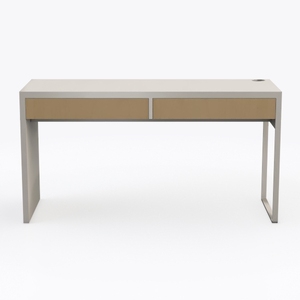
Minimalist Two Tone Solid Wood Office Desk With Drawers 3D Model
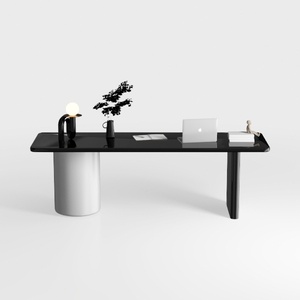
Modern Minimalist Black Glossy White Metal Office Desk 3D Model

Minimalist White Solid Wood Kids Study Desk With Shelves 3D Model
Homestyler offers an easy-to-use online design tool with stunning 3D renderings, a vast collection of interior projects, and helpful video tutorials. It’s perfect for bringing your home design ideas to life, whether you're a beginner or a seasoned DIY enthusiast.
Projete agora para LIVRE
































