

Creating an elegant and intuitive marriage hall that accommodates hundreds of guests involves more than just aesthetics—it epitomizes essential space planning, ergonomics tailored for human experience, and effective lighting strategies. My design philosophy for Ashirwad Marriage Hall focuses on maximizing flow and comfort while keeping the core of the ceremony intact. Research points to the significant effect of spatial design on guests' experiences and operational efficiency. For instance, Gensler's Workplace Research highlights how well-organized circulation and spatial diversity enhance user satisfaction, a concept that directly applies to event venues where wayfinding, designated zones, and sound management contribute to overall comfort. The WELL v2 standards further emphasize the measurable advantages of proper lighting and sound control, which include reduced stress and enhanced social interactions in spacious environments.
Effective capacity planning is grounded in factual evidence. The Illuminating Engineering Society (IES) suggests lighting levels of 100–300 lux for hospitality circulation areas, and 300–500 lux for specific areas like dining and buffets, favoring color temperatures in the range of 2700–3000K to maintain a warm, celebratory atmosphere. Psychologically, the color palette plays a crucial role; warm shades such as gold and soft reds foster social interaction, while softer greens and neutrals help manage arousal and lessen fatigue—ideally suited for lengthy ceremonies. These guidelines inform my repeated applications in large banquet venues.
Flow is the key to a well-functioning event space. Research from Steelcase on shared environments underscores the importance of clearly defined activity areas to minimize friction and enhance comfort. In the context of a marriage hall, this means thoughtfully arranging the route for the procession, seating areas, dining services, photo backdrops, and lounge spaces with clear ratios and visual markers. For larger weddings, I typically allocate around 45–55% of the net usable space for seating and circulation, 15–20% for dining, 10–12% for the stage and ritual area, 8–10% for back-of-house and vendor zones, and the remaining for lounges, photo opportunities, and children's areas. These proportions can be adjusted based on cultural traditions and service styles, ensuring the hall remains intelligible and efficient.
Spatial Planning: Zoning, Ratios, and Flow
I begin by dividing the hall into three main sections: the ceremonial core (including the stage and mandap), the guest seating area, and the service perimeter. It's essential that the ceremonial core is aligned for clear visibility, adhering to a 1:1.6 stage-to-proscenium ratio for a visually pleasing effect. The guest seating is organized into modular clusters—either tables seating 8–10 or rows of chairs with a spacing of 900–1000 mm center-to-center to ensure readable and safe aisles. The service perimeter accommodates buffet lines, beverage stations, and quick clean-up areas with aisle widths of 1.8–2.4 m to prevent congestion. When necessary, I utilize a room layout tool like Homestyler to simulate traffic flow during peak transitions (such as arrivals, post-ceremony movements, and meal services).
Entry, Reception, and Navigation
Guests typically form their impressions within the first 30 seconds of arrival. A clearly defined drop-off route, canopy for shade, and direct sightlines to the registration or welcome desk can greatly reduce clutter. I prefer a three-zone arrival setup: an inviting photography space, an efficient check-in and gift area, and a smooth transition into the main hall. Navigation should be supported by vertical signage—gentle banners, floral arrangements, and decoratively placed lighting to guide movement. Primary aisles should measure between 2.4–3.0 m, with secondary ones at 1.5–1.8 m. For wheelchair accessibility, maintaining a minimum width of 900 mm, 1.5 m turning radii, and ramp slopes no steeper than 1:12 is crucial.
Stage and Ritual Design
An effective stage design ensures intimacy while remaining visible from the back of the hall. I aim for a platform height of 600–750 mm, complemented by a buffer of 1.8–2.4 m in front for photographers and family members. Proper lighting to illuminate the couple should reach between 300–500 lux, ideally at a temperature of 2700–3000K and a high Color Rendering Index (90+) to flatter skin tones. Employing layered backdrops—using soft fabrics, greenery, and reduced reflective surfaces—can minimize glare during photography sessions. Side wings should be allocated for rituals, musicians, and close family, alongside dedicated pathways for audio-visual equipment to avoid accidents.
Dynamic Seating Arrangements
For gatherings of 300–500 guests, I advocate for cluster seating instead of straight rows. Breaking up rows with lounge spaces—comfortable seating arranged every 12–15 m—allows elderly guests and children to rest easily. In ceremony mode, maintaining 1.0–1.2 m row spacing and 1.5 m aisles for dining is essential. Should the event need to transition from ceremony to dining, using mobile seating arrangements and collapsible banquet tables allows for quick adjustments. An efficient interior layout planner can greatly assist in visualizing these changes; tools like Homestyler can effectively showcase layout transitions in moments.
Buffet, Service, and Vendor Coordination
The design of service areas determines whether an event feels tranquil or disordered. Dividing buffet lines into two-sided serving stations can halve the wait time. It's vital to keep hot and cold food stations at least 1.2 m apart for safety, with back-of-house pathways of 1.5–1.8 m. Staging areas for plated service should be located within 12–18 m of guest seating clusters. Vendor storage should be hidden behind acoustic panels or draped areas for visibility while still being accessible. Implementing waste separation for dry, wet, and compostable materials helps maintain cleanliness.
Lighting: Atmosphere, Structure, and Glare Management
Lighting sets the ambiance and drives behavior. Following IES recommendations, I target 100–300 lux for circulation, 200–300 lux in general seating, and 300–500 lux for tasks in the stage and buffet, all with warm color temperatures of 2700–3000K. A layered approach using ambient chandeliers, perimeter wall lighting, and focused accent lighting creates a hierarchy without overwhelming guests. Maintaining a low Unified Glare Rating (UGR) through diffusive textures and bounce lighting is imperative for the comfort of guests during extended events. I often configure three distinct lighting scenes: welcoming glow, focused ceremony lighting, and relaxed dining settings, each adjusted to suit the rhythm of activities.
Sound Management and Speech Clarity
Large venues can become quite loud. For optimal acoustic conditions, aim for reverberation times within 0.9–1.2 seconds through a combination of absorptive ceilings, fabric paneling, and soft furnishings. Positioning speakers to provide even coverage while avoiding excessively loud zones is essential; loudspeakers should not overpower the first rows of guests. Providing a quieter lounge area or space for parents with young children can offer reprieve from the noise. Key guidelines include avoiding parallel hard surfaces and incorporating textural diversity in the design.
Material Choice, Upkeep, and Environmental Responsibility
Events can be tough on surfaces. I recommend materials that offer high durability—slip-resistant flooring, stain-resistant fabrics, and modular carpet tiles in aisles for easy replacement. Utilizing low-VOC finishes supports better air quality, aligning with the WELL v2 concept aimed at creating healthier interiors. Where budget permits, opting for recycled materials for wall panels and staging elements is advisable. Making sure thresholds are level and minimizing trip hazards—in high-traffic areas like buffet spaces and photo-background zones—is crucial.
Color Schemes and Atmosphere
Using warm whites, champagne gold, and soft greens creates a balance between festivity and tranquility. Insights from Verywell Mind's color psychology suggest that warm tones encourage socializing, while calming greens provide balance—warm hues should be used near the stage and dining areas, with greens placed in lounges and transitional spots to minimize visual fatigue. Ensure that accent colors are concentrated for effect—strong focal palettes at the stage and neutral tones elsewhere maintain visual coherence.
Utilizing Outdoor Areas and Courtyards
If Ashirwad features an outdoor courtyard or terrace, consider it a valuable space for relaxation. This area can be utilized for photo sessions, light snacks, or children’s activities, providing a necessary pause from the main hall. Use soft perimeter lighting of 100–150 lux, and ensure that outdoor furniture is positioned thoughtfully against potential wind. Shaded areas and designated smoking spots should be carefully planned away from main pathways to maintain indoor air quality.
Safety, Accessibility, and Preparedness
Clear egress routes are essential. Exits must be clearly marked, with a minimum 1.2 m clearance in escape paths, while fire safety equipment should be both visible and easily accessible. Considerations for electrical redundancies (for AV and lighting systems), rain plans for outdoor features, and first aid stations near service areas are critical. Additionally, develop a micro-operations strategy, including a 10-minute reset between the ceremony and dining phases, sanitation protocols during peak services, and briefings for staff regarding guest movement.
Operational Guidelines: Staffing and Timing
Even the best-designed venues can fall short without efficient staff coordination. It’s crucial to pre-assign roles: ushers for seating transitions, a vendor coordinator to manage service pacing, and a floor manager to oversee lighting and sound setups. For clarity and cohesion, I utilize simple run-of-show boards positioned at the service perimeter—itemizing timelines for arrival, ceremony, photography, dining, and farewells—to ensure everyone is aligned on expectations.
Design Considerations for Ashirwad Marriage Hall
- Define guest count categories and flexible layouts (ceremony vs. banquet).
- Outline spatial ratios: seating/service/stage/back-of-house areas.
- Plan primary/secondary aisles and ensure wheelchair accessibility.
- Establish lighting setups based on activity needs with warm color temperatures and minimal glare.
- Incorporate acoustic elements to target reverberation times around 1.0 seconds.
- Choose materials that are durable, low-VOC, and easy to clean.
- Organize buffet logistics with dual-sided lines and maintain safety clearances.
- Design lounge areas and quiet spaces for guest relaxation.
- Integrate outdoor spaces to provide guests with decompression options.
- Finalize contingency plans and operational strategies prior to event day.
Common Questions
Q1. How much room should I allocate per guest for seating?
A1. For ceremony seating, estimate approximately 0.8–1.1 m² per guest, including aisles; for banquet seating, allocate about 1.2–1.5 m² per guest. These figures facilitate comfortable movement and service.
Q2. What are the ideal lighting levels for creating a warm, photogenic ambiance?
A2. Aim for 200–300 lux in general seating, 300–500 lux on stage and buffet areas, and 100–300 lux for circulation, maintaining a color temperature of 2700–3000K with a high CRI. These levels correlate well with IES standards and enhance appearance.
Q3. How can I prevent congestion in buffet lines?
A3. Implement dual-sided serving stations, maintain aisles of 1.8–2.4 m, and separate hot and cold food stations by at least 1.2 m to alleviate pressure on queues.
Q4. What are the most effective acoustic treatments for large halls?
A4. Use a combination of absorptive ceilings, fabric wall panels, and soft furnishings to achieve a reverberation time between 0.9–1.2 seconds. Ensure even coverage from speakers without excess volume.
Q5. What colors keep guests engaged while minimizing visual strain?
A5. Warm neutrals and gold accents near focal areas encourage social engagement; muted greens and taupes in lounges can help regulate arousal and reduce fatigue, in line with color psychology insights.
Q6. How can I ensure the hall is accessible to all guests?
A6. Maintain a minimum clear width of 900 mm for doorways, 1.5 m for turning radii, ramps installed at 1:12 or shallower slopes, and at least one continuous accessible route to seating, stage view, and restrooms.
Q7. What is the recommended stage height and buffer zone?
A7. For mid-sized halls, a stage height between 600–750 mm paired with a front buffer zone of 1.8–2.4 m is beneficial, optimizing sightlines for photography and ensuring safety.
Q8. How should I manage events that transition from ceremony to dining?
A8. Utilize mobile seating banks and folding tables, preset storage areas, and plan for a 10–15 minute reset duration. Employ a room design visualization tool to verify movement clearance.
Q9. Which materials are best suited for handling heavy event use?
A9. Opt for stain-resistant textiles, slip-resistant flooring, modular carpet tiles for aisle areas, and low-VOC finishes to enhance air quality and simplify maintenance efforts.
Q10. How can I effectively utilize outdoor spaces?
A10. Set up shaded areas for seating, deliver soft perimeter lighting of 100–150 lux, ensure that furniture is arranged to accommodate wind patterns, and distinctly separate smoking areas from guest pathways.

Meridian Furniture 77054Natural Everson Collection
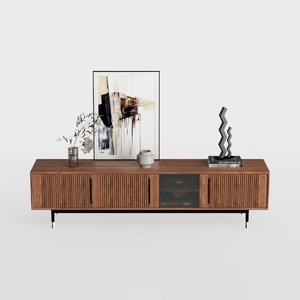

Modern Minimalist Walnut Fluted Door TV Cabinet 3D Model

Minimalist Brown Velvet L Shaped Sectional Sofa 3D Model
Homestyler is your go-to home design platform, perfect for both beginners and seasoned designers. With its user-friendly online design tool, stunning 3D renderings, and an abundance of DIY video tutorials, you can effortlessly create and visualize your ideal space. Transform your home design journey today!
Projete agora para LIVRE
































