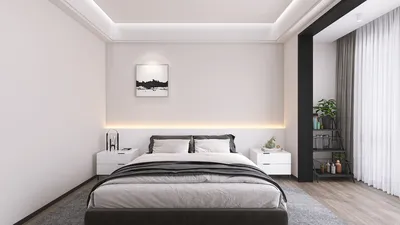


I once worked with a client who required that the patch behind a radiator remain completely undetectable. In my attempt to sand it down smoothly, I accidentally went through the drywall paper, which only exacerbated the issue. After a frantic repair session and some important lessons learned, I discovered that small repairs can be virtually invisible if approached correctly, particularly when utilizing a tool like Homestyler for 3D visualization to evaluate how light interacts with the repaired area.
Feather-sand and blend the edges
When removing peeling paint, I always employ fine-grit sandpaper to feather the edges of the area, allowing the new coat to smoothly adhere to the old. This method creates a nearly imperceptible transition; however, patience is key—rushing can lead to noticeable dips.
Tip: Sand in broad, gentle arcs and finish with a light scuff pad prior to priming to achieve an even surface sheen.
save pin
Use chemical strippers carefully for stubborn layers
In cases where there are multiple layers of paint or oil-based paint, a gel stripper can be extremely helpful—it allows you to remove old paint with minimal sanding. While effective, it does have a strong odor and requires good ventilation, protective gloves, and thorough cleanup.
Budget tip: Inexpensive strippers may work, but they can be time-consuming; professional-grade gels are pricier but often reduce surface damage and expedite the preparation for color matching.
save pin
Take a sample for a spectrophotometer or DIY chip book
I usually take a small paint chip (approximately 1 inch by 1 inch) from the cleanest area to my paint supply store for accurate color matching, or I photograph the area under consistent lighting for future reference. While modern machines are quite advanced, they can’t assess texture or sheen variations—therefore, it's essential to apply a small test swatch on the wall first.
For improved accuracy, I employ a straightforward color sampling technique: I remove a tiny patch to expose the original paint, allow it to dry, and then head to the matcher.
save pin
Prime, then paint in layers to match sheen and texture
Priming is essential—it seals the repaired area and guarantees that the topcoat adheres like the rest of the wall. When performing color matching, start with thin initial coats and build up several light layers to control sheen and absorption.
Potential hiccup: If the existing paint has faded, even the correct formula can sometimes appear mismatched until the surrounding area is painted or the new patch is slightly aged.
save pin
Match under the same lighting and finish with texture tricks
Lighting plays a crucial role. I always evaluate the patch at the same time of day and use identical bulbs to ensure a solid match. For replicating texture, small stippling or rolling techniques can imitate the original finish—something I successfully applied when overcoming my radiator repair challenge.
Minor challenge: Textured finishes can be difficult to replicate; occasionally, blending a slightly larger area may yield a better result with less hassle.
save pin
FAQ
Q1: Can I sand paint off without damaging the drywall?
A1: Yes, as long as you use fine grit (120–220) and sand gently. Maintain a light touch and check frequently to avoid exposing the paper layer underneath.
Q2: How can I determine if the old paint is oil-based or latex?
A2: A little denatured alcohol on a small area—if the paint softens, it’s latex; if it doesn’t, it’s likely oil-based. Testing beforehand can help you avoid using incompatible strippers or primers.
Q3: Is a spectrophotometer color match reliable?
A3: Spectrophotometers provide precise color matching, but they cannot assess texture or sheen, so always conduct a test patch under real lighting conditions to confirm accuracy.
Q4: Do I need a primer after removing paint?
A4: Almost always. Primer seals patched areas and evens out absorption, ensuring that the final coat looks uniform; skipping this step may result in noticeable edges or uneven sheen.
Q5: How should I address lead-based paint concerns?
A5: If your home was constructed before 1978, it’s important to test for lead-based paint before sanding or stripping. The EPA offers guidance here: https://www.epa.gov/lead. For positive results, employ certified contractors and adhere to lead-safe practices.
Q6: What’s the most economical way to achieve a good color match?
A6: Take a clean, dry paint chip from a discreet area and obtain a matched sample from a well-regarded store. Test the match in situ and make adjustments with slight tints if necessary.
Q7: How can I blend a patch so it’s undetectable?
A7: Feather the edges, apply primer to the area, use multiple thin coats of the matched paint, and recreate the original texture with the same roller or brush. Consistent lighting during checking is vital.
Q8: When should I repaint the entire wall instead of simply spot-repairing?
A8: If the existing paint shows uneven fading or the texture is complicated, repainting the whole wall is often the quicker and more consistent solution. If you're considering larger updates, think about how the repaired section will appear in a full room layout using tools like Homestyler.
save pin
Looking to transform your home? Try Homestyler! This user-friendly platform offers an intuitive online design tool, stunning 3D renderings, and a wealth of inspiring design projects. Plus, with DIY video tutorials, you'll have everything you need to create your dream space easily.
Projete agora para LIVRE
































