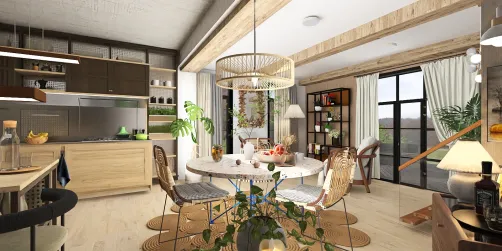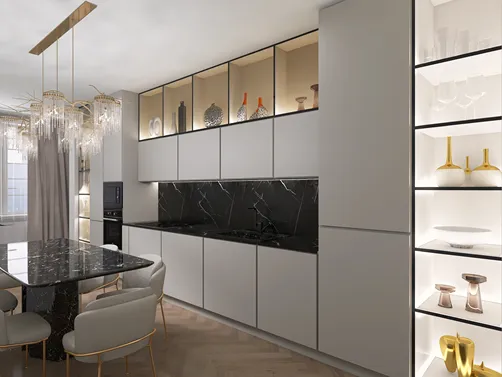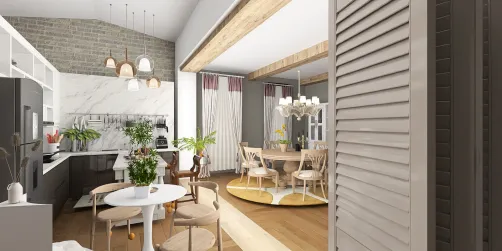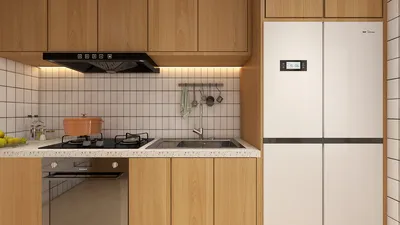
I once had a client who was determined that their pantry had to fit into a 24-inch closet because "we don’t have space for bulky cabinets" — and indeed, I quietly reveled in the design challenge. This project highlighted just how a thoughtfully organized pantry can transform a compact area, leading to the creation of my beloved sliding spice rail. Small spaces ignite significant creativity, and I’m excited to share five pantry concepts that I routinely implement in my projects, especially with tools like Homestyler to visualize the ideas.
1. Slim pull-out pantry
Picture a tall, narrow cabinet outfitted with full-extension drawers or pull-out shelves. It surprisingly maximizes storage capacity and offers complete visibility, eliminating the issue of forgotten items lurking in dark corners. The key requirements are high-quality hardware and precise measurements. I frequently incorporate this solution in galley kitchens; it’s moderately priced and an excellent choice for accessibility.
2. Open shelves adorned with baskets
Open shelving lends an airy sensation to a small pantry while allowing for a stylized storage solution — think woven baskets, labeled jars, and trays to conceal clutter while infusing personality into the kitchen. The drawback involves dust accumulation and the necessity for regular tidying, yet for those on a limited budget, this approach achieves an upscale look without the associated costs. My advice: use standard basket sizes to maintain tidy shelves and facilitate effortless swapping.
3. Vertical wall storage solutions
In situations where floor space is limited, I opt for vertical storage: mounted rails, pegboards, and slim racks are perfect for holding cans, utensils, and even paper products. I often create a quick visual pantry rendering to demonstrate to clients just how much additional space we can utilize effectively on the walls. It's a cost-effective and adaptable method, although heavier items still require lower shelves for safety considerations.
4. Concealed pantry under the counter
Don’t overlook the area beneath the counter — deep drawers or rolling carts tucked under a breakfast bar can serve as hidden pantries. I implemented this in a tiny studio, where a sliding drawer unit discreetly housed baking materials and small appliances out of view. This option is excellent for renters, though it’s essential to be aware that plumbing or structural features may limit drawer depth.
5. Multifunctional appliance bay
Imagine combining appliance storage with pantry space: a designated niche for the microwave with pull-out storage underneath keeps countertops uncluttered while providing dedicated food storage. I advise planning for electrical and ventilation needs early, as poor planning can lead to awkward modifications later. For clients wanting to visualize the transformation, I utilize tools like Homestyler to produce a compact kitchen blueprint, ensuring everyone appreciates the scale before any renovation begins.
FAQ
Q1: What materials are ideal for a compact pantry?
I favor laminated plywood for its durability and cost-effectiveness, while painted MDF offers a sleek finish. While solid wood boasts beauty, it’s often heavier and more expensive, which could be an issue for rentals or newer apartments.
Q2: How much shelf depth is necessary?
For canned goods and jars, depths between 10–12 inches usually suffice; for appliances, aim for 18–24 inches. It’s best to measure your most frequently used items fist to avoid unutilized space.
Q3: Are pull-out pantries worth the investment?
Absolutely, especially in narrow layouts — they significantly enhance visibility and access. While they incur a hardware-cost premium, they frequently save money by reducing wasted space and alleviating frustration over missing items.
Q4: How do I keep pantry food fresh within a small area?
Store dry goods in airtight containers, maintain a cool and dry pantry environment, and utilize FIFO (first-in, first-out) labeling. For thorough guidance on safe food storage temperatures and best practices, refer to USDA recommendations at https://www.usda.gov/.
Q5: What lighting options are effective for a pantry?
Motion-sensor LED strips are an affordable, easy enhancement that significantly improves visibility. They produce low heat and are long-lasting, making them ideally suited for small enclosed spaces.
Q6: Can renters enhance their pantry without permanent alterations?
Definitely: freestanding shelving units, tension rods, adhesive hooks, and rolling carts offer renter-friendly and reversible options. I've successfully revamped various rental pantries through these methods, achieving remarkable results.
Q7: How do I budget for a pantry overhaul?
Basic reorganizing and baskets can be achieved for under $200; custom pull-outs or cabinets typically range from several hundred to a few thousand based on hardware and finishes. Prioritize changes that enhance accessibility first, as that’s where you’ll experience immediate rewards.
Q8: What common erro should I avoid?
Avoid over-deepening shelves with the assumption that you will store more — an excess depth can lead to unused dead zones. Stick to appropriately measured solutions and mockups to ensure you cater to the items you actually possess.
Discover the ease of home design with Homestyler! This user-friendly platform offers an intuitive online design tool, stunning 3D renderings, and a wealth of design projects and DIY video tutorials. Transform your space and unleash your creativity effortlessly!