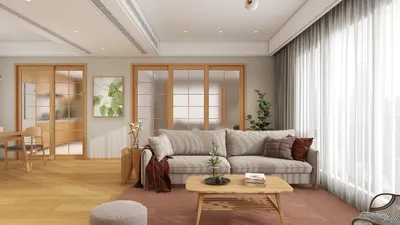


As an interior designer with over ten years of experience, I’ve observed that the perfect sectional can transform a living room completely. With current trends emphasizing multifunctional spaces and adaptable layouts, even small rooms can become havens for innovative design. In this article, I’ll present ten sectional ideas for living rooms derived from my personal experiences and professional insights, showcasing that even limited spaces can inspire remarkable creativity, especially with tools like Homestyler.
1. Minimalist Sectional with Built-in Storage
My Perspective: I once collaborated with a client in a compact 55m² apartment, where a sleek, low-profile sectional featuring hidden storage beneath the chaise provided both style and a discreet place for extra blankets.
Advantages: This design maximizes storage in smaller living rooms and maintains a clutter-free environment, especially suited for modern minimalist interiors.
Disadvantages: The hidden compartments may not be deep enough for larger items, limiting their usability.
Suggestion: Pair this sectional with streamlined kitchen storage solutions to create a harmonious open-plan aesthetic.
2. L-Shaped Sectional for Room Division
My Perspective: In open-concept living spaces, an L-shaped sectional serves as a subtle divider between the living and dining areas.
Advantages: It naturally delineates spaces without the need for physical walls and provides additional seating.
Disadvantages: Thoughtful placement is necessary to prevent obstruction of walkways.
3. Modular Sectionals for Dynamic Layouts
My Perspective: I appreciate modular sectionals for clients who frequently entertain or enjoy altering room layouts.
Advantages: These versatile pieces can be rearranged into various configurations, perfectly catering to changing needs.
Disadvantages: If not styled carefully, modular sectionals can appear visually disjointed.
4. U-Shaped Sectional for Cozy Gatherings
My Perspective: U-shaped sectionals are ideal for families who relish movie nights together.
Advantages: They accommodate many guests and foster conversation and closeness.
Disadvantages: This design requires ample space and can dominate the room if not balanced well.
5. Luxurious Velvet Sectional
My Perspective: Once, I sourced a luxurious deep green velvet sectional for a loft; it instantly became the centerpiece of the room.
Advantages: Velvet adds a rich texture and vibrant color, creating a cozy ambiance.
Disadvantages: Velvet can be high maintenance and might wear out more quickly compared to other fabrics.
6. Low-Back Sectionals for an Open Feel
My Perspective: In spaces with low ceilings, a low-back sectional enhances the room's openness.
Advantages: It preserves sightlines and allows light to flow freely through the area.
Disadvantages: It may not provide adequate support for prolonged lounging.
Case Study: This design was particularly effective in a studio I developed, complemented by a glass backsplash to brighten the space.
7. Sectionals with Chaise for Ultimate Relaxation
My Perspective: Ideal for readers or nap enthusiasts, a sectional with a chaise is perfect for weekend lounging.
Advantages: It combines lounging comfort with additional seating options while fitting into corners nicely.
Disadvantages: Its placement is crucial to avoid blocking windows or pathways.
8. Two-Tone Upholstery for Added Style
My Perspective: In a Scandinavian-themed living room, I experimented with a two-tone sectional—light fabric on the main body and darker colors for cushions.
Advantages: This design breaks visual monotony and enables integration of various colors from the room’s décor.
Disadvantages: If the color palette isn’t well-coordinated, it can appear mismatched.
9. Compact Sectional for Studio Spaces
My Perspective: A small two-seater sectional can efficiently define lounging areas in studio apartments without feeling overbearing.
Advantages: This keeps proportions balanced and simplifies moving through tight spaces such as staircases.
Disadvantages: It offers limited seating, potentially necessitating additional chairs for guests.
10. Sectional with Integrated Side Table
My Perspective: This design is particularly advantageous in compact living areas where every surface is valuable.
Advantages: It enhances functionality and reduces the need for separate furniture pieces.
Disadvantages: Fixed side tables can limit rearrangement options.
Idea: I once complemented this sectional with wooden elements, adding warmth and enhancing the cozy atmosphere.
Conclusion
Whether you have a sizable area or a small room, a sectional can be the standout feature of your living area. It’s crucial to focus on intelligent design choices rather than feeling restricted by space. As highlighted by the American Society of Interior Designers, multifunctional furniture is essential in crafting stylish and practical small environments. Which sectional idea are you eager to try for your home with the aid of Homestyler?
FAQ
1. What is the ideal sectional shape for a compact living room? In confined spaces, L-shaped or petite sectionals are best for defining zones without overwhelming the area.
2. Can sectional sofas fit in studio apartments? Certainly! Even a small two-seater sectional can establish a separate seating area without crowding the room.
3. Are modular sectionals a wise investment? Definitely, particularly if you frequently move or enjoy rearranging your layouts. Modular sectionals adapt seamlessly to your needs.
4. What fabric works best for sectionals in busy homes? Performance fabrics or tightly woven blends are preferable, as they resist stains and have a longer lifespan, according to Consumer Reports.
5. How can I position a sectional in an open-plan layout? It can be used to divide spaces subtly, such as placing it back-to-back with a dining area.
6. Do low-back sectionals affect comfort? While they provide less head support, they create a perception of larger, brighter spaces.
7. How do I coordinate a sectional with my current décor? Choose colors that resonate with your existing palette and reflect the textures already present in your room.
8. Is it possible to design my own sectional layout? Yes! Online tools, including Homestyler’s design planner, allow you to visualize configurations and effectively organize compact living spaces.
Discover your dream home with Homestyler! This user-friendly online design platform offers a fantastic design tool, stunning 3D renderings, and a wealth of DIY video tutorials. Whether you're a novice or an experienced designer, Homestyler makes it easy to create beautiful spaces that reflect your style.
Projete agora para LIVRE
































