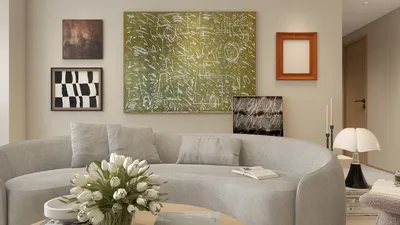


For over ten years, I've been involved in home design, and one thing remains constant — while color fashions may evolve, the combination of navy blue and gray boasts an enduring allure. Recently, I've noticed an increasing number of clients requesting this pair due to its elegance and adaptability. In my eyes, small spaces ignite true creativity, and I have employed these hues effectively to give living areas an impression of spaciousness, warmth, or dramatic flair. Today, I'm excited to present 10 design inspirations derived from my own work and expert recommendations that you can easily implement.
1. Minimalist Navy Feature Wall
In a recent project for a small apartment, we painted one wall a deep navy. The result? It centered the room beautifully without overwhelming it.
Benefits: Adds depth; highlights structural elements; complements lighter gray furniture, maintaining an open feel. As noted by *Architectural Digest*, deep blues in accent walls can elevate a room's sophistication level.
Drawbacks: In confined spaces with limited light, navy may create a sense of closeness on the wall — hence, lighting becomes crucial.
Suggestion: Incorporate a sizable artwork in metallic tones to break the monotony of the navy wall.
2. Gray Sofa Enhanced with Navy Cushions
I've incorporated this setup in various urban condos — a mid-gray sofa serves as a versatile base, while plush navy cushions provide a quick style enhancement.
Advantages: Easy to switch out with seasonal decor; offers a balanced mix of cool and warm tones; more cost-effective than investing in a new sofa.
Disadvantages: Excessive bold navy cushions may weigh down the sofa's appearance.
Introduce a textured throw for added comfort and contrast.
3. L-Shaped Arrangement with Color Distinction
In a client’s loft, we implemented an L-shaped seating configuration, painting one section of the wall navy while leaving the adjoining wall light gray. This choice visually separated the lounge area from the dining space in an open layout.
Pros: A smart method to delineate areas without using dividers; optimizes floor space. This is where L-shaped designs prove their worth in maximizing room.
Cons: May not fit every room layout — in narrow spaces, it could impede flow.
Budget Tip: Repainting is a budget-friendly way to create zones as opposed to structural changes.
4. Layering Rugs in Navy and Gray
By placing a dark navy rug underneath a lighter gray patterned one, you can create depth and warmth, particularly on wooden flooring.
Pros: Introduces richness in texture; easily defines seating areas; harmonizes with both contemporary and classic decor.
Cons: Layered rugs may pose a tripping hazard unless secured properly.
Utilize a non-slip underlay to maintain stability.
5. Velvet Navy Chair
A navy velvet chair swiftly becomes the centerpiece of a room — I love how it captures natural light in client photoshoots.
Pros: Provides a luxurious feel; pairs beautifully with matte gray wall finishes and metallic accessories.
Cons: Velvet requires more upkeep, especially in homes with pets.
Style Tip: Position it near a window to inject a touch of drama into the space.
6. Glass Coffee Table with Navy Complements
I once utilized a tinted glass coffee table to maintain openness in a small living area, while incorporating navy coasters and trays for subtle color continuity.
Pros: Enhances light circulation; contributes to a spacious feel; a blend of modernity and timelessness.
Cons: Glass surfaces readily show smudges — keep a microfiber cloth handy.
Underneath, gray baskets can discreetly provide storage solutions.
7. Navy Draperies with Gray Sheers
Mixing dense navy curtains with soft gray sheers can completely transform how a room feels from day to night.
Benefits: Offers complete control over light; creates a layered, refined look; when installed above the window frame, they can create a sense of height.
Drawbacks: High-quality curtains can be quite an initial investment.
Consider ready-made options for a quicker and more economical solution.
8. Two-Tone Open Shelf Wall
In a reading nook, we painted the interiors of open shelves navy while leaving the rest of the wall light gray. This transformed standard storage into a design highlight.
Pros: Draws the eye to displayed books and items; a cost-effective way to upgrade the area; compatible with various styles. Before proceeding, consider exploring storage ideas that combine colors.
Cons: Needs careful styling to prevent clutter from becoming too prominent against dark backgrounds.
Change display items seasonally to keep it engaging.
9. Mixed Metallic Accents with Navy and Gray
Incorporating brass or chrome elements into a navy and gray scheme can add instant sophistication. A single metallic floor lamp breathed life into my latest project.
Advantages: Creates contrast for added elegance; easy to swap or change as needed.
Disadvantages: Too many different metal finishes can create visual chaos — limit to two types at most.
Keep the surrounding decor muted to allow the metallic accents to stand out.
10. Large Navy Artwork Against Gray Walls
In a small living area, a sizable navy abstract painting on a pale gray wall delivered impactful drama without overwhelming the space.
Pros: A minimalist approach can yield a maximum visual impact; decorating goes quicker since fewer items are needed. This style aligns well with *Elle Decor*’s emphasis on minimalism.
Cons: Sourcing the ideal piece at the right scale can require effort. Sometimes, commissioning artwork proves beneficial, as I did for a penthouse.
Statement pieces also benefit from 3D previews before purchase, utilizing tools like Homestyler for visualization.
Summary
Small living rooms should be seen as a blank canvas for innovative and bold concepts. The union of navy blue and gray creates a tranquil, chic, and highly adaptable atmosphere. As recommended by *Houzz*, striking color contrasts work best when complemented by adequate lighting and thoughtfully chosen furniture. Which of these design ideas do you feel inspired to try in your own living area?
FAQ
1. What makes navy blue and gray a great choice for a living room?
They form a classic color scheme that harmonizes depth with softness, making them suitable for both modern and traditional settings.
2. Will opting for a navy accent wall cause my compact room to feel more confined?
Only in low-light conditions; when paired with light gray tones, it can maintain an airy ambiance.
3. How should I accessorize a navy and gray scheme?
Incorporating metallic finishes, wooden elements, and various textures will beautifully complement this color palette.
4. What flooring looks best with navy and gray?
Light wood, whitewashed oak, or pale tiles can enhance the contrast; darker flooring brings about a more dramatic ambiance.
5. Is it feasible to incorporate navy and gray within a rustic decor style?
Absolutely — incorporate linen, woven textures, and aged wood elements to preserve a cozy feeling.
6. Are there cost-effective alternatives for achieving this design?
Accent pillows, throws, and minor painting projects are accessible starting points to explore.
7. Does lighting significantly influence these colors?
Definitely — appropriate lighting ensures navy doesn’t appear flat. According to the *IES Lighting Handbook*, warm white LEDs work best.
8. Where can I find examples of similar color schemes?
Explore detailed visual representations through inspiring color layouts from past projects for some guidance.
Homestyler is your go-to online platform for home design! With its user-friendly design tool, stunning 3D renderings, and a wealth of DIY video tutorials, you can effortlessly create and visualize your dream spaces. Transform your home design journey today!
Projete agora para LIVRE
































