


Illusionary Living Space Design
The 'Illusionary Living Space' is a conceptual interior design scene inspired by the 'Design or Deceive? April Fool’s Interiors' challenge — a bold, rule-breaking typology where perception overrides physics. Rather than optimizing for function alone, this scene prioritizes cognitive engagement: it distorts spatial logic through gravity-defying elements, paradoxical scale relationships, chromatic dissonance, and layered visual cues that invite double-takes. It transcends conventional living room design to become an experiential canvas — one where walls dissolve into murals, ceilings host furniture, and thresholds blur between floor and sky. This is not just décor; it's interior space planning as narrative theater.
Design Challenges & Common Pitfalls
Designing illusionary spaces introduces unique complexities beyond standard interior space planning. Key challenges include maintaining spatial legibility while introducing ambiguity, balancing surrealism with user comfort and safety (e.g., floating furniture must still feel intuitively stable), and avoiding visual fatigue from excessive distortion. Common pitfalls include overloading the composition with competing illusions (causing cognitive overload), neglecting lighting logic (which undermines believability of effects like inverted ceilings), and misaligning scale — where oversized motifs or undersized structural elements unintentionally evoke disorientation rather than delight. Success hinges on intentional restraint and precise Homestyler design tricks: leveraging HDR environments, strategic transparency settings, and model-library assets with editable geometry to test perceptual thresholds before rendering.
Core Design Principles
🎭 Embrace Controlled Paradox
Introduce one dominant perceptual contradiction — such as an upside-down bedroom ('Il cielo giù, il prato su') or a staircase that dissolves into void — while grounding the rest of the space in coherent logic. This prevents chaos and directs attention to the intended 'aha' moment. Use monochromatic palettes or soft ambient lighting (e.g., 'g_Sky_Grassland' HDR) to reduce visual noise and amplify the illusion’s impact.

Rebecca Laghi’s 'Il cielo giù, il prato su' masterfully applies the Controlled Paradox principle in an illusionary living space by flipping ceiling-and-floor semantics — grass grows upward from the ceiling while sky occupies the floor plane. Using Homestyler AI design tools, she leveraged the 'felsenlabyrinth' HDR environment to unify light direction and atmospheric depth, ensuring the inversion feels immersive rather than jarring. Her minimalist layout avoids decorative clutter, letting the paradox dominate — a textbook example of how strategic interior space planning supports perceptual storytelling.
Start Designing Now🌀 Leverage Light & Transparency as Illusion Engines
Light isn’t just illumination — it’s the primary tool for constructing believable unreality. Use directional sunlight settings (e.g., 'sunlight': 1) to cast consistent, logic-defying shadows that reinforce floating or inverted forms. Combine transparent materials (glass floors, semi-opaque partitions) with reflective surfaces to dissolve boundaries and generate recursive depth. In Homestyler, adjust 'renderDetail.sunlight' and layer 'transparency' parameters on custom models to fine-tune ethereal ambiguity without sacrificing spatial coherence.

Graca Doutel’s 'Ascending Into a Dream: The Spiral Paradox' exemplifies Light & Transparency as Illusion Engines. Her monochromatic spiral staircase appears weightless because Homestyler’s 'g_Sky_Grassland' HDR delivers even, diffused daylight — eliminating harsh contrast that would anchor it to reality. She applied subtle transparency to balustrades and used matte wall finishes to mute reflections, allowing the form to hover visually. This reflects advanced Homestyler design techniques: manipulating material shaders and environmental lighting to achieve 'ethereal illusions' within rigorous interior space planning.
Create Your Dream Space🎨 Anchor Illusion with Narrative Texture
Every illusion needs emotional resonance — not just visual surprise. Integrate storytelling textures: hand-painted murals that extend beyond frames, tactile wall coverings mimicking sky or soil, or curated objects (e.g., astronaut figurines, anthropomorphic frogs) that contextualize the absurdity. These details transform optical trickery into lived-in wonder, making surrealism feel personal and intentional rather than arbitrary.

Beatrice Esan’s 'Whimsical Ascent' deploys Narrative Texture to ground its anti-gravity illusion: floating cushions are wrapped in rich, story-driven patterns; an astronaut and a headphone-wearing frog inject playful, human-scale mythos. Using Homestyler’s model library, she sourced stylized characters and layered them with 'g_tropical_beach' lighting to create warmth amid surrealism. This demonstrates how thoughtful interior space planning — pairing symbolic objects with calibrated ambiance — transforms a visual gag into an emotionally coherent illusionary living space.
FAQ
Q: Do I need professional 3D modeling skills to create illusionary interiors in Homestyler?
A: No — Homestyler’s AI-powered interface lets you generate high-fidelity illusionary scenes using intuitive drag-and-drop tools, smart material presets, and context-aware model suggestions. Focus on concept and spatial storytelling; the software handles rendering complexity.
Q: How can I ensure my illusionary design remains functional for real-world use?
A: Prioritize 'perceptual safety': maintain clear circulation paths, avoid true visual obstructions (e.g., use transparent railings instead of solid ones for floating stairs), and validate ergonomics via Homestyler’s measurement tools. Illusion should enhance — not compromise — usability.
Q: Are there Homestyler design tricks specifically for April Fool’s–style illusions?
A: Yes — leverage the 'April Fool’s Model Collection' (Model Library ID #669) for gravity-defying furniture, use 'HDR swap' to instantly shift mood (e.g., 'moonlit_golf' for nocturnal paradoxes), and apply 'AI Style Transfer' to convert realistic renders into painterly, dreamlike variants — all part of advanced Homestyler design techniques.
Q: Can illusionary interior space planning improve client engagement in real projects?
A: Absolutely. Clients remember emotional resonance — not just square footage. Presenting a 'Spiral Paradox' concept early builds excitement, communicates brand daring, and invites collaborative ideation. It’s interior space planning as experience design.
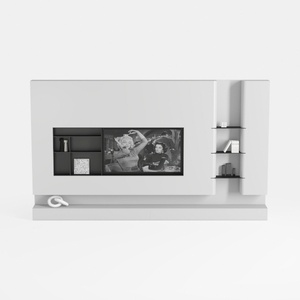
Minimalist White Wall Mounted TV Stand Cabinet With Open Shelves 3D Model
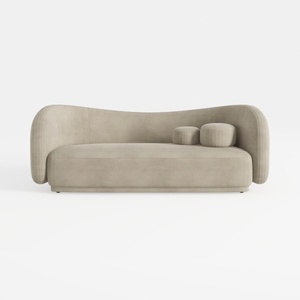
Minimalist Velvet Curved Living Room Sofa 3D Model
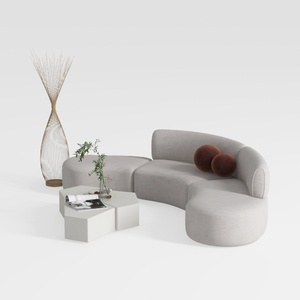
Minimalist Fabric Curved Sectional Sofa 3D Model
Homestyler offers an easy-to-use online design tool combined with stunning 3D renderings and a vast collection of interior projects. Plus, its helpful DIY video tutorials make bringing your home design ideas to life simple and fun.
Projete agora para LIVRE





