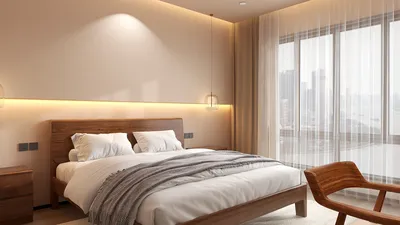


In my experience, I once installed a stunning pendant light that seemed ideal in theory, but I quickly learned that scale plays a crucial role when a client kept ducking under it upon entering — this was a clear lesson in lighting design. Such minor miscalculations illuminate that small spaces require grander ideas. I find small rooms to be my favorite design challenges; they compel one to optimize, prioritize needs, and use light creatively to enhance the environment.
This article will present five effective lighting inspirations that I implement in my projects to make compact rooms feel more expansive, brighter, and inviting. These recommendations blend design awareness, practical considerations, and budget-friendly options, allowing you to experiment at home.
1. Layered lighting: integrate ambient, task, and accent features
I begin every project by incorporating three types of lighting: ambient (general lighting), task (for activities like reading or cooking), and accent (to highlight art or architectural details). In small spaces, a single overhead fixture often fails—opt instead for a dimmable ceiling light for ambient illumination, a directed lamp for task lighting, and either wall washers or picture lights for accentuating features. The benefit is enhanced flexibility and depth, while the trade-off entails having more switches and slightly elevated initial costs; however, smart dimmers can simplify this.
save pin
2. Wall-mounted fixtures can maximize floor area
When square footage is limited, consider replacing floor lamps with wall sconces or swing-arm reading lights. I recommended swing-arm sconces for a studio client eager to maintain an uncluttered floor for yoga practice—this approach not only appeared cleaner but also created an illusion of more space. However, be aware that you will need basic wiring or plug-in alternatives, but the additional space often proves invaluable.
save pin
3. Use accent lighting to create the illusion of expanded walls
Incorporating hidden LED strips above cabinetry or behind crown molding can elegantly wash walls with gentle light, making surfaces appear to stretch outward. I installed warm LED tape above kitchen cabinets in a compact apartment, and guests consistently remarked how cozy and expansive the area felt. The key challenge lies in hiding the strips and choosing the right color temperature—use warm tones for living areas and neutral for workspaces.
save pin
4. Selecting the right color temperature and CRI is essential
Color temperature significantly affects mood: warm lighting (2700–3000K) creates a cozy atmosphere, neutral light (3500–4000K) appears cleaner in kitchens, while cool tones (5000K+) are ideal for task-centric areas. I always select fixtures with a CRI above 90 for spaces where color accuracy is vital—like kitchens, makeup areas, or art displays. There’s a down side, though: higher CRI lamps can be pricier, yet they dramatically reduce color distortion and avoid issues during renovations.
save pin
5. Mirrors and reflective surfaces can enhance brightness
Mirrors serve more than mere decoration; they can effectively reflect both natural light and artificial illumination, effectively doubling perceived brightness. When remodeling a bathroom, I strategically placed a frameless mirror opposite a vanity light, which transformed the small room into a much brighter space. The caveat is to position the lights and mirrors skillfully to prevent glare.
As you read through these suggestions, you might be eager to test out layout designs for yourself—using an online room planner can greatly assist with quick space planning and testing fixture placements and traffic flow. For detailed design, I often transition to more comprehensive tools for generating floor plans; I frequently utilize free floor plan creators to achieve precise dimensions and lighting positions. When finalizing the lighting scheme for a kitchen, tools like a kitchen layout planner are invaluable for ensuring that task lights are perfectly situated.
save pin
FAQ
Q1: What color temperature is ideal for a bedroom?
A1: I suggest using warm light (2700–3000K) in bedrooms to foster relaxation and enhance sleep quality.
Q2: How many lumens should I aim for in a small living room?
A2: Target approximately 1,500–3,000 lumens altogether, spread across various fixtures instead of relying on one bright source.
Q3: Are LED lights preferable compared to incandescent bulbs for smaller spaces?
A3: Absolutely—LEDs are more energy-efficient, emit less heat, and now offer high CRI options that accurately represent colors.
Q4: Should I consistently use dimmers?
A4: I generally advocate for the use of dimmers since they provide mood control and energy savings; just ensure your fixtures are compatible with LED drivers.
Q5: Can mirrors truly double the perceived brightness?
A5: Yes, mirrors greatly enhance light by reflecting it; positioning them across from windows or light fixtures yields optimal results.
Q6: How can I avoid glare from recessed or track lighting?
A6: You can minimize glare by using directional trims, baffles, or lower lumen outputs, along with incorporating ambient light layers to reduce contrast.
Q7: Where can I locate lighting standards and recommendations?
A7: The Illuminating Engineering Society (IES) publishes authoritative guidelines on recommended illuminance levels and practices, which you can find in their publications.
Q8: How should I choose CRI for makeup or kitchen areas?
A8: For accurate color rendering in makeup applications and food preparation areas, select a CRI of 90 or above—it’s worth the investment for authentic color accuracy.
save pin
Homestyler is your go-to online home design platform, perfect for unleashing your creativity! With its easy-to-use design tool, stunning 3D renderings, and a plethora of inspiring design projects and DIY video tutorials, transforming your space has never been easier. Start designing today!
Projete agora para LIVRE
































