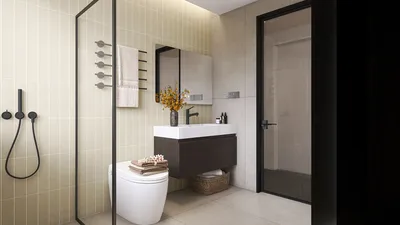


Transforming compact rooms into bright, airy spaces while maintaining privacy and sound control is achievable with glass walls. I create partitions that tactfully balance visibility and movement, ensuring optimal daylight management—principles applicable whether you're zoning a studio, designing a home office, or delineating a dining area. Research indicates that natural light significantly enhances well-being; the WELL Building Standard (WELL v2) links proper daylight access and glare reduction to improved comfort. Moreover, studies by Herman Miller underline that natural light is one of the most sought-after environmental features for employee satisfaction. In home environments, maximizing daylight not only lowers dependence on artificial lighting but also aligns better with our natural circadian rhythms.
The advantages of improved lighting extend beyond just mood enhancement. According to Steelcase research, having visual connections across different spaces fosters collaboration and awareness while still maintaining essential boundaries—ideal for semi-private home offices. The Illuminating Engineering Society (IES) recommends a typical task illuminance level of 300-500 lux for focused activities, which can be achieved in adjacent areas if a glass partition effectively preserves daylight distribution. If privacy poses a concern, using patterned, reeded, or frosted glass can manage translucency, allowing light in while minimizing direct visibility and glare.
Determine Functions Before Selecting Glass
Successful dividers begin with a well-defined purpose. I consider three key factors: visual privacy, sound absorption, and traffic flow. For spaces like living rooms meant for television viewing, low-reflectance glazing can minimize distracting reflections. In home offices, opting for laminated glass substantially improves sound insulation compared to regular tempered glass. When redesigning a studio apartment, make sure to plan for door swings or sliding track clearances, ensuring that the partitions don’t interfere with main pathways or furniture arrangements. Research from the Gensler Research Institute often finds that spatial clarity enhances task performance; thus, your partition should clearly delineate where activities take place and how individuals navigate those spaces.
Select the Appropriate Glass: Safety, Sound Isolation, and Care Requirements
For DIY projects, having code-compliant safety glazing is essential; tempered or laminated glass is the standard for any partitions. Laminated glass provides enhanced sound dampening and remains intact if damaged, while tempered glass is more impact-resistant but breaks into smaller shards. In bedrooms or busy traffic zones, I prefer laminated glass for a more serene acoustic environment; in wet areas like bathrooms, tempered glass with a privacy treatment is a practical choice. The thickness typically ranges from 8 to 12 mm for framed systems, and frameless doors can be 10 to 12 mm for added support. If condensation is a concern, selecting glass with easy-to-clean coatings and planning for necessary ventilation gaps is advisable.
Clear glass permits maximum views and natural light, making it optimal for small apartments where openness is crucial. Frosted or acid-etched options diffuse light to soften contrasts and enhance privacy—ideal for bedrooms or study spaces. Reeded glass offers vertical lines that subtly obscure silhouettes, adds textural interest, and helps minimize glare by scattering light. For family homes, patterned films provide flexibility, allowing for future updates to privacy needs at a low cost.
Frame Styles and Hardware That Simplify DIY Projects
The choice of frames can greatly influence both stability and installation complexity. Slim aluminum frames offer a modern aesthetic and resist corrosion, suitable for use near kitchens or bathrooms. Steel frames provide sharp shadow lines and narrow sightlines but may require specialized tools and rust prevention measures. Wooden frames can introduce warmth and add visual thickness, perfect for contrasting minimalist designs. For doors, sliding systems minimize swing clearance, ensuring smooth circulation; investing in soft-close tracks is advisable. Be sure to select gaskets and setting blocks that match your chosen glass thickness to mitigate vibration and ensure adequate support.
Focus on Layout: Proportion, Rhythm, and Clearance
I design modules with widths ranging from 450 to 900 mm based on room size, creating a uniform rhythm across panels. Ensure vertical mullions align with architectural elements—like window bays or ceiling beams—to prevent a chaotic visual experience. Maintain clear paths of at least 900 mm for comfortable movement, positioning door openings near natural circulation points. If you're exploring options, using a room layout tool like Homestyler can help visualize panel sizes, door placements, and furniture flows prior to installation.
Room layout tool
Illumination, Color, and Glare Control
Unchecked glass can create undesirable reflections and spikes in contrast. I counteract this with matte finishes opposite the divider and warm-diffuse light fixtures. For workspaces, aim for 300-500 lux at desk level according to IES guidelines, supplementing with task lights of 2700-3500K for comfort during evening hours. In living areas, aim for 200-300 lux of ambient light, complemented by accent lighting to maintain a cozy atmosphere. Pair glass dividers with neutral wall tones to help reduce glare; dark walls increase reflection and contrast, while stark white can inadvertently bounce light excessively. Color psychology suggests that softer neutrals create a calming effect, especially beneficial near partitions to minimize visual distractions.
Sound Comfort and Human Factors
Although glass alone is not a complete sound barrier, laminated panels with proper seals at the top and bottom can significantly cut down on sound transmission—especially for speech frequencies. Adding a door with continuous gaskets and drop seals is more effective than simply increasing glass thickness. Consider sightlines: partial-height walls, ideally between 2100–2400 mm in homes, facilitate ventilation while providing necessary separation. Ergonomically, design should avoid thresholds or tracks that create tripping hazards; flush sills or recessed tracks work better for daily movement.
Safety, Building Regulations, and Anchoring
Always check local regulations concerning safety glazing requirements in hazardous areas—near doors, in wet zones, or where panels may reach the floor. Select appropriate anchors for your material; for concrete, use sleeve or wedge anchors properly embedded; for wood, lag screws into the studs; and for drywall, avoid relying on hollow anchors for structural components. Consistently check for plumb and level, taking care to shim evenly to prevent shifting. Personal safety gear is vital: use cut-resistant gloves, eye protection, and suction cups for handling glass. If a piece exceeds your safe lifting capacity, enlisting the help of a professional glazier is recommended.
Step-by-Step Sequence for a DIY Build
1) Verify layout dimensions, module widths, and clearance for doors. 2) Mark and drill top tracks or head frames; confirm the ceiling structure. 3) Secure the sill or bottom track using continuous shims to ensure it remains level. 4) Install vertical mullions, checking they are plumb throughout their height. 5) Correctly position gaskets and setting blocks; carefully place panels using suction cups. 6) Fasten glazing beads or compression stops starting from the bottom. 7) Install seals, door hardware, and soft-close systems if required. 8) Caulk around the perimeter as necessary, allowing for ventilation gaps where appropriate. 9) Clean the glass using non-abrasive products and inspect for even reflections.
Material Sustainability and Care
Glass is highly recyclable, and aluminum frames generally incorporate recycled materials; using low-VOC sealants can improve indoor air quality, and selecting durable finishes will lower maintenance needs over time. Regular cleaning with pH-neutral solutions helps maintain clarity and prevents mineral buildup, especially in kitchens and bathrooms. As privacy requirements change, consider using removable films instead of replacing glass for a more economical and environmentally friendly approach.
Realistic Budgets and Timelines
I recommend breaking down expenses into categories for glass, framing, hardware, seals, and labor. While DIY efforts can yield substantial savings, allocate budget for professional assistance with heavy lifting or intricate cuts. Generally, weekend projects are feasible for straightforward installations up to 3-4 meters using pre-cut panels; however, more complex door systems and steel frames could take longer. Remember to measure twice and order once, as errors in panel sizing can lead to delays.
FAQ
Utilize safety glazing, either tempered or laminated. Laminated is ideal when sound insulation and retaining integrity post-breakage are crucial; tempered offers greater impact resistance, ideally used near baths.
Achieve balance with matte finishes opposite the glass, incorporate task lighting at levels of 300-500 lux as per IES recommendations, and consider frosted or reeded glass to minimize reflections and diffuse light.
Indeed, glass maintains daylight distribution throughout spaces, contributing to comfort goals associated with WELL v2 standards and supporting natural light preferences highlighted by Herman Miller studies.
Select laminated glass along with continuous seals and drop seals for door installations. These elements are effective in reducing speech frequencies compared to simply increasing thickness in residential spaces.
Choose aluminum for its durability and ease of installation, steel for ultra-sleek sightlines (with rust protection), and wood for its inviting look and suitability for DIY modifications. Ensure the frame selection aligns with the room’s function and humidity levels.
Common wall heights range from 2100–2400 mm. Full-height provides maximum separation while partial height ensures ventilation and a lighter visual effect.
Sliding doors optimize circulation and minimize spatial conflicts with furniture; swing doors allow for tighter seals and simpler hardware options. Choose according to clearance requirements and sound insulation needs.
Absolutely. You can apply removable frosted or patterned films to existing panels, providing a budget-friendly solution that avoids the need for glass replacement.
Utilize interior layout planners like Homestyler to visualize module widths, mullion spacing, and door placements, ensuring clearances and harmonious visual flow before making any commitments.
For work areas, maintaining a color temperature of 2700-3500K fosters comfort during evening tasks. In living sections, combining warm ambient layers with diffused accent lighting sustains an inviting atmosphere without harsh glare.
Homestyler is your go-to online home design platform, perfect for transforming your ideas into reality. With an easy-to-use design tool, stunning 3D renderings, and a wealth of DIY video tutorials, you can effortlessly create and visualize your dream space—no experience needed!
Projete agora para LIVRE
































