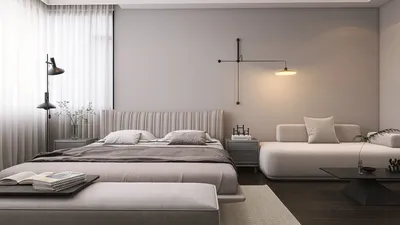


I’ve crafted numerous compact living spaces where couples share a unified bedroom-living area. The most effective designs harmoniously foster intimacy while establishing personal boundaries. The objective is to create flow, enhance storage, and maximize light, ensuring the space feels spacious rather than confined.
Define Your Intent: Shared Comfort with Individual Agency
In smaller shared environments, couples often oscillate between togetherness and alone time. A smart layout that promotes two task zones alongside a shared relaxation area minimizes friction in daily routines. Insights from workplace studies can be applied at home; for instance, Steelcase discovered that over half of employees desire better control over their environments to enhance well-being. This principle translates nicely to home design, with adjustable lighting, versatile seating, and movable barriers benefiting both inhabitants (source: steelcase.com/research). According to the WELL Building Standard, maintaining 300–500 lux at work surfaces and 2700–3000K in relaxation areas establishes a coherent environment that supports various activities (source: wellcertified.com).
Optimize Your Furniture Choices
Scale matters significantly. A typical queen bed measures around 60" x 80"; ensure at least 24–30" of clear space on each side to prevent nighttime collisions. For desks, a compact depth of 20–24" alongside a chair that can fully slide beneath the surface preserves walkways. Herman Miller’s ergonomic standards suggest maintaining a 90–100° angle for knees and elbows for comfort; therefore, selecting chairs with adjustable heights and narrow arms allows storage under a desk, freeing up floor area (source: hermanmiller.com/research).
Strategize Your Layout: Prioritize Flow
Start with the bed positioned against a long wall, ensuring a clear pathway from the entrance to the window. Where space is limited, consider replacing nightstands with wall-mounted shelves or a single shared ledge. To visualize different options quickly, use a room layout tool like Homestyler, allowing for rapid configuration adjustments—bed-centered, bed-cornered, and bed-flush—while keeping pathway widths in mind to prevent pinching.
Implement Layered Lighting for Atmosphere and Functionality
Adopt a three-tier approach to lighting: ambient (ceiling or cove lighting), task (bedside sconces, desk lamps), and accent (lighting on shelves or artwork). To minimize glare, choose diffused fixtures and aim for UGR ≤ 19 in task areas to reduce visual fatigue (IES guidance, ies.org/standards). Transitioning the warmth of the light from 3000K in the evening to 2700K late at night prepares the space for relaxation. Separate dimmer controls allow each partner to adjust brightness levels without disturbing the other’s comfort.
Explore Color Psychology: Tranquil Base with Vibrant Accents
Utilize soft, desaturated colors—such as mist gray, sand, and sage—to create a tranquil environment. Verywell Mind emphasizes that blue and green are seen as calming hues, while vibrant reds might induce excitement; in compact spaces, bold accents should be limited to textiles or a solitary wall to prevent overwhelming energy (source: verywellmind.com/color-psychology). Incorporate contrasting textures—like bouclé, linen, and matte wood—to enrich the space without causing visual clutter.
Invisible Storage Solutions
Design storage so that it blends seamlessly into the architectural framework. Full-height wardrobes with minimalistic handles and two to three internal zones—shared clothing, folded items, and personal storage—promote efficiency. Under-bed storage options or lift-up bases can introduce an additional 10–15 cubic feet in compact areas. A narrow height-adjustable dresser can function as a valet for daily outfits, helping streamline mornings.
Enhance Acoustic Comfort with Thoughtful Material Choices
Sound can become amplified in a small shared space. Employ a thick rug, an upholstered headboard, and lined curtains to absorb mid and high-frequency sounds. If the room is used for video calls, a soft pinboard behind the desk can help mitigate echoes. Opt for FSC-certified woods and low-VOC finishes; natural materials add a calming effect to the space.
Create Micro-Zones Without Physical Barriers
Utilize furniture layout and lighting to delineate spaces. Positioning a loveseat toward the window establishes a reading nook, while a desk nestled in a wardrobe corner creates a productive area. A streamlined console measuring 24–30" at the foot of the bed can act as a media or breakfast station without obstructing pathways. To enhance privacy, a lightweight folding screen can help one partner find solitude during calls.
Understand Spatial Ratios and Maintain Visual Harmony
Keep large pieces low and elongated; vertical elements should remain slender to maximize headroom and daylight. Aim for a visual ratio of 60/30/10—60% calm base (walls, significant textiles), 30% mid-tone furniture, and 10% accents. Repeating a motif (like ribbed wood, black metal lines) throughout two to three pieces can unify the space.
Focus on Ergonomics for Shared Home Offices
If a desk must accommodate two users, opt for a 48–60" surface equipped with dual task lights and a collective drawer. Chairs should provide lumbar support and adjustable seating; monitor placement should cater to eye level, around 43–49" from the floor based on individual height. Utilize a laptop riser to maintain a neutral neck position.
Balance Daylight, Privacy, and Restfulness
For optimal sleep, combine blackout shades with breathable sheers. Minimize reflective surfaces opposite the window to decrease glare over the bed. If one partner wakes early, a bedside sconce featuring a narrow beam and soft light allows them to read without flooding the room with brightness.
Cost-Effective Strategies with Design Impact
Focus on quality lighting, ergonomic seating, and tailored storage solutions. Paint, textile updates, and hardware changes can refresh the overall feel affordably. Invest in one standout piece—like a sculptural sconce or a texturally rich headboard—to enhance aesthetics without overcrowding the space.
• Position the bed against the longest wall; ensure pathways of at least 24–30".
• Feature a versatile surface: a slim console or desk with a depth of 20–24".
• Utilize wall-mounted lighting to optimize nightstand area.
• Design full-height storage with compartmentalization; under-bed drawers can provide additional space.
• Establish a reading nook through light and arrangement, avoiding sizable furniture additions.
• Experiment with setups using an interior layout planner like Homestyler before finalizing purchases.
Frequently Asked Questions
Q1: What is the ideal bed size for a small couple’s room?
A queen typically provides the perfect balance. If one side’s circulation drops below 24", consider a smaller queen or a wall-mounted shelf instead of a nightstand for extra space.
Q2: What brightness should task lighting achieve?
Aim for 300–500 lux at the desk and 200–300 lux at bedside for reading. Combine with warm 2700–3000K lighting for comfort in the evening, as advised by WELL lighting standards.
Q3: How can we diminish glare and eye strain in our space?
Select diffused ambient fixtures, use matte finishes near windows, and install task lighting with controlled beam distributions. Keep UGR ratings ≤19 in work areas for visual comfort based on IES practices.
Q4: Which colors create a calm yet lively atmosphere in a small room?
Employ low-saturation colors (such as sage and mist) with one or two vibrant accents (like ochre or midnight blue). Research suggests that blue and green promote calmness; restrict vibrant reds to a minimum.
Q5: How can two people effectively share a small workspace?
Include a shared 48–60" desk, two adjustable chairs, dual lighting fixtures, and sound-absorbing materials. Designate time blocks and utilize a folding screen for quick privacy during video calls.
Q6: What is the most efficient storage approach without creating clutter?
Incorporate full-height wardrobes with internal organization, under-bed drawers, and wall-mounted shelves that follow a unified material theme. Conceal smaller items in labeled bins to expedite decision-making.
Q7: Any strategies for improving sleep in limited spaces?
Use blackout shades combined with sheer curtains, warm dim lighting during the night, and ensure electronic devices are kept away from the bedside. Position the bed to avoid direct glare from windows and noisy appliances.
Q8: How do we select seating that fits our small room?
Opt for compact lounge chairs or a loveseat with slender arms. Ensure these chairs can tuck completely under desks, adhering to ergonomic standards for optimal comfort and adjustable heights.
Q9: What is the most significant upgrade on a tight budget?
Prioritize quality lighting and a comfortable chair. Add a textured rug along with new hardware; these modifications can enhance both comfort and perceived quality without high costs.
Q10: How can we avoid the feeling of claustrophobia in our compact living space?
Maintain low and linear larger furniture pieces, ensure clear sightlines to windows, and repeat a cohesive material palette. Use mirrors strategically to enhance light without adding visual clutter.

Baxton Studio Karine Mid-Century Modern Walnut Bro



Storkcraft Next Santos Twin-Over-Twin 5-in-1 Conve
Discover your creativity with Homestyler, the ultimate online home design platform. Its user-friendly design tool lets you craft stunning layouts, while impressive 3D renderings and a wealth of design projects inspire your vision. Plus, with DIY video tutorials, transforming your space has never been easier!
Projete agora para LIVRE
































