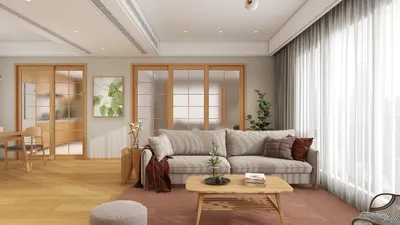


I once persuaded a client to replace their cumbersome bookcase with a sleek window desk complemented by a series of concealed drawers. Initially, they were not pleased with the loss of "shelf drama", but just three days later, they shared a photo of their tidy and cheerful study. This experience highlighted how constraints can ignite creativity, demonstrating that effective room planning can transform a compact study into a serene and spacious environment. In this article, I will outline five practical design inspirations that I employ in real projects, showcasing how to maximize both function and style in small study spaces, including the innovative use of Homestyler.
1. Wall-mounted fold-down desk with vertical storage
When space is at a premium, a wall-mounted fold-down desk provides a spacious work surface without requiring a permanent large piece of furniture. Pairing it with tall, slim cabinets or open shelving above allows for easy access to books and documents while maintaining open walking areas.
Pros: cost-effective, adaptable, perfect for multifunctional spaces. Cons: hinges must be durable, and careful cable management is essential — I always ensure there’s an outlet positioned just behind the desk to prevent cable clutter.
save pin
2. Incorporate light, reflective surfaces to enhance spatial perception
Utilizing light colors, a substantial mirror, and glossy or satin-finish cabinetry can significantly amplify the illumination in a compact study. I’ve replaced dark laminate with a warm white that reflects light beautifully, instantly making the area appear larger and more organized.
Advantages: enhances perceived space and uplifts mood; Disadvantages: dust visibility increases, so opt for textures that are easy to maintain. Budget-friendly tip: inexpensive mirror frames or lightweight mirrors can dramatically transform the space without straining your wallet.
save pin
3. Built-in benches offering storage and integrated lighting
Benches are often undervalued in compact studies as they provide seating, storage, and a snug reading nook simultaneously. I frequently design slim built-in benches beneath windows with drawers or lift-top storage, complemented by task lighting overhead for a functional and inviting corner.
This method benefits from effective 3D modeling to accurately gauge proportions and lighting prior to construction. That’s why I frequently utilize tools like Homestyler for quick models, enabling clients to visualize sightlines and storage depth before final decisions are made.
save pin
4. Establish zones using rugs, lighting, and low partitions
Even in small rooms of 8–10 m², you can create distinct ‘study zones’ by incorporating a rug to anchor your desk, a pendant light to highlight the workspace, and a slender shelf or plant divider for subtle separation. I once utilized a low shelf to discreetly conceal a cat bed while also minimizing lines of sight into the study — both functional and charming.
However, this approach requires discipline: multiple zones can lead to clutter, so I recommend implementing a daily five-minute tidying routine to maintain the study’s productivity.
save pin
5. Multi-functional furniture paired with subtle color zoning
My go-to tip for small studies is to select furniture that serves multiple purposes: a desk that also functions as a console, stackable stools that can be tucked away, or a cork wall panel that serves as a pinboard while also acting as a sound barrier. Combine this with a color accent on one wall to harmonize the room’s design.
If time is limited, utilizing AI-driven layouts can quickly generate various furniture arrangements, which I have found helpful for clients who need immediate solutions. Small studies benefit from experimentation, so don’t hesitate to iterate your ideas.
save pin
FAQ
Q: What’s the optimal desk size for a compact study?
For a laptop with additional workspace, widths of 100–120 cm are typically sufficient; for dual monitors, aim for 140–160 cm. The depth should be around 50–60 cm to ensure functionality without occupying excessive space.
Q: How can I enhance lighting in a tiny study?
Layer your lighting: use ambient ceiling lights, task lighting at the workspace, and a small accent lamp for added warmth. Opt for daylight bulbs for work areas and consider dimmers to adjust mood.
Q: Are built-in solutions worth the investment?
Built-ins optimize every inch of space and often lend a refined feel, although they come at a higher cost and limit flexibility. For those renting, modular units that mimic the look of built-ins can serve as a practical alternative.
Q: How should I choose colors for a small study?
Stick to a light base tone paired with a singular accent color for depth. Warm neutrals invite comfort, while cool tones enhance focus — be sure to test samples in varying light conditions.
Q: Is it possible for small studies to be ergonomic?
Absolutely — prioritize adjustability in your chair, desk height options (including sit-stand capabilities), and monitor placement. Even within limited spaces, a quality chair and proper screen height can prevent discomfort.
Q: What storage solutions are ideal for tiny studies?
Vertical open shelving, shallow cabinetry, and storage beneath seating are excellent choices. Regularly decluttering ensures effective storage; if you’re uncertain, take a photo of the area and create an inventory of what you utilize weekly.
Q: How can I quickly prototype a layout?
I suggest sketching on graph paper or employing an online room planner to experiment with layouts before making any furniture purchases. For more refined visualization, tools like Homestyler can assist in confirming size and lighting, helping to avoid expensive errors.
Q: Are there research-backed guidelines for designing small workspaces?
Indeed — organizations such as the American Society of Interior Designers (ASID) stress the importance of ergonomics, proper lighting, and storage as foundational elements for effective small workspaces. Adhering to these principles will ensure you cover all the essentials.
save pin
Transform your home design dreams into reality with Homestyler! This user-friendly online platform offers a powerful design tool, stunning 3D renderings, and a wealth of DIY video tutorials. Whether you’re a novice or a pro, you’ll find inspiration and guidance to create the perfect space.
Projete agora para LIVRE
































