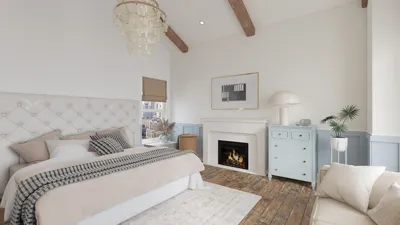


My focus is on designing small urban residences with a single, clear objective: maximizing every square foot without compromising tranquility or charm. In urban environments where the average size of newly constructed apartments has been shrinking over the last decade, key elements—like natural light, soundproofing, flow, and storage solutions—become increasingly important. Research by Steelcase indicates that employees who enjoy well-thought-out spaces report up to 17% higher engagement, illustrating how quality spatial design can have a significant effect on both mood and productivity, not just at work but in peaceful home settings as well. Additionally, the WELL Building Standard stresses the importance of visual comfort and natural light accessibility, offering guidelines to mitigate glare and promote circadian rhythms—essential in smaller homes where the availability of windows might be restricted. Consider using Homestyler to visualize these concepts effectively.
My design strategy revolves around lighting and human factors. According to the Illuminating Engineering Society, living areas should achieve between 150 and 300 lux, while task-focused spaces need between 200 to 500 lux. For optimal usability in tighter layouts, I typically aim for the higher end of these ranges in areas like desks and kitchen prep zones. Color choice also plays a vital role; insights from Verywell Mind's color psychology suggest that various shades can influence mood—cool blues can evoke tranquility, while greens can nurture balance. I employ these color strategies deliberately to visually expand spaces and mitigate overwhelming sensations in multifunctional rooms.
Plan A: Two Bedrooms + Flex Nook (Approximately 620–700 sq ft)
In scenarios where families or roommates share smaller living spaces, clearly defined functional areas are crucial. I organize entryways to create a buffer between private quarters and common areas, incorporating a compact vestibule complete with a shoe drawer and coat rail. The combined living-dining area is positioned along window lines to harness natural light, while a compact, L-shaped kitchen is tucked against the party wall. The layout features bedrooms located on opposite sides of the main space to minimize noise transfer and enhance privacy. Each bedroom offers at least a 9' x 10' footprint with 30 to 36 inches of clearance alongside beds for ergonomic accessibility.
To maintain smooth flow, circulation remains straightforward: a single line directs movement from the entry to the living area, avoiding dead-end hallways. Storage solutions are cleverly integrated within wall thicknesses—12-inch deep recessed cabinets and a sliding pantry adjacent to the kitchen. I favor pocket doors for the second bedroom and bathroom, optimizing swinging space. Sound comfort is a priority in communal living situations; incorporating soft materials like wool rugs and upholstered headboards can help, while sealing gaps with drop seals on doors can significantly reduce flanking noise.
Layering light is essential to enhance plan flexibility. In living areas, I specify ambient lighting in the range of 3000–3500K for a warm feel without the yellow tint. For bedside lighting, 2700K lamps aid in winding down, while I recommend 4000K task lighting for kitchen counters. The target for LED loads is 0.3–0.5 W/ft² with dimming options. If glare is a concern, selecting matte countertops and low-sheen finishes like eggshell paint can help diffuse reflections. When it comes to color, applying cooler, desaturated tones in circulation areas visually pushes walls outward, while a mid-tone accent behind the sofa can ground the space without making it feel smaller.
The arrangement of furniture influences behavior significantly. In multifunctional living-dining areas, incorporating a 60–72 inch sofa alongside a round extendable table helps avoid obstructions in flow. I utilize media consoles no deeper than 12–14 inches to ensure passages remain clear. Bedrooms are equipped with wall-mounted sconces and slender nightstands; built-in closet designs include upper storage compartments. For those looking to experiment with furniture layouts prior to finalization, using an interior layout planner like Homestyler allows you to mock up clearances and multifunctional zones effectively.
Plan B: Two Bedrooms + Split Bath + Linear Kitchen (Approximately 540–620 sq ft)
This layout is ideal for long, narrow urban sites, commonly found in older buildings. I position both bedrooms along the quiet rear side of the property, sizing them similarly to maintain balance. The living room is located towards the street where natural light can enter through the window, while a single-loaded galley kitchen occupies one wall. To alleviate the potential “tunnel” feeling of the corridor, I create a shallow study nook (24 inches deep) opposite the kitchen, which includes a fold-down desk and an acoustic pinboard.
The split bath design (with the toilet and sink separate from the shower area) enhances morning efficiency for two occupants. Utilizing pocket or barn-style doors preserves circulation flow. It's essential to keep hallway widths at a minimum of 36 inches, widening to 42 inches in areas with kitchen pinch points. For overhead lighting, I opt for continuous surface-mounted LED channels along the long axis and add under-cabinet task lights at 4000K for effective food preparation, while maintaining ambient lights at 3000K for balance.
To reduce echo, a frequent challenge in linear layouts, I employ various materials: cork or rubber flooring in the corridor absorbs impact noise, while fabric-wrapped panels behind the dining bench and heavier lined curtains across the street-facing window further enhance acoustics. In terms of sustainability, opting for FSC-certified plywood for built-ins and low-VOC paints improves indoor air quality.
Spatial Ratios, Visual Balance, and Ergonomics
In smaller residences, spatial ratios govern not just aesthetics but behavior. It is advisable to maintain a living zone ratio of approximately 1.6:1 to 1.8:1 for comfortable conversational spacing. A gap of at least 18–24 inches should be maintained between the coffee table and sofa edge. Desk arrangements should adhere to ergonomic norms, with visual distances to screens ranging from 20 to 28 inches, elbows positioned at right angles, and task lights placed on the opposite side of the user’s dominant hand to prevent shadowing. Seat cushions should be about 18 inches high, while dining tables should be set at a height of 28–30 inches to promote good posture.
Storage Strategy That Doesn’t Box You In
Vertical storage is your best ally. I integrate 84-inch-high wardrobes with upper compartments and pull-down hanging rails, as well as toe-kick drawers in kitchens for seldom-used items. Recessed wall niches (12 inches deep) in corridors can hold books and decorative objects without adding bulk. In longer rooms, concentrating storage on one wall keeps movement intuitive and avoids creating a cramped atmosphere.
Daylight, Color, and Mood in Compact Homes
Daylight is a precious resource we should protect. Position tall cabinets opposite windows to avoid blocking light. When windows are limited, opting for high light reflectance value (LRV) paints (85+ for ceilings and 60–70 for walls) can help brighten the space. For psychological benefits, incorporating greens in bedroom areas and soft blues in work zones helps in stress reduction, aligning with established insights from color psychology.
Acoustic Comfort and Neighborly Peace
Compact homes often amplify sound transmission. To combat this, I recommend installing solid-core doors for bedrooms, incorporating soft-close mechanisms in kitchen cabinetry, and placing felt pads under furniture. Area rugs with 0.5–0.75 inch pile help absorb mid-frequency sounds. If budgets permit, resilient channels within bedroom partitions can effectively minimize noise issues without requiring significant space.
Sustainable, Durable Materials
Selecting durable materials safeguards your investment. Consider using quartz or sintered stone for kitchen countertops, high-pressure laminate with ABS edge-banding for cabinetry, and water-based polyurethane finishes on flooring to limit VOC emissions. Whenever feasible, opt for rapidly renewable materials such as bamboo for shelving or cork as an underlayment.
Future-Proofing for 2024–2025 Living
As lifestyles evolve, bedrooms increasingly serve multifunctional roles. I design spaces with considerations for cable management, glare-free monitor setups, and adjustable task lighting. It's crucial to maintain at least two duplex outlets on opposite walls, as well as a dedicated circuit for high-load kitchen appliances to avoid tripping issues.
References in Practice
I utilize established guidelines as foundational standards: the WELL strategy for visual comfort to manage glare and optimize task lighting, along with Steelcase research that connects spatial quality with human productivity. These principles guide the balance between ambient and task lighting, reinforcing the necessity for deliberately layered light and well-defined zones in small homes.
FAQ
Aim for an ambient lighting level of around 200–300 lux with 400–500 lux at reading or workstations. Implement dimmable fixtures in the 3000–3500K range for versatile mood settings.
A queen bed typically fits within a 9' x 10' area with 30–36 inches of clearance; for tighter spaces, a full bed offers extra room for storage without impacting comfort.
To enhance sound insulation, use solid-core doors, install door drop seals, position wardrobes back-to-back to act as sound barriers, and consider resilient channels in adjoining walls.
For narrow layouts, a single-loaded galley kitchen maintains clear circulation. In squarer configurations, an L-shaped design maximizes corner storage and optimizes the work triangle.
Utilize high-LRV ceilings (85+) with soft, neutral wall colors (LRV 60–70), complemented by desaturated blues or greens in work and relaxation areas to promote tranquility and enhance the perception of space.
Incorporate vertical built-ins reaching up to 84 inches, recessed wall niches at 12-inch depth, and toe-kick drawers, while concentrating heavier storage on one wall to facilitate easier movement.
Absolutely—carve out a 24-inch deep niche within a corridor or install a wall-mounted fold-down desk in the bedroom. Pair this with 4000K task lighting and efficient cable management for an optimized workspace.
Ensure a minimum hallway width of 36 inches, expanding to 42 inches in kitchen pinch points to alleviate crowding.
Choose low-sheen finishes, install translucent roller shades, and layer ambient lighting with task lights. Position reflective surfaces thoughtfully to avoid direct light reflections from windows.
These doors swing freely and improve overall flow, particularly in bathrooms and secondary bedrooms where wall space is often limited.
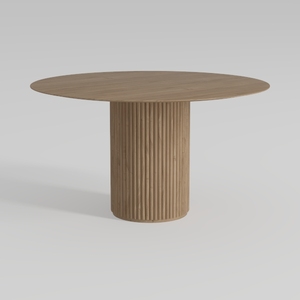
Tribesigns 47" Round Dining Table for 4, Farmhouse

Meridian Furniture 668Brown-S144B Cube
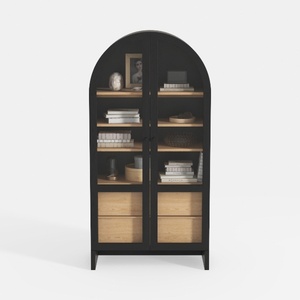
Wood Bookshelf with Adjustable Shelves, 72" Tall
If you're looking to transform your home design ideas into reality, Homestyler is the go-to platform for you. With its user-friendly online design tool and stunning 3D renderings, you can explore numerous decor projects. Plus, the informative video tutorials will guide you every step of the way in your DIY journey!
Projete agora para LIVRE
































