


Direct Answer
The distinctions between mid-century modern and Scandinavian design primarily lie in their mood, materials, and design philosophies. Mid-century modern embraces bold shapes, contrasting elements, and sculptural furnishings, whereas Scandinavian design emphasizes softness, light tones, and practical everyday use. Both celebrate simplicity but express it through distinctly different approaches.
Quick Takeaways
Introduction
Throughout my experience working on numerous home projects, clients often ask about the differences between mid-century modern and Scandinavian design. Interestingly, many people initially believe these styles are nearly identical due to shared elements like clean lines, wooden furniture, and neutral color schemes.
However, when designing actual interiors, the differences quickly become clear. A living room inspired by 1950s California exudes a very different atmosphere compared to one influenced by contemporary Nordic designs.
Choosing an inappropriate style for a room frequently results in subtle issues such as furniture overpowering small spaces, lighting that feels too harsh, or layouts that are visually pleasing but impractical for everyday living.
Before finalizing any style decisions, it’s valuable to visualize how your selected furniture and layouts will interact with the floor plan. Utilizing digital tools like Homestyler for realistic room visualization greatly simplifies this process and reduces costly errors.
Let's explore the core factors that distinguish these two design trends and identify when each style is most suitable.
save pin
Origins of Mid-Century Modern and Scandinavian Design
Key Insight: Mid-century modern emerged post-war in America, driven by innovation, while Scandinavian design stems from Nordic practicality and climate needs.
Mid-century modern originated in the U.S. during the 1940s to 1960s. Designers like Charles and Ray Eames, George Nelson, and Eero Saarinen revolutionized furniture by incorporating new industrial materials such as molded plywood, fiberglass, and tubular steel to create sculptural forms.
Conversely, Scandinavian design developed concurrently but with a focus on democratic design—making beautiful, accessible furniture that suited daily life. Pioneers like Alvar Aalto and Arne Jacobsen shaped this era.
Notable contextual distinctions:
These environmental factors continue to influence how each style adapts within today’s homes.
Core Design Principles Compared
Key Insight: While both styles value minimalism, mid-century modern exudes bold statements whereas Scandinavian interiors aim for calmness and liveability.
A common pitfall is mixing mid-century furniture pieces with Scandinavian color schemes, which often results in disjointed aesthetics rather than a harmonious design.
Furniture Shapes, Materials, and Color Palettes
Key Insight: The furniture’s shape is the most telling difference between these two styles.
Mid-century modern furniture boasts architectural, expressive silhouettes, whereas Scandinavian designs feature softer, lighter forms.
Typical elements include:
When conceptualizing these differences within a room layout, it’s advisable to
save pin
use detailed 3D floor planning software such as Homestyler to map furniture placement before investing in large, statement pieces.
Which Style Works Best for Different Homes
Key Insight: Your home's size, lighting, and architectural features should guide your style choice.
Having applied both styles in numerous residences, a clear trend emerges.
Scandinavian design tends to excel in:
Mid-century modern prevails in:
One hidden challenge with mid-century interiors is that authentic pieces often require ample spacing to avoid feeling cluttered, which can be limiting in smaller apartments.
save pin
How to Combine Both Styles Without Clashing
Key Insight: The simplest way to blend these styles is by using Scandinavian spatial planning supplemented with select mid-century statement furnishings.
This mixed approach is increasingly prevalent in contemporary homes.
Practical mixing tips include:
Many designers leverage digital visualization tools like Homestyler to preview these combinations before purchasing, helping avoid costly design errors and ensuring cohesive integration.
Why These Two Styles Are Often Confused
Key Insight: Retail marketing often blurs the lines between the two aesthetics, concealing their fundamental differences.
Numerous brands inaccurately label products as "mid-century Scandinavian" despite these styles having independent origins.
Shared traits causing confusion include:
Yet a closer examination of furniture forms, lighting effects, and color contrasts readily reveals their distinctions.
Answer Box
Mid-century modern centers around bold shapes, sculptural pieces, and strong contrasts. Scandinavian design prioritizes gentle forms, light hues, and practical living. The best choice largely depends on your room’s dimensions, illumination, and the desired ambience.
Final Summary
FAQ
What is the main difference between mid-century modern vs Scandinavian design?
Mid-century modern highlights bold forms and contrasts, whereas Scandinavian design emphasizes light colors, comfort, and functional minimalism.
Is Scandinavian design more minimal than mid-century modern?
Generally, yes. Scandinavian interiors usually feel softer and less visually intense than mid-century modern environments.
Which is better, mid-century or Scandinavian interior?
It depends on your living space. Larger rooms suit mid-century modern styles, while smaller homes often benefit from Scandinavian design’s lightness and flexibility.
Can you mix mid-century modern with Scandinavian style?
Absolutely. Start with Scandinavian colors and layouts as a foundation, then add mid-century statement furniture pieces for interest.
Are mid-century modern homes expensive to furnish?
Original vintage items can be pricey, but many modern reproductions make the style accessible at lower costs.
What wood types are common in Scandinavian interiors?
Birch, ash, and pine are frequently used since they help maintain airy, light-filled spaces.
What colors define mid-century modern interiors?
Accent hues like mustard yellow, olive green, burnt orange, walnut brown, and deep teal are typical.
Do both styles work in apartments?
Yes, though Scandinavian design is typically better suited for smaller apartments due to its lighter palette and adaptable furnishings.

Minimalist Solid Oak Linen 3 Seater Sofa 3D Model
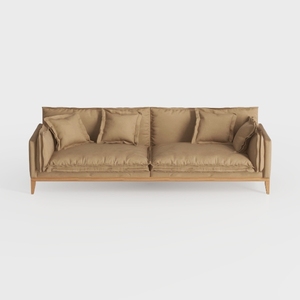

Minimalist Fabric Solid Wood 3 Seat Sofa With Throw Pillows 3D Model
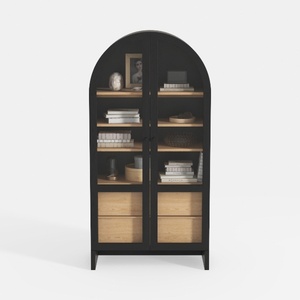
Modern Black Oak Arched Glass Display Cabinet 3D Model
Homestyler offers an easy-to-use online design tool combined with stunning 3D renderings, diverse interior projects, and helpful DIY video tutorials. It’s ideal for anyone wanting to create and visualize beautiful home designs effortlessly.
Projete agora para LIVRE
































