


Direct Response
Octagon homes occupy a unique yet impactful segment in contemporary architecture. Designers leverage the eight-sided form to maximize natural illumination, offer expansive views, and enhance energy efficiency, resulting in distinctive residential creations.
Though still not widespread, octagon houses are seen in innovative housing developments, environmentally friendly homes, and bespoke architectural projects throughout North America, Europe, and parts of Asia.
Key Highlights
Overview
Having worked over a decade in residential design, I've encountered various unconventional layouts. Yet, the octagon home remains especially intriguing. Modern octagon architecture bridges historic design experimentation with today’s architectural innovation.
Many individuals exploring octagonal designs initially view them as architectural curiosities. However, the reality is more complex. When executed properly, eight-sided residences address issues common in traditional rectangular houses, such as patchy lighting, restricted exterior views, and inefficient spatial flow.
Recently, clients have shown interest in multi-sided floor plans, often experimenting before committing to construction. Software like Homestyler has empowered many to visualize and refine these unique layouts with ease.
This article delves into the architectural evolution of octagon homes, examines contemporary projects globally, and considers why polygonal shapes might increasingly influence future residential designs.
save pin
Historical Background of Octagon Architecture
Insight: The popularity of octagonal homes in the 19th century was tied to beliefs in healthier living and greater efficiency.
The fascination with octagon-shaped houses dates back to the mid-1800s, sparked by Orson Squire Fowler, who advocated in 1848 that such homes were both healthier and more efficient than typical square structures.
He argued that the eight-sided design allowed:
Between 1850 and 1870, thousands of octagon homes were constructed across the United States, with many still standing, particularly in New York, Wisconsin, and the Midwest.
Notable historic examples often cited by architectural historians include:
Interestingly, Fowler’s claim holds some truth. Modern studies affirm that multi-faceted shapes can distribute natural light more evenly than rectangular buildings.
Contemporary Architects Embracing Octagonal Designs
Insight: Today's designers prioritize environmental benefits and enhanced spatial experience in octagonal residential projects.
Unlike the 19th-century fad, modern octagon houses are usually bespoke high-end homes or sustainable experimental dwellings.
Architects focusing on polygonal homes primarily aim to achieve:
Several modern architects have incorporated octagonal or polygonal forms into residential designs:
One notable trend from recent reviews is that octagon interiors rarely feel awkward. Carefully planned furnishing zones often create a more fluid spatial flow compared to traditional rectangular layouts.
Architects often begin by digitally simulating circulation with advanced tools, including Homestyler, making complex octagonal floor plans simpler to understand through 3D visualization.
save pin
Geographical Popularity of Octagonal Homes
Insight: Octagon homes are more frequently found in scenic or rural settings where maximizing panoramic views is critical.
While uncommon in urban densely built environments, these homes are repeated features in particular areas.
Based on case studies and construction data, popular regions include:
The rationale is straightforward. Eight sides significantly expand the range of exterior views.
Instead of just four main directions, an octagonal structure offers eight perspectives, which is especially valued for:
In such locations, the eight-sided layout serves as a functional advantage rather than a mere architectural novelty.
Cutting-edge Octagonal Projects Worldwide
Insight: Successful octagonal residences often pair geometric innovation with sustainable design principles.
Various projects worldwide demonstrate the evolution of octagon homes.
Noteworthy examples include:
An important aspect frequently overlooked is the structural benefit. Octagons evenly distribute structural loads across walls, potentially simplifying engineering approaches.
However, compromises exist:
save pin
Summary Box
Though still relatively rare, octagon homes have a distinct place in contemporary residential architecture. Their geometric form enhances daylighting, visual connectivity, and interior spatial dynamics, making them attractive options for bespoke homes set in scenic contexts.
Most current octagonal houses stem from architectural custom projects rather than mass production.
Specialized Builders for Polygonal Residences
Insight: Expert builders are essential because polygon homes demand unique framing and construction techniques.
Mainstream homebuilders generally shy away from octagonal construction due to standardization around rectangular designs.
Instead, polygonal houses are often crafted by:
Common construction challenges include:
During design phases, both architects and builders frequently use digital environments—such as using Homestyler—to simulate and optimize room flow in polygonal homes quickly, as these shapes can be complex to envision without virtual walkthroughs.
Emerging Trends in Alternative Residential Geometry
Insight: Advances in digital modeling tools and prefab methods are making non-rectangular homes more attainable.
Rectangular homes dominated the 20th century mainly because they simplified design, engineering, and construction processes.
However, shifting trends include:
These innovations reduce historic cost barriers linked with complex geometries.
From my experience reviewing new projects, polygonal homes are prevalent within certain design movements such as:
While octagon houses may not overtake traditional homes broadly, they continue shaping how designers approach light, space, and geometry in residential architecture.
Concluding Remarks
Frequently Asked Questions
Are octagon homes common nowadays?
No, they remain niche and are mostly custom-designed architectural residences rather than standard housing models.
Why opt for an octagonal design?
Octagon layouts improve natural light distribution, expand panoramic views, and enhance interior spatial circulation.
Are octagonal houses more energy efficient?
They can provide balanced solar exposure and improved natural airflow when designed thoughtfully.
Who typically designs modern octagonal homes?
Mainly custom residential architects, eco-designers, and experimental architectural firms.
Are they costlier to build?
Often yes; the intricate framing, roofing, and custom materials typically increase construction expenses.
Where are octagonal homes most frequently found?
They are predominantly located in picturesque rural areas such as mountains, forests, and lakesides.
Is it possible to create your own octagon house plan?
Certainly. Digital planning tools like Homestyler enable homeowners to experiment with polygonal floor plans before engaging architects.
What makes interiors of octagon homes unique?
They tend to feel more open and radial, with rooms organized around central circulation hubs.
Bibliography
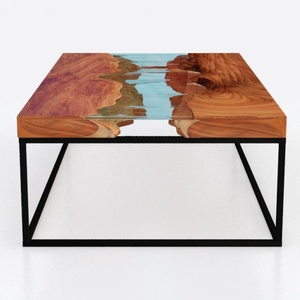
Custom 3D Waves Ocean Dining Table, Blue Ocean
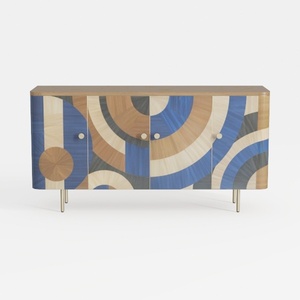
Art Deco Geometric Pattern Solid Wood Sideboard with Metal Legs 3D Model
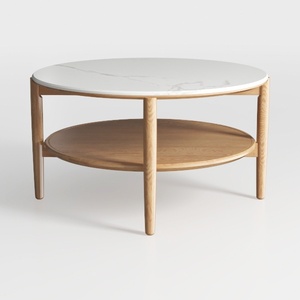
Minimalist Marble Top Solid Oak Round Two Tier Coffee Table 3D Model
Homestyler offers an easy-to-use online design tool with stunning 3D renderings, inspiring interior projects, and helpful DIY video tutorials—perfect for bringing your home design ideas to life effortlessly.
Projete agora para LIVRE
































