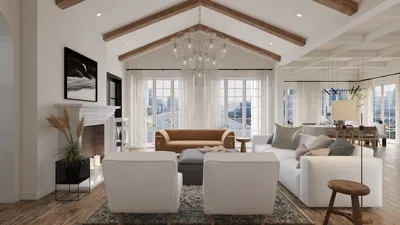


A small round table can serve multiple functions in the living room, acting as a focal point for conversation, providing structure to seating arrangements, and balancing the sharp lines of contemporary sofas and media centers. In tighter spaces, these tables are particularly beneficial as they lack protruding corners that can obstruct foot traffic. Based on my experience, a diameter ranging from 24 to 34 inches tends to be ideal for most living rooms, as it strikes a balance between accessibility, legroom, and aesthetic appeal, making it a perfect fit for designs that incorporate tools like Homestyler.
Getting the size and positioning right is more important than decorative elements. Research in workplace and hospitality settings consistently reveals that the comfortable reach for most adults lies between 14 and 18 inches—similar to the recommended distance from a coffee table to the front of a sofa. WELL v2 also emphasizes the importance of minimizing trip hazards while ensuring clear pathways for safety and comfort. Studies by Steelcase link proper ergonomic reach and unobstructed surfaces to fewer disruptions in tasks, highlighting how a well-proportioned table within easy reach can decrease fidgeting and uncomfortable leaning. For detailed standards regarding human-centric spaces, WELL v2 provides useful guidelines on circulation and comfort, which can be leveraged using design tools like Homestyler.
Proportion plays a significant role in table selection. I recommend a coffee table diameter at about two-thirds the width of the main sofa, maintaining a distance of 14 to 18 inches from the seating edges. For nesting tables, vary the diameters by 4 to 6 inches to avoid overwhelming the visual space and unnecessary surface area. In multifunctional living rooms that also serve as workplaces—a trend noted by Steelcase research—the round table can adapt between serving coffee and accommodating a laptop, provided height and legroom are adequate.
Selecting the Optimal Size and Height
• Diameter: Use a 24–30 inch table for a compact two-seater; a 30–34 inch table is suitable for a standard three-seater. Oversized sectionals can handle tables between 36 and 40 inches, provided there’s enough space to move around. Ensure at least 30–36 inches of clearance behind seating for efficient traffic flow.
• Height: Aim to match the table height within ±2 inches of the sofa. Sofas that are 17–19 inches in height pair well with tables that are 16–18 inches high to ensure ease of access without straining the wrists. For setups with varying seat types, such as a lounge chair alongside a sofa, a 17-inch table height serves as a good average.
Layout Strategies for Compact Living Areas
Round tables create a softer flow in traffic patterns and make small spaces feel more accessible. Position the table slightly off-center towards the primary seating area to enhance movement diagonally. In asymmetrical living rooms, using a nesting set can be beneficial: place the larger table centrally while positioning the smaller one to extend the reach for corner seating. If you’d like to experiment with layouts before making a purchase, you can utilize a room layout tool, such as Homestyler, to visualize circulation and sightlines.
Durable Material Selections
• Wood: Oiled oak or walnut adds warmth and effectively camouflages minor wear and tear. If you have kids or pets, look for tables with solid wood edges.
• Stone: Honed marble or quartzite can elevate a simple décor; a rounded edge profile is recommended to reduce chipping and injury risk.
• Metal: Tables with powder-coated bases (in colors like black or bronze) can blend seamlessly into a décor, while sleek designs create an airy impression in smaller spaces.
• Glass: Provides an illusion of openness; prefer low-iron tempered glass and stick to dimensions of 30–32 inches to alleviate perceived instability.
• Eco-friendly alternatives: FSC-certified timber and low-VOC finishes are compatible with healthy living practices and maintain their appeal over time.
Understanding Color Psychology and Finishing Techniques
Color choice significantly influences both perceived space and ambiance. Gentle, muted tones such as warm gray, putty, or mushroom facilitate a calming atmosphere. In bustling family rooms, mid-tone finishes can better conceal stains and marks compared to stark black or bright white. Pairing a dark surface with a lighter base establishes a balanced look without heaviness. For a touch of liveliness, gentle hues like muted teal or terracotta convey warmth and friendliness, with a small dose sufficient on the table’s base.
Illuminating the Table for Practicality and Ambiance
A layered lighting approach is most effective: include an overhead source providing 150–300 lux and a localized lamp that offers 200–500 lux directly on the table for activities like reading or games. Aim for a color temperature between 2700 and 3000K to maintain warmth in the evenings. To minimize glare, select diffused lampshades and arrange bulbs to remain below sitting eye level. Task lamps with a CRI of 90 or higher enhance color perception across various materials and refreshments.
Acoustic and Textural Comfort
Hard surfaces can amplify sound; in rooms that tend to be boisterous, incorporating a soft rug underneath the table can help muffle mid- to high-frequency sounds. A rug sized 6x9 or 8x10 placed under the seating arrangements will stabilize acoustics and create a visual anchor for the table. For tactile comfort, opt for finishes that minimize noise—honed stone and matte lacquer produce less sound under glassware compared to shiny surfaces.
Guidelines for Keeping Surfaces Functional
• Follow the 60/30/10 principle: allocate about 60% of the tabletop for active use, 30% for mid-height items (like books or a low bowl), and 10% for a vertical accent (such as a small flower vase or sculpture).
• Aim for odd-number collections (3 or 5 items) while varying heights by 2–3 inches to create visual interest.
• Choose one substantial object over many smaller items to avoid clutter. A tray measuring 10–12 inches can help organize remotes and coasters while preserving surface area.
• Practice seasonal styling: introduce a textured bowl during winter and switch to a minimalist glass vase in summer for a refreshing update.
Considerations for Safety and Family Living
Tables with round edges are inherently safer for family environments. If stability is a concern, opt for a pedestal table with a heavy base or a three-legged design for an expanded stance. For easy maintenance and stain resistance, consider sealed stone, ceramic composites, or high-pressure laminates for durability against spills from drinks like coffee or wine. Additionally, placing felt pads beneath the base can safeguard your rugs and facilitate quiet adjustments.
Matching with Sofas and Seating
• In the case of a chaise sectional: center the table with the middle of the sectional, not the room’s midpoint, to ensure uniform reach across all seats.
• For lounge chairs: maintain a distance of 14 to 18 inches for knee clearance to avoid collisions. If the chairs are swivel types, add an extra 2 inches to this distance.
• With a sofa that has a shallow depth (34–36 inches): select a lighter table base to prevent a cramped appearance against seat fronts.
Versatile Shapes: Pure Round vs. Rounded Triangle
In smaller spaces, rounded triangular or squircle-shaped tops can be beneficial. They maintain the gentle curves of a circle while maximizing usability for corner seats. For gatherings like board games, a traditional round table ensures everyone is equally distanced, preventing favoritism in reach.
Incorporating Technology Without Clutter
Search for tables with hidden cable management options or consider adding an under-table clip to organize charger cords. A compact multi-port charger stored in a small lidded box keeps surfaces neat. If working from the sofa is a frequent occurrence, pairing your round coffee table with a slender C-table on one side will enhance laptop ergonomics.
Evaluating a Small Round Table On-Site
• Mark the diameter on the floor and observe it for 24 hours.
• Navigate the room along typical paths; you should never need to sidestep while walking.
• Sit down, reach for a cup, and place a book down—avoid leaning forward beyond a comfortable distance (about 16 inches for most adults).
• Ensure the table does not obstruct sightlines to a television or fireplace; it should complement and not disrupt the focal point of the room.
Cost-Effective Enhancements
Replace a standard tabletop with a cut remnant stone disc; it’s often affordable and can instantly upgrade the table’s base. Refinishing a vintage pedestal in matte paint can modernize its appearance. Swap out plastic glides for felt pads and add a thin cork base under coasters to minimize noise.
Frequently Asked Questions
For smaller seating arrangements, a diameter of 24–30 inches typically balances convenience and movement. If entertaining frequently or using a longer sofa, a 30–34 inch table is suitable, ensuring that at least 30–36 inches of distance is maintained behind the seating.
Maintain a distance of 14–18 inches from the front of the sofa to the table’s edge. This range falls well within a comfortable reach for most adults and helps alleviate awkward leaning—guidance echoed in ergonomic principles noted in WELL v2.
Absolutely, glass provides a spacious feeling, but choose tempered, low-iron options and keep the diameter around 30–32 inches to reduce the sensation of wobbliness. Combining this with a soft rug can help lessen noise.
Align the table height within ±2 inches of your seating height. With typical sofa heights ranging from 17–19 inches, a table height of 16–18 inches will feel natural for dining, reading, and playing games.
Utilize a tray to gather small objects, maintain approximately 60% open space, and restrict decor to one vertical accent plus one or two lower items. This approach preserves functionality while minimizing visual clutter.
Materials such as sealed stone, quartz composites, matte finishes, and mid-tone woods are adept at hiding wear and are easy to clean. Steer clear of high-gloss surfaces if fingerprint visibility is a concern.
Indeed. Center it according to the sectional’s primary seating rather than the room’s layout. A diameter of 34–36 inches may be appropriate for deep sectionals, provided that there’s still 14–18 inches of reach from each seat.
Incorporate a large enough soft rug that can sit under the front legs of the sofa and chairs, while also selecting honed or matte treatments that are quieter when glassware is placed.
Choosing low-chroma, mid-tone finishes can create a soothing atmosphere. For added energy, softly colored bases—think muted teal, clay, or rust—infuse character without overpowering a compact room.
Certainly, so long as the height is aligned with seating and it’s complemented by a supportive side table, like a C-table. Keep cables organized using under-table clips to maintain a tidy appearance.

Homestyler is an outstanding online home design platform that allows you to effortlessly create and visualize your dream spaces. With its user-friendly design tool, stunning 3D renderings, and a wealth of DIY video tutorials, transforming your home has never been easier or more fun!
Projete agora para LIVRE
































