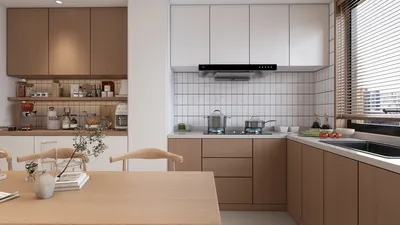


I once nearly tore down a perfectly functional wall in a condo because a client believed that expanding space was the only way to enhance functionality. However, we ultimately saved time and budget by optimizing storage instead. This experience highlighted an important lesson: when designing small kitchens, smart solutions consistently outperform extensive renovations. Here, I’ll share five practical ideas I’ve applied in actual projects that help small kitchens feel more spacious and purposeful.
1. Utilizing vertical space with open shelving and stacked cabinets
Why this works: Taking advantage of the room’s full height adds storage without increasing the kitchen's footprint. Benefit: It provides additional accessible storage for everyday essentials and feels lighter visually compared to solid cabinet walls. Consideration: Maintaining consistent styling and keeping open shelves organized is crucial, since clutter is more noticeable. Try using design platforms like Homestyler to visualize layouts.
save pin
2. Incorporating integrated appliances and slimline combinations
Why this works: Appliances designed for compact spaces—such as dishwasher drawers and counter-depth refrigerators—free up aisle room and maintain an open flow. Benefit: This creates an efficient work triangle without sacrificing essential appliances. Consideration: These specialty appliances may come at a higher price and might have fewer features than standard versions.
save pin
3. Adding pull-out counters and multi-functional kitchen islands
Why this works: Retractable or foldable countertops provide extra workspace only when needed. Benefit: They offer additional prep or dining surfaces without permanently using up space. Consideration: The mechanisms require clearances and careful planning to avoid blocking pathways.
save pin
4. Employing light colors, reflective backsplashes, and focused lighting
Why this works: Bright finishes combined with layered lighting create an illusion of higher ceilings and expanded space. Benefit: The kitchen appears larger and more inviting at first glance. Consideration: Highly glossy surfaces show wear and fingerprints more easily, so durable materials are recommended for frequently used areas. You can experiment with lighting in Homestyler’s floor plan creator.
save pin
5. Creating clear zones with open sightlines and dedicated task areas
Why this works: Separating prep, cooking, and cleaning zones minimizes overlap, making the space more comfortable for one user. Benefit: Improved workflow and fewer accidental collisions during meal preparation. Consideration: This requires advance planning and possibly custom cabinetry to separate areas effectively without losing usable space. Utilize layout planners like Homestyler to design these zones.
Visualization: Imagine your small kitchen outfitted with a neat vertical array of cabinets, a slim appliance wall, and a pull-out counter converting into a weekend baking station. Take action by sketching at least one improvement you can implement this weekend—perhaps swapping out a large appliance, adding an extra shelf, or drawing a mini floor plan using Homestyler.
save pin
FAQ
Q: What is the average cost of remodeling a small condo kitchen? A: Costs vary by location and the scope of the project. Minor updates may range from $6,000 to $12,000, whereas comprehensive remodels can cost around $20,000 to $40,000. It's wise to allocate extra budget for unexpected issues behind walls.
Q: Is it possible to modernize a kitchen while keeping the existing layout? A: Yes, cosmetic changes such as new paint, hardware, lighting, or backsplashes can refresh the space without a full remodel. However, these won't increase storage or dramatically improve the layout.
Q: Are custom cabinets worth the investment in a small kitchen? A: Often yes—custom or semi-custom cabinetry maximizes awkward corners and vertical space better than stock options. Although the upfront cost is higher, functionality improves significantly in compact kitchens.
Q: How should I select appliances for a tiny kitchen? A: Focus on daily-used appliances and choose compact versions for secondary needs, like combining a single oven with a microwave drawer. Always measure twice and allow clearance for doors and drawers to open smoothly.
Q: What budget-friendly upgrades add value to a small kitchen? A: Simple swaps like new cabinet fronts or paint, replacing countertops with engineered stone, and updating hardware and lighting can make a big difference without full demolition. Adhering to NKBA standards also helps keep improvements market-appropriate.
Q: How can a galley kitchen be made to feel less cramped? A: Use continuous flooring and matching cabinet colors, and remove visual barriers to create a longer sightline. Light tones combined with effective task lighting also enhance openness.
Q: Are open shelves practical in a condo where storage is limited? A: They work well for frequently used or decorative items but should be paired with closed cabinetry to store pantries and less attractive kitchen tools. Regular editing is necessary to avoid a cluttered appearance.
Q: Do small kitchens benefit from professional design software? A: Absolutely. 3D planning and floor design tools, such as Homestyler, enable testing clearances, door swings, and appliance placements before committing, which prevents costly mistakes and ensures the design is functional in reality.


Homestyler offers an easy-to-use online design tool with stunning 3D renderings, a vast collection of interior design projects, and helpful DIY video tutorials—perfect for bringing your home decor ideas to life effortlessly.
Projete agora para LIVRE
































