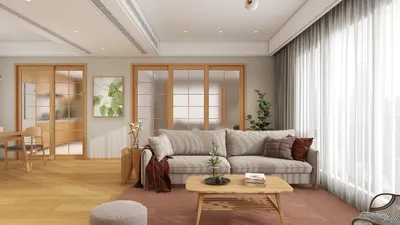


I once had the pleasure of installing a beautiful vintage lantern on a client's porch, which amusingly turned into a dog walk alert system for the entire neighborhood—who knew motion sensors and local dogs had such discussions? This little experience highlighted the importance of having exterior lighting that blends personality with practical functionality. For small outdoor spaces, making intelligent lighting choices is essential, and incorporating motion sensor wall lights is a straightforward yet impactful enhancement.
1. Slim LED Sconce with Adjustable Sensor
Slim LED sconces are a favorite for tight entryways, providing bright light without the bulkiness. An adjustable motion sensor helps prevent unnecessary activation from passersby, ensuring it only responds to guests approaching the door. The benefits include energy efficiency and a sleek appearance, but the key is selecting a model with a sufficiently wide detection range to eliminate blind spots.
save pin
2. Flood-Style Wall Light for Driveways
For broader driveways, a flood-style wall light paired with a robust motion sensor offers excellent visibility — ideal for both security purposes and nighttime grocery unloading. While these lights can be quite bright, I prefer to soften the brightness with warm LEDs to maintain a welcoming ambiance. A smart budget choice is to select a flood light with adjustable sensitivity and a dusk-to-dawn function to prevent excessive lighting.
save pin
3. Integrated Camera and Light Combo
If you seek both security and illumination, consider fixtures that combine a motion-activated light with a camera. This design minimizes wiring complexities and provides video footage triggered by motion. However, be mindful of privacy aspects and the potentially higher price point, yet for many homeowners, the enhanced security is worth the investment.
save pin
4. Motion-Activated Step Lights Along Walls
For narrow side yards or staircases, low-profile motion-activated step lights ensure safe navigation without excessively brightening the entire area. These subtle lights reduce glare while guiding foot traffic. Proper placement is crucial: too few lights lead to gaps, while too many can clutter the space. I typically suggest positioning them at knee height, spaced about 1.2–1.5 meters apart for a balanced look in residential settings.
save pin
5. Decorative Lantern with Smart Sensor Module
If aesthetics are a priority, retro lanterns equipped with smart sensor modules blend traditional charm with modern technology. They are especially suitable for porches that prioritize curb appeal. Keep in mind that integrating smart modules may require confirming compatibility with existing dimmers or wiring, so a quick onsite assessment can help avoid unexpected issues.
save pin
Practical Considerations
When installing, remember to consider the sensor's height and angle: mounting at about 2–2.5 meters typically strikes a balance between coverage range and minimizing activation from small animals. Additionally, warm color temperatures (2700K–3000K) near entryways create an inviting atmosphere. If unsure about the layout, sketching a basic plan can aid in visualizing coverage; I often utilize Homestyler for 3D modeling to preview lighting effects and shadows effectively.
save pin
Resources
For those looking to test placements before committing to installations, try laying out your fixtures using a digital plan — this allows you to visualize how detection zones will interact. A good planning tool, such as Homestyler, can streamline the process and help achieve optimal results.
save pin
FAQ
Q: What is the ideal mounting height for motion sensor exterior wall lights?
A: Generally, a height of 2–2.5 meters above ground ensures reliable coverage while reducing chances of false triggers from wildlife.
Q: Do motion sensor lights consume a lot of electricity?
A: Not at all—since they only activate when necessary, and modern LED fixtures are highly efficient, they usually lead to lower overall energy consumption.
Q: How can I prevent false triggers from street traffic or animals?
A: Opt for sensors with adjustable sensitivity, narrower detection angles, and proper mounting height; additional shielding and targeted placement can also help.
Q: Is it possible to retrofit my existing wall light with a motion sensor?
A: Absolutely, many retrofit sensors and smart modules are compatible with existing fixtures, but ensure you check for compatibility with dimmers and wiring prior to purchasing.
Q: Are motion sensor lights effective for security?
A: Yes, they make excellent deterrents — sudden lighting draws attention and can discourage potential intruders when coupled with clear sightlines.
Q: What color temperature should outdoor wall lights be?
A: For entrances and porches, warm light at 2700K–3000K creates a welcoming environment, while neutral and bright lighting around security zones typically uses about 4000K.
Q: Where can I find authoritative guidelines on outdoor lighting standards?
A: The Illuminating Engineering Society (IES) offers recommended practice documents regarding outdoor lighting; referring to IES standards will provide precise photometric guidance (https://www.ies.org/).
Q: Is it beneficial to integrate motion sensors with smart home systems?
A: Yes, linking them with smart home hubs allows for scheduling, remote access, and integration with cameras — though it does come with added complexity and potential costs.
save pin
Homestyler is the ultimate online home design platform for anyone looking to unleash their creativity. With its user-friendly design tool, stunning 3D renderings, diverse design projects, and helpful video tutorials, bringing your home design ideas to life has never been easier or more enjoyable!
Projete agora para LIVRE
































