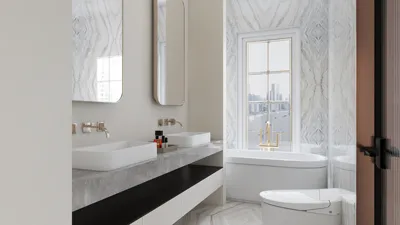


I once had a client who insisted on surrounding a small mirror with a series of oversized Edison bulbs — while the effect was cinematic, the heat generated by those bulbs nearly damaged the mirror's frame. After reworking that installation, I discovered that compact bathrooms demand smarter strategies and heightened creativity. If you're aiming to infuse style into a limited space, here are five decorative light bulbs for bathroom vanities that I frequently endorse, complete with quick advantages, real-life insights, and a clever trick I still employ. Don’t forget to explore the space-efficient vanity ideas I crafted for petite bathrooms.
1. Cozy Edison-style filament bulbs for a warm, inviting appearance
Filament bulbs are a favorite of mine due to the texture and vintage aura they impart to a vanity space. They provide warm, flattering illumination that enhances skin tones and exudes character rather than harsh brightness. However, traditional filament bulbs can get quite hot and may waste energy, so I typically suggest opting for LED filament variants to maintain the aesthetic without the accompanying heat or higher electrical costs.
save pin
2. Soft frosted globe bulbs for gentle, shadow-free lighting
Frosted glass effectively diffuses light, minimizing harsh shadows on the face — essential when your mirror serves as the primary light source. These bulbs offer a modern and clean appearance, and pair nicely with lower-wattage LED bulbs. To keep the design engaging, combine them with a slim metal backplate or a painted vanity frame to avoid a sterile hotel-like feel.
save pin
3. Flexible dimmable LED filament bulbs for versatile mood and task lighting
My go-to choice for most bathroom projects is a dimmable LED filament bulb — it marries nostalgia with cutting-edge efficiency. The ability to dim the lights allows you to transition from bright makeup application to a soothing evening routine without needing to swap fixtures, which is particularly beneficial in smaller spaces. For guidance on placement and layout, I often draw upon vintage bulb styling examples to effectively balance brightness and glare.
save pin
4. Tinted or color-smart bulbs for customizable ambiance
For those who appreciate a dash of drama, low-CRI colored bulbs or smart bulbs with tunable white options can transform the atmosphere without requiring a complete vanity overhaul. They’re enjoyable for weekend pampering sessions and help create a cinematic feel to evening routines. However, be mindful that colored lighting isn’t ideal for precision tasks such as shaving or applying makeup, so it's wise to complement them with a neutral white source to maintain accuracy.
save pin
5. Frosted tubular or integrated LED tubes for consistent task lighting
In terms of practical lighting setups, I frequently utilize frosted tubular LEDs or integrated LED tubes, which provide even illumination across the face without casting shadows. Their sleek design is particularly accommodating in compact vanities. If you’re contemplating a complete renovation, these tubes can be a subtle standout in any glamorous bathroom update while saving space behind medicine cabinets or slim mirrors.
save pin
Tip 1:
Keep wattage low but ensure enough lumens: target about 1,200–2,000 lumens for the vanity area, and incorporate dimmers where feasible. I always create a mock-up at a 1:1 scale before making bulb purchases to avoid unnecessary returns or regrets.
save pin
FAQ
Q1: Are decorative bulbs safe for use in bathrooms?
Yes, but it’s crucial to select damp-rated or wet-rated fixtures based on how close they are to the shower. Opting for LED options will help reduce heat, and always adhere to local electrical regulations for bathroom installations.
Q2: What color temperature is best for vanity lighting?
I usually recommend a temperature of 2700K–3000K for a warm and appealing glow; 3000K offers a slightly sharper look while remaining flattering. If you're focused on makeup tasks, consider bumping it up to a neutral 3500K for improved color accuracy.
Q3: Is it advisable to use colored smart bulbs in my vanity?
Yes, you can use them, but limit their application to mood lighting rather than as primary task lights. Always ensure a neutral white light source is available for grooming and makeup to prevent skin tones from appearing distorted.
Q4: How many lumens do I require for a bathroom vanity?
A sensible goal is approximately 1,200–2,000 lumens across two or three fixtures. Utilizing dimmable circuits allows you to adjust the light output based on varying needs.
Q5: Do vintage filament bulbs necessitate special fixtures?
LED filament bulbs typically fit into standard sockets without requiring special fixtures. Always verify dimmer compatibility and ensure adequate heat clearance if using traditional incandescent filaments, which I generally recommend avoiding.
Q6: What about IP ratings for damp environments?
Select fixtures with at least an IP44 rating if they are located near potential water exposure; recessed or enclosed fixtures may need even higher protection. Always consult a qualified electrician for installations near tubs or showers.
Q7: Are there best practices for positioning vanity lighting?
Certainly — avoid a single overhead light that creates shadows. Installing side-mounted or linear lighting at eye level offers even illumination. Industry recommendations for effective task lighting are outlined by the Illuminating Engineering Society (IES) (see https://www.ies.org for details).
Q8: How can I balance style and budget?
Begin with LED bulbs that replicate your preferred look (filament, frosted, or globe) and incorporate one higher-end dimmer or smart controller. This strategy allows you to manage costs while achieving a significant visual upgrade.
save pin
Looking to transform your space? Homestyler is your go-to online home design platform! With its user-friendly design tool, stunning 3D renderings, and a wealth of DIY video tutorials, you'll find endless inspiration and support to create your dream home effortlessly.
Projete agora para LIVRE
































