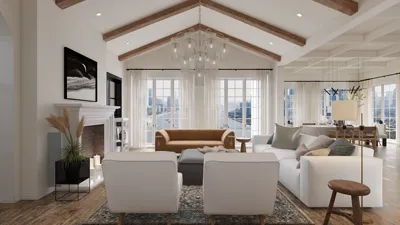


Designing impressive hall ceilings is a meticulous endeavor. It stems from a careful combination of proportions, lighting control, and thoughtfully chosen finishes, all of which work together to influence both movement and atmosphere. In these circulation areas, I emphasize a sense of clarity and rhythm; the ceiling acts as a visual backbone, linking different spaces and weaving the overall narrative.
Numerous studies demonstrate the significance of lighting and ergonomic design in transitional zones like hallways. According to the Illuminating Engineering Society (IES), a brightness of 100–150 lux is recommended for corridors to ensure safe passage without glare, and a color rendering index (CRI) of over 80 is vital for maintaining material authenticity. The WELL v2 standards advocate for minimizing unified glare rating (UGR) and finding a balance in circadian-friendly lighting, incorporating warm tones in the evening and neutral during the day to combat eye strain. Color psychology also plays a crucial role; research from Verywell Mind suggests that soft neutrals and warm whites foster calm, whereas deeper hues can gently invigorate movement.
In practical applications, a ceiling in a hallway serves as the design's rhythm keeper. Uniform lighting fixtures and carefully proportioned details provide navigational assistance. Research by Steelcase indicates that visually uninterrupted lines and systematic lighting enhance wayfinding and lower cognitive load in workplace corridors—principles I also implement in residential designs by establishing a clear pattern with light fixtures and pathways. When a hall intersects other rooms or staircases, I create a ceiling plan at the outset; using a simple interior layout planner can help visualize the spacing of fixtures, soffits, and bulkhead transitions before any construction begins with tools like Homestyler.
Understanding the Role of the Ceiling
The ceiling in a corridor serves as a guide and a backdrop. It aligns sightlines, effectively conceals utilities, and sets the overall ambiance. My starting point is always the height and width of the ceiling: lower hallways benefit from clean lines and perimeter lighting, while taller spaces can incorporate coffered designs or subtle barrel vaults. The key is to establish a deliberate rhythm, avoiding decoration that lacks purpose.
Proportions and Spatial Flow
Proportion significantly influences comfort levels. Long, narrow hallways can feel calmer with lighting intervals of 1:1 or 1:2. Beams and coffers should align with doors or thresholds to prevent visual disruption. Crown or trim depths should be proportionate—generally 2.5–4 inches for modest spaces, and 5–6 inches for larger areas—ensuring that details appear integrated rather than overstated.
Lighting Approach: Multi-Layered, Glare-Free, and Human-Centered
I adopt a three-layer lighting strategy: ambient (uniform downlights or linear slots), accent (perimeter lighting for textural highlights), and feature lighting (pendants over junctions or art spaces). Aim for a baseline brightness of 100–150 lux according to IES corridor guidelines, with 2700–3000K lighting in residential halls for warmth, transitioning to 3000–3500K in mixed-use areas for a neutral effect. Avoid overlapping beams at shallow angles to minimize glare; using baffle trims or microprismatic lenses can help. Incorporating dimming capabilities adjusts the ambiance from daytime brightness to the soft warmth of evening.
Ceiling Styles and Their Applications
- Flush drywall ceilings: Ideal for minimalist aesthetics; pair these with concealed linear lighting to maintain a clean visual effect.
- Coffered ceilings: Employ shallow coffers (2–3 inches) in residential corridors; ensure modules are aligned with door centers for cohesive design.
- Tray ceilings: A modest lift of 4–6 inches with perimeter LED lighting can add depth without compromising the perceived length of the space.
- Exposed beams: If the structure contributes to character, keep beam spacing uniform while adding indirect lighting to soften shadows.
- Vaulted or barrel ceilings: Maintain a gentle curve; accentuate with wall washers rather than direct downlighting to retain the elegant shape of the ceiling.
Materials and Finishes
Ceilings should exhibit quiet durability. I recommend high-quality gypsum finished to Level 4–5 where light grazing is expected, along with low-VOC paints for better indoor air quality. Opt for matte or eggshell sheens to decrease glare, while satin finishes can enhance trim features. Incorporating wooden slats not only adds warmth but also helps with sound absorption; it's also important to integrate fire safety and maintenance access from the beginning. For eco-friendliness, select FSC-certified wood, and ensure adhesives comply with low-emission standards.
Color Psychology for Transitional Ease
Halls are transition spaces rather than destinations; therefore, I utilize balanced color palettes that encourage flow. Warm whites (around 2700K lighting and soft paint shades) create a welcoming atmosphere in narrow corridors. A subtle tint on the ceiling—5–10% of the wall color—can help visually compress overly tall spaces. If a lively vibe is desired near an entrance, a deeper mid-tone on the ceiling can indicate arrival without being overpowering.
Acoustic Considerations
In narrow, hard passages, sound can echo. Utilizing wood slats, micro-perforated gypsum, or concealed acoustic panels can help manage reverberation. For larger halls, integrating soft materials—such as fabric-wrapped panels or textured plaster—creates a balance between clarity and quietness.
Human-Factors and Navigation
Consistent placement of fixtures serves as a guide: evenly spaced luminaires and aligned trims allow occupants to intuitively understand direction. To minimize visual disruptions at intersections, I prefer warmer pools of light or unique ceiling details to indicate decision points. This gentle choreography lessens hesitation and facilitates smooth movement.
Detailing: Integrating Services Elegantly
Service elements like sprinklers, sensors, and grilles should align with lighting fixtures. I implement service ‘bands’ to cluster devices in a predictable layout rather than scattering them across the ceiling. Recessing smoke detectors within trim lines, where codes permit, helps maintain a clean aesthetic; early coordination with building codes assists in avoiding last-minute adjustments.
Natural Light and Day-Night Transitions
Skylights or clerestories can beautifully illuminate hall ceilings; however, it's crucial to ensure that glazing is diffused to eliminate harsh spots. I match the color temperature of artificial lighting to the natural day-night cycle—utilizing neutral tones during the day and warmer shades in the evening—and establish dimming scenes prioritizing safety and comfort.
Renovation Strategies for Existing Hallways
- Simplify: Eliminate excessive fixtures; opt for continuous indirect lighting for a cohesive look.
- Align: Ensure fixture rows are straight with door centers and wall features.
- Upgrade: Switch to high-CRI LEDs and dimming systems for improved tone and control.
- Refine: Incorporate small trays or perimeter coves to conceal wiring and provide a gentle wash of light.
Planning and Visualization
Before closing up the drywall, I model the layout for fixture spacing, soffits, and trims. Quick layout simulations can prevent misalignment of utilities and ensure even illumination. A useful method to gauge proportions and spacing is through an interior layout planner, like Homestyler, which visualizes ceiling modules, lighting cones, and junction details.
Case Study: Revamping a Narrow Hallway
In a long, narrow hall measuring 36 feet by 42 inches, a flat gypsum ceiling made the space feel restrictive. I introduced a 4-inch tray with indirect linear lighting around the edges, complemented by small, low-glare downlights spaced every 8 feet. The warm 2700K at night and 3000K during the day, alongside a matte finish on the walls, enlarged the perceived width, softened shadows, and clarified junctions. The project team coordinated sprinklers and sensors within a single service band to maintain visual cleanliness.
Maintenance and Longevity
Select accessible drivers and service hatches, ensuring fixtures have replaceable components wherever possible. Paints should be easy to clean while having a matte finish to prevent reflections. Conducting an annual check on dimming settings and device alignment keeps the hallway looking orderly and well-maintained.
FAQ
Q1: What is the ideal ceiling height for narrow hallways?
A: A height of 8–9 feet is most comfortable. Lower ceilings benefit from seamless planes and indirect lighting to enhance spaciousness.
Q2: What level of brightness is recommended for a hallway?
A: Strive for 100–150 lux of ambient lighting as per IES corridor standards, complemented by layered accents. Excessive brightness can induce glare, while insufficient light can compromise safety.
Q3: Should I use warm or cool lighting in hallways?
A: Warm lighting (2700–3000K) is best for residential comfort, while 3000–3500K is suitable for mixed environments. Ensure a CRI of 80 or above for proper color accuracy.
Q4: Are coffered ceilings appropriate for small halls?
A: Yes, provided the coffers are shallow (2–3 inches) and aligned with doorways—too large coffers can visually compress the space.
Q5: How can I reduce glare from downlights?
A: Incorporate baffle trims or microprismatic lenses, keep spacing adequate, and utilize dimmers appropriately. Maintain a low UGR to lessen eye strain.
Q6: What are the most durable materials for ceilings?
A: Recommend using high-quality gypsum with a Level 4–5 finish, low-VOC paint, and FSC-certified wood slats. Matte or eggshell sheens will help minimize glare.
Q7: Can the design of a ceiling improve navigation?
A: Definitely. Consistent fixture spacing and aligned trims help guide movement naturally; highlight junctions with warmer lighting.
Q8: How can I visually integrate sprinklers and detectors?
A: Create service bands aligning devices with lighting fixtures to ensure a clean visual appearance. Early coordination with codes is crucial.
Q9: Is indirect lighting sufficient by itself?
A: Yes, in many cases—perimeter coves can deliver uniform, soft illumination. Supplement with minimal downlights at junctions for clarity.
Q10: What color should I choose for the ceiling?
A: Opt for matte warm whites; for taller hallways, consider a 5–10% tint of the wall color to visually reduce height. Maintain consistent finishes throughout the sequence.
Q11: How does acoustic design influence ceiling choices?
A: Hard corridor surfaces can generate noise. Incorporating wood slats, micro-perforated panels, or textured materials helps to minimize echo.
Q12: How can I preview the ceiling design before construction?
A: Utilize a room design visualization tool to simulate fixture spacing, soffits, and lighting angles, allowing for adjustments to proportions before installation.

Dia 28 Inch, Modern Glass Chandeliers for Bedroom,


Modern Globe Pendant Light Mid Century Opal Glass
Homestyler is the ultimate online home design platform for anyone looking to transform their space. With an easy-to-use design tool, stunning 3D renderings, a wealth of design projects, and helpful DIY tutorials, it empowers you to create your dream home effortlessly!
Projete agora para LIVRE
































