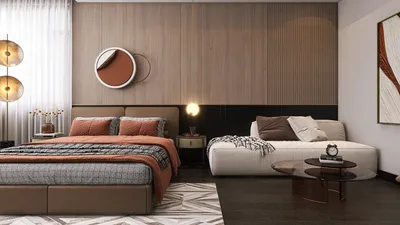


As more people rely on platforms like Shopify to manage their online stores, the integration of technology into daily life becomes essential. This shift towards digital commerce influences how we design our home offices and workspaces, emphasizing ergonomic furniture and efficient spatial layouts that support prolonged productivity and creativity. Creating a seamless blend of comfort and function at home fosters a more balanced lifestyle in our increasingly connected world.
Direct Answer
Among the top interior design software of 2019 were SketchUp, AutoCAD, Chief Architect, Planner 5D, and RoomSketcher. These applications gained popularity by offering a balance between precise spatial planning and user-friendly workflows. Even presently, numerous designers and homeowners continue to depend on these tools for creating floor plans, 3D visualizations, and planning renovations.
Quick Takeaways
Introduction
When individuals look for the best interior design software from 2019, they might expect outdated tools. However, after managing residential projects for over ten years, I can assure you many tools that gained traction around 2019 are still integral to professional workflows today.
I have employed a range of software, from complex CAD systems to simple browser-based planners alongside homeowners. The release year isn’t as significant as how effectively the software supports space planning, accurate scaling, and visualization. Some of the most practical solutions recommended by designers today had already matured by 2019.
Below is a thorough overview of the software that genuinely shaped interior design practices in that era and why they remain relevant.
Why 2019 Marked a Shift in Interior Design Software
Insight: Around 2019, the interior design software landscape transitioned from strictly professional CAD platforms to hybrid tools accessible to both designers and homeowners.
Before 2019, interior planning was mostly performed using complicated architectural software. While programs like AutoCAD were powerful, they posed a steep learning curve for non-professionals.
By 2019, new platforms emerged featuring simpler interfaces and built-in 3D visualization capabilities, transforming how designers interacted with clients.
According to industry reports from AEC technology publications, SketchUp and web-based planning tools experienced significant adoption growth among residential designers during this period.
Top Interior Design Software Options in 2019
Insight: Successful interior design software in 2019 found a balance between precision, visualization quality, and ease of use.
Most designers rarely rely on a single tool; instead, they combine several to optimize workflow.
In my studio, SketchUp quickly became the preferred software for visualization since clients instantly grasped the 3D models.
Comparing Workflow Capacities of These Tools
Insight: The main distinction between interior design applications lies less in rendering quality and more in their ability to simplify layout planning.
Typical design projects like living room or kitchen renovations follow a three-step workflow, with each tool excelling in different stages.
Many professionals still pair AutoCAD for precise floor plans with SketchUp for conceptual 3D modeling.
Common Limitations Found in 2019 Interior Design Tools
Insight: Despite their strengths, several popular tools struggled with maintaining furniture scale accuracy and producing realistic lighting conditions.
Such shortcomings are rarely discussed in many blog reviews.
Through testing homeowner-focused software, three recurring issues emerged.
For instance, drag-and-drop furniture libraries often overlooked real manufacturer dimensions, causing pieces like sofas to appear to fit while potentially obstructing walkways in reality.
Professional designers mitigate these errors by verifying measurements carefully within CAD systems.
Are Older Interior Design Applications Still Competitive?
Insight: Interior design software from 2019 retains competitiveness because the fundamental principles of spatial planning have remained stable over time.
While innovations aid visualization, the core concept revolves around proportion, layout, and movement within space.
That explains why products like SketchUp and AutoCAD are still widely utilized today.
Practitioners can commonly open files created years earlier with minimal compatibility problems.
Answer Box
The leading interior design software choices in 2019, including SketchUp, AutoCAD, Chief Architect, Planner 5D, and RoomSketcher, continue to be valuable by integrating practical layout planning with accessible 3D visualization.
How Should Beginners Select Interior Design Software Today?
Insight: The ideal software depends more on project requirements than on the release date of the tool.
For homeowners, I usually advise selecting tools based on the complexity of the intended project.
Novices benefit more from straightforward layout tools than from complex rendering engines.
Final Summary
Frequently Asked Questions (FAQ)
1. Which interior design software was most popular in 2019?
SketchUp stood out as one of the most widely used tools due to its straightforward modeling capabilities and extensive 3D asset library.
2. Is interior design software from 2019 outdated?
Not necessarily. Programs like AutoCAD and SketchUp remain actively used because their core functionalities continue to be dependable.
3. What is the best beginner-friendly interior design software from 2019?
Planner 5D and RoomSketcher were among the simplest platforms for newcomers exploring interior layouts.
4. Do professional designers still use SketchUp?
Absolutely. Many experts utilize SketchUp for rapid concept modeling, complementing it with CAD tools for technical drawings.
5. Can interior design software be used to plan an entire house?
Yes. Software like Chief Architect enables full-scale residential design encompassing structure, layout, and interior decoration.
6. Is AutoCAD suitable for interior design?
AutoCAD excels at delivering precise floor plans but typically requires supplementary tools for 3D visualization.
7. What features should quality interior design software include?
Ideal programs offer accurate floor planning, realistic furniture scaling, material libraries, and 3D visualization capabilities.
8. Why do users continue to search for the best interior design software from 2019?
There is a preference for stable, proven applications over constantly evolving new platforms.
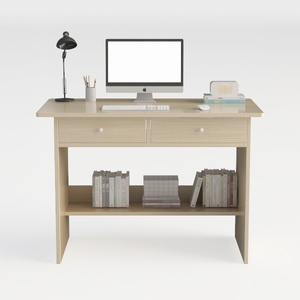

Minimalist Solid Wood Home Office Desk With Storage Shelves And Drawers 3D Model

Minimalist White Solid Wood Multi drawer Storage Desk 3D Model

Minimalist Solid Wood Top White Metal Adjustable Standing Desk 3D Model
Homestyler is an easy-to-use online home design platform offering powerful 3D rendering tools, extensive interior design projects, and helpful DIY video tutorials. It’s perfect for bringing your creative ideas to life and visualizing your dream space effortlessly.
Projete agora para LIVRE
































