- Keep a clear spine: one main path from the entrance toward the busiest part of the farm.
- Group by task: crops, animals, and production each get a recognizable zone.
- Use repeated shapes: matching rows or borders make a farm feel intentional.
- Decorate the edges: fences, trees, and flowers can frame a work area without blocking its route.
- Leave expansion room: avoid filling every gap just because it is available.
A farm can be productive and still feel like a place you want to visit. The trick is deciding what should be easy to reach, what deserves a little breathing room, and where decoration can do more than fill an empty square. A thoughtful Hay Day farm design starts with the way you play, not with copying a screenshot tile for tile.
Below are practical layouts for different priorities: quick harvesting, a welcoming farm entrance, a neat orchard, or a more relaxed cottage look. You can adapt them as your farm expands, so there’s no need to tear everything up every time you unlock a new machine. Start with the paths and work zones, then add the pretty bits.
Start with the way you play
Before moving buildings, decide what you want to make easier. If you check the farm in short bursts, keep the fields and machines you use most near the main route. If you enjoy decorating, reserve a central focal point for the farmhouse, a pond, or a small garden. A layout that looks lovely but makes every harvest a scavenger hunt gets old fast.
Think in zones rather than isolated objects. Put production buildings together, keep animal pens close enough to collect from in one sweep, and group crops by how often you plant them. Leave a little open space beside areas likely to grow. That empty patch is not wasted; it saves you from rearranging the whole farm when you add another machine or decoration.
A few simple rules make almost any plan easier to maintain:
I prefer a layout that looks organized from the entrance but stays flexible behind the scenes. A straight path can make a small farm feel orderly; a few curved side paths soften the look without making the whole map confusing.
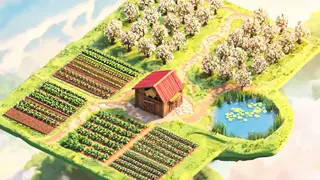

Hay Day farm design layouts for different priorities
There isn’t one perfect arrangement for every player. These four approaches give you a starting point, and you can mix them as your farm grows.
- The efficient grid
Line up crop plots in compact blocks and keep the machines you visit most along one side. Use short, straight paths between the blocks. This is the easiest setup to scan when you’re planting and harvesting quickly. It can look a little formal, so soften the outer edge with trees or a narrow flower border.
Best for: frequent harvesting and a tidy overview.
Difficulty: easy. Time: about 15–30 minutes to rearrange a small area.
- The production hub
Cluster your production buildings around a central open space, with animal areas and crops nearby but not mixed into the same footprint. The hub gives you a clear place to work and makes the farm feel like a small village. Keep the path wide enough to move around the buildings without creating awkward dead ends.
Best for: players who check machines often.
Difficulty: moderate. Time: 20–40 minutes, depending on how much you move.
- The orchard lane
Arrange fruit trees in repeated rows or small groups, then run a path along one edge. Repetition makes the orchard feel planned, while a few gaps keep it from looking like a solid wall of trees. Add a bench or decorative feature at the end of the lane if you want a destination rather than just a row.
Best for: a calm, garden-like section.
Difficulty: easy. Time: 15–25 minutes.
- The cottage entrance
Make the farmhouse the visual anchor. Lead the entrance path toward it, then frame the approach with flowers, a fence, or a small pond. Keep the busiest production area off to one side so the entrance stays welcoming rather than crowded. This is my favorite option when the farm feels too much like a storage yard.
Best for: a strong first impression.
Difficulty: moderate. Time: 20–45 minutes.
For a balanced Hay Day farm design, combine a practical grid behind the scenes with a more decorative entrance and orchard. You get a farm that works without making every corner look like a checklist.
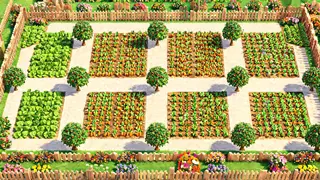

Choose a layout that fits your farm
The best arrangement depends on how much space you have and what you want to notice first. A compact farm benefits from fewer, clearer zones. A larger one can support separate themed areas, but it still needs a route that connects them.
| Layout style | What it prioritizes | Works well when | Watch out for |
|---|---|---|---|
| Efficient grid | Fast planting and harvesting | You want a clean, easy-to-scan farm | Too many straight lines can feel rigid |
| Production hub | Convenient machine access | You visit production buildings often | A tight cluster can feel crowded |
| Orchard lane | A calm, garden-like look | You want trees to feel like a feature | Leave room for paths and future growth |
| Cottage entrance | A welcoming focal point | You care about the farm’s first impression | Don’t let decoration block your main route |
A useful way to plan is to choose one focal point and let the rest support it. If the barn is the star, keep the entrance and paths leading toward it. If you want the orchard to stand out, use a simpler border and avoid placing every decorative item nearby. One clear focal point usually looks more polished than several competing ones.
You can also sketch a rough plan before moving anything. Mark the entrance, the main path, and the busiest work zone first. Then test where a pond, garden, or tree row might fit. If you like planning spaces visually, Homestyler can help you experiment with proportions and color relationships before committing to a more detailed arrangement. It’s a handy way to think through balance, even when the final farm is built in a game.
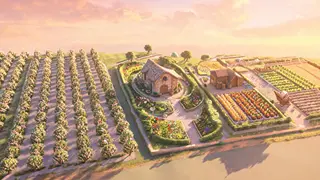

Small changes that make a farm feel finished
A layout doesn’t need dozens of decorations to feel complete. Repetition and spacing do more work than a pile of unrelated items. Repeat a fence style around one zone, echo a flower color near the entrance, or use a short path to connect two areas that otherwise feel disconnected.
Try these finishing touches:
- Frame, don’t fence in. Use borders to define a zone while leaving a clear opening.
- Repeat a detail. A few matching accents look more deliberate than one of everything.
- Break up long rows. A small gap or path keeps an orchard or crop block from feeling like a wall.
- Keep busy areas readable. Leave open space around the buildings you tap most.
- Decorate in passes. Place the essentials first, then add details only where the farm feels bare.
I’ve found that the easiest mistake is decorating before the routes are settled. It’s tempting to place every favorite item immediately, but then the practical path gets squeezed into whatever space remains. Build the route first. The decorations will look better when they have room.
If you’re unsure whether a new arrangement feels balanced, step back and look at the whole farm rather than zooming in on one corner. A good layout should make sense at a glance and still reward a closer look.
Make one zone better first
You don’t have to redesign the entire farm in one sitting. Pick the area that bothers you most: a crowded machine cluster, a messy entrance, or an orchard that has grown without a plan. Give that zone a clear purpose, make its path easy to follow, and leave a little room for whatever you unlock next.
What began as an Autodesk innovation has evolved into a design platform used by more than 20+ million registered users (platform data, 2026) around the globe. Homestyler combines powerful rendering, an intuitive editor, and a vast furniture library to help you turn inspiration into photorealistic designs — whether you're redesigning a single room or planning an entire home.
That’s the approach I’d use for any Hay Day farm design: practical routes first, one strong focal point, then decoration in small, repeatable touches. If you want to test a broader color or layout idea before you commit, Homestyler can help you preview the overall balance. Then bring the idea back to your farm and adjust it to fit the way you actually play.
Projete agora para LIVRE