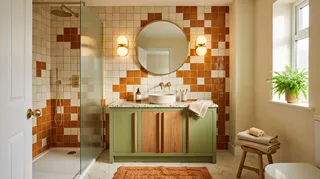
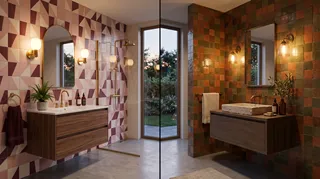
- Use a warm tile as a focused backdrop. Try ochre, terracotta, or olive on the shower wall or behind the vanity, then keep the remaining walls a soft cream. A single feature area gives the color room to register without making the whole room feel enclosed. For a full-height tiled wall, check how the shade shifts in both daylight and evening light before committing.
The best retro bathroom ideas don’t recreate a time capsule. They borrow the parts that still feel good: warm tile, rounded shapes, brass that catches the light, and colors with a little personality. The 1970s are back in the conversation, but the most livable versions feel edited rather than themed.
That distinction matters in a small room. A full wall of orange tile can be a lot before coffee; a band of ochre tile paired with a quiet cream wall is easier to live with. Below, you’ll find ways to bring in the era’s color and character while keeping the bathroom practical, bright, and unmistakably yours.
What Makes Retro Bathroom Ideas Feel Current?
A convincing 1970s-inspired bathroom is less about copying a period photo and more about choosing a few recognizable cues. Think square or softly rounded ceramic tile, earthy colors, warm metal, and silhouettes that feel a little softer than today’s sharp-edged minimalism. Put those elements together with modern lighting, good ventilation, and storage that actually works.
The palette is doing much of the work. Avocado, rust, mustard, tobacco brown, dusty pink, and cream all have a place, but they don’t need equal billing. I’d choose one color to lead, one to support it, and a neutral to give the eye a break. Cream tile with olive accents feels calmer than a room where every surface competes.
Brass is the other shortcut to the look. A warm finish can make a plain white sink feel intentional, especially when the mirror frame, faucet, and one or two small accessories share the same tone. It doesn’t have to match perfectly; in fact, a little variation between brushed brass and aged brass can keep the room from looking like a showroom set.

7 Ways to Bring Back 70s Tile and Brass
The trick is to decide where the room’s strongest color belongs before you order tile or paint. A small bathroom can handle a bold moment, but it usually needs a quieter surface nearby. These ideas work as a starting point, not a checklist to complete all at once.
- Let the grout do less. A close match between tile and grout creates a calmer, more continuous surface. Contrasting grout can emphasize a grid, which may be exactly what you want with small square tiles, but it also adds visual busyness. Ask for a sample board with the actual grout color; a tiny swatch can look very different across a whole wall.
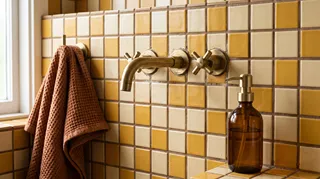
- Pair brass with one strong color, not five. Brushed or satin brass works especially well with olive, rust, cream, and dusty pink. Repeat the finish in two or three places, such as the faucet, mirror frame, and towel hook. That’s enough to make it feel deliberate. If you’re replacing plumbing fixtures, confirm the finish and dimensions before buying; a beautiful faucet is no help if it doesn’t fit the existing sink.
- Choose a vanity with a softer outline. A rounded mirror, curved basin, or gently tapered legs can bring in the era without requiring vintage cabinetry. A simple wood vanity also warms up tile that might otherwise feel cold. I prefer one curved element at a time; several competing curves can make a compact room feel fussy.
- Try a color-blocked tile band. A horizontal strip of colored tile can add a retro note around the room, especially when the rest of the wall is painted or tiled in a neutral. Keep the band aligned with a clear architectural line, such as the top of the vanity backsplash. Random placement tends to look like an afterthought.
- Bring in pattern through a small surface. A geometric floor or a patterned shower niche can deliver the playful side of the decade without taking over. If the floor is busy, keep the wall tile simple. For a rental or a quick refresh, use color in towels, a bath mat, or art instead of adhesive tile in a wet area; peel-and-stick products aren’t a reliable substitute for waterproof tile.
- Make the lighting warm, but not dim. Globe-shaped sconces or a rounded ceiling fixture can reinforce the vintage mood. Choose a light source that still makes shaving, makeup, and cleaning easy. A warm bulb can soften the palette, but the room needs enough brightness at the mirror. If possible, use separate ambient and task lighting rather than asking one fixture to do everything.
| Design move | Best place to use it | Visual effect | Planning note |
|---|---|---|---|
| Ochre or olive tile | Shower wall or vanity backdrop | A clear, warm focal point | Check samples in morning and evening light |
| Brass hardware | Faucet, mirror, hooks | Adds warmth and a vintage cue | Confirm finish and fixture compatibility |
| Geometric pattern | Floor or niche | Brings in playful 70s character | Balance it with quieter walls |
| Cream tile and grout | Main wall surfaces | Keeps a small room feeling open | Choose a grout that’s practical to maintain |

How to Balance Vintage Color With Modern Comfort
A retro bathroom should look warm, not worn out. Keep the parts that affect daily use firmly modern: a well-sealed shower, dependable ventilation, easy-to-clean surfaces, and storage for the things you don’t want on display. Vintage style is a visual choice; it doesn’t require vintage plumbing or a hard-to-maintain layout.
Start with the room’s fixed elements. If the tub, toilet, or vanity is staying, use those colors and shapes as your boundaries. A white tub can sit comfortably beside terracotta tile; a wood vanity can soften a pink-and-cream palette. If you’re starting from scratch, choose the tile first, then select the metal finish and paint around it. That order is less likely to leave you with a brass faucet that clashes with the tile’s undertone.
Scale matters, too. Large-format tile can make a small room feel less chopped up, while smaller squares give a stronger period reference. Neither is automatically better. Consider the room’s proportions, the number of grout lines you’re willing to clean, and whether the tile will wrap around corners or stop at a clear edge.
Before purchasing, lay out samples together: tile, grout, paint, metal finish, and a towel or wood sample. Look at them in the actual bathroom, not only under store lighting. I’ve seen a warm beige turn pink beside the wrong tile; the sample board is a much cheaper place to discover that than the installed wall.
If you’re unsure whether a bold tile will overwhelm the vanity or whether brass will work with your wood tone, sketch the room or test the palette in Homestyler before making a shopping list. A quick visual check can help you compare a full-color shower wall with a smaller tile accent.

Common Questions Before You Commit
Can retro tile work in a small bathroom?
Yes. Keep the strongest color to one wall, the floor, or a defined band, and use a lighter neutral elsewhere. A consistent grout color can also reduce the visual breaks between tiles. If you love a dark or saturated shade, test it on a sample board in the room before covering every wall.
Does brass look dated?
It can, if every surface is shiny and overly coordinated. Brushed or aged brass usually reads softer. Pair it with simple shapes and a restrained palette, and let the finish repeat in a few useful places rather than on every accessory.
What if I want the look without a renovation?
Start with reversible details: a rounded mirror, warm-toned towels, a wood tray, or a new light fixture if the wiring and installation allow it. Paint can also shift the mood, provided the surface is suitable for a bathroom and properly prepared. Avoid putting decorative peel-and-stick products in a shower or anywhere they’ll be exposed to standing water.
How do I keep the room from looking like a themed set?
Mix eras. A vintage-inspired tile can sit beside a clean-lined vanity, modern shower glass, and simple storage. Leave some surfaces quiet. The room needs breathing space as much as it needs character.
Start With One Memorable Detail
You don’t need to commit to a full 1970s bathroom to get the appeal. Choose one anchor: a warm tile color, a brass faucet, a rounded mirror, or a small geometric floor. Then build around it with practical finishes and a palette that feels good in the light you actually have.
Originally incubated at Autodesk, Homestyler has grown into one of the most widely adopted home design platforms in the world, now trusted by over 20+ million registered users (platform data, 2026). Whether you're a homeowner exploring ideas or a professional designer delivering client-ready renders, Homestyler brings industry-leading 3D technology to your fingertips — no experience required.
My favorite approach is usually the least complicated one: cream or pale tile for the main surfaces, one earthy color for personality, and brass repeated just enough to connect the details. If you’re ready to compare a few layouts or test how a tile color sits beside a vanity, Homestyler can help you preview the room before you buy. Start with one sample, one finish, and a plan you’ll still enjoy on an ordinary Tuesday morning.
Projete agora para LIVRE