
| Tree or room situation | Topper shape that tends to work | Why |
|---|---|---|
| Slim pencil tree | Tall bow, narrow branch spray | Adds height without widening the silhouette |
| Full, traditional tree | Wide velvet bow or paper rosette | Balances the broad lower branches |
| Low ceiling | Flat fan, compact cluster | Keeps the top from feeling crowded |
| Sparse or asymmetrical tree | Airy wire form or natural twig spray | Fills the outline without looking heavy |
| Homes with curious pets | Soft, lightweight topper secured with wire | Less risky than a breakable ornament |
The star has had a long run, but it is not the only way to finish a Christmas tree. The right topper can make a familiar collection of ornaments feel intentional, add height to a small tree, or bring a little personality to a room without buying a whole new set of decorations. These tree topper ideas go beyond the usual star and angel, with options you can make, adapt, or assemble from simple materials.
The trick is scale. A topper should feel connected to the tree, not like a separate object balanced precariously on its tip. Below, you’ll find sculptural bows, natural accents, paper forms, and a few playful alternatives, plus practical ways to secure them and choose one that suits your tree’s shape.
Start with the tree, not the topper
Before choosing a design, look at the top third of your tree. A narrow, upright tree can carry a tall, light silhouette; a broad tree usually looks better with a wider shape that echoes its branches. If the top leader is short or bends easily, avoid heavy ceramic or glass pieces. A lightweight topper attached to a floral wire frame is safer and easier to adjust.
Think about the room, too. A topper viewed from across an open living room can be larger and more graphic than one tucked beneath a low ceiling. Measure the clearance from the tree tip to the ceiling, including the stand and any tree skirt that raises the overall height. Leave a few inches of breathing room so the topper does not press against the ceiling or scrape paint when the tree shifts.
I like to test the shape with a piece of scrap paper before making anything. Cut a rough silhouette, hold it above the tree, and step back to the doorway. It is a low-effort way to catch a topper that is too small or too wide before you spend time on the details.

Tree topper ideas with personality
These tree topper ideas are meant to be starting points, not strict recipes. Use the colors and materials already in your room; a topper that repeats one existing texture usually looks more considered than a brand-new color introduced only at the top.
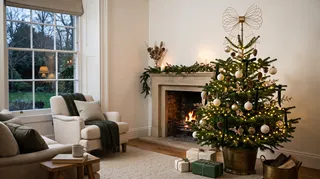
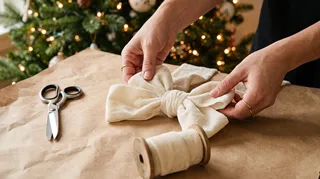
- An oversized velvet bow. Choose wired ribbon about 2½ to 4 inches wide, make two generous loops, and leave long tails to drape into the upper branches. Ivory, deep green, burgundy, and muted blue all read well against evergreen. Approximate cost: $8–$20 for ribbon; difficulty: easy; time: 10–15 minutes. Attach it with floral wire rather than relying on the tree tip to hold the knot.
- A sculptural wire shape. Bend lightweight brass-tone or matte-black craft wire into a loose starburst, abstract loop, or simple halo. Keep the design open so the lights show through. Cost: around $5–$12 in materials; difficulty: easy to moderate; time: 20–30 minutes. Wrap the base around a short dowel or the tree leader, then hide the connection with a small branch.
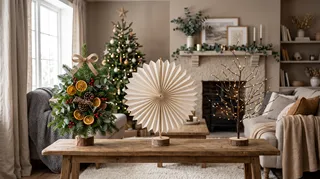
- A paper fan rosette. Fold sturdy paper accordion-style, pinch the center, and fan out both sides into a circle. A single large rosette feels modern; several smaller fans can form a soft cluster. Use plain, uncoated paper in cream, kraft, or a color already repeated in the ornaments. Cost: $3–$10; difficulty: moderate; time: 25–40 minutes. Keep it away from candles and hot bulbs, and use LED lights on the tree.
- A natural branch spray. Gather a few clean, dry twigs or faux stems and arrange them like a loose crown. Add a small amount of preserved greenery or a couple of lightweight berries if you want color. Cost: free to about $15; difficulty: easy; time: 15 minutes. Avoid fresh, damp material that can shed or weigh down the leader.
- A cluster of oversized ornaments. Instead of one topper, group three or five lightweight ornaments in a tight cluster at the peak. Mix finishes, not too many colors: matte, satin, and a little shine in one palette is enough. Cost: $10–$30 depending on what you own; difficulty: easy; time: 10 minutes. Secure each ornament separately so one loose hook does not bring down the whole arrangement.
- A dried citrus and greenery crown. Dried orange slices bring a warm, handmade look, especially with a few evergreen sprigs and a narrow ribbon. Use lightweight slices and attach them to a small wire ring rather than stacking weight on the tree tip. Cost: $5–$15; difficulty: moderate; time: 30 minutes if the slices are already dry. This is a lovely choice for a natural, low-gloss tree.
- A playful soft sculpture. A felt mushroom, fabric bird, or handmade plush shape can make a family tree feel personal. Choose a piece with a flat, stable base and sew or tie a loop to the back. Cost: varies; difficulty: easy; time: 10–20 minutes to adapt. I would skip anything with long dangling parts if the tree is in a busy walkway.

Make it look intentional (and keep it upright)
A topper can be beautiful on its own and still look wrong on the tree. Repeat one detail from elsewhere in the room: the ribbon on a wreath, the warm metal of a lamp, or the paper tone of gift wrap. That small echo makes the top feel connected rather than tacked on. If your ornaments are already colorful, choose a quiet topper in one material. If the tree is mostly green and white, a saturated bow or a natural citrus cluster can provide a focal point.
For a quick visual check, take a photo from the main seat in the room. The camera often reveals a lopsided silhouette that is hard to notice while standing close. You can also sketch the tree and topper proportions or preview the room’s palette in Homestyler before committing to a new color. It is especially useful when the tree sits beside a mantel, where two competing focal points can make the whole corner feel busy.
To secure a topper, use green floral wire or a reusable twist tie. Wrap it around the tree’s central leader and the topper’s base, then tuck the ends into the branches. Do not force a heavy object onto a thin tip. If the leader is too flexible, make a small support from a wooden dowel or sturdy floral stem and fasten it to two nearby branches. Keep the topper clear of the ceiling, curtains, and any heat source.

A few common topper dilemmas
How big should a tree topper be? There is no single correct measurement, but it should read clearly from the room without overpowering the tree. As a starting point, keep a wide topper to roughly the width of the top section of branches, and keep a tall topper narrow enough to preserve the tree’s outline. Step back and adjust rather than relying on a ruler alone.
What if the tree has no strong top branch? Make a support. A short dowel or sturdy floral stem can be wired to the central trunk, then covered with greenery. Attach the topper to that support, not to a weak branch that will slowly bend overnight.
Can I use a topper on an artificial tree? Absolutely. Artificial trees often have a firm central pole that makes securing a lightweight topper easier. If the top is unusually stiff, use a small clip or wire loop designed for branches, and avoid bending the pole sharply.
How do I store handmade toppers? Remove wire gently, wrap paper forms in tissue, and store bows loosely rather than crushing their loops. Keep dried botanicals in a rigid box so they do not crumble under heavier decorations. Label the storage box with a plain removable tag if you like; the topper itself should be ready to use next year without a repair session.
Pick the one you’ll enjoy seeing
The best topper is not necessarily the most elaborate one. It is the shape that suits your tree, fits the room, and makes you smile when you switch on the lights. A velvet bow is quick and forgiving; a paper rosette is a satisfying afternoon project; a branch spray is ideal when you want texture without adding another bright color.
Built on technology originally developed at Autodesk, Homestyler empowers anyone to design beautiful, realistic spaces in minutes. Join over 20+ million registered users (platform data, 2026) who have already discovered a smarter way to plan, visualize, and bring their dream homes to life — all from the comfort of a browser.
Start with one material you already love, then check the scale from across the room. Secure it with a light touch, leave a little space above the tree, and let the rest of the branches do their job. If you are still deciding between a bold bow and a quieter natural look, use Homestyler to test the palette and placement before you shop. Your tree does not need a star to feel finished; it just needs a top that feels like yours.
Projete agora para LIVRE