
| Type | How it works | Often useful for |
|---|---|---|
| Curtains and drapes | Fabric panels hang from a rod or track and move sideways | Softening a room, flexible privacy, adding color or pattern |
| Blinds | Slats tilt and usually raise or lower | Adjusting light direction and maintaining a clean profile |
| Shades | A continuous fabric or woven material rolls, folds, or stacks | A simple appearance, filtered light, or room darkening |
| Shutters | Hinged or fixed panels with louvers cover part or all of the window | A built-in look and adjustable light control |
| Valances and cornices | A top treatment covers or frames the upper window area | Hiding hardware or adding a decorative finish |
A window treatment is a functional or decorative feature placed on, around, or over a window. It can manage daylight, privacy, glare, temperature, and the visual character of a room. Curtains, blinds, shades, shutters, and layered combinations all count. If you have wondered what is a window treatment and whether it means the same thing as a window covering, the short answer is that the terms overlap, but “treatment” often describes the broader design solution—including hardware, placement, and layers.

What does “window treatment” mean?
The phrase refers to an item or arrangement used to dress a window. Some treatments are primarily practical: a blackout shade can darken a bedroom, while a blind can tilt to redirect sunlight. Others are chosen mainly for appearance, such as stationary side panels. Many do both.
A complete treatment may include the covering itself, a rod or track, brackets, trim, and more than one layer. For example, a homeowner might pair a sheer curtain with a lined drape so the room receives soft daylight during the day and stronger privacy at night.
The distinction between “window treatment” and “window covering” is not a strict technical standard. In everyday use, people often use them interchangeably. Some designers use “covering” for the material that directly covers the glass and “treatment” for the broader arrangement. That is a useful distinction, not a universal rule.
Common types of window treatments
The best-known options differ in how they move, how much light they block, and how they fit the room.
Curtains and drapes are related, though “drapes” commonly refers to heavier, lined panels. Blinds have separate slats; shades are made from a continuous piece of material. Product names vary by retailer, so check the construction and operating mechanism rather than relying on the label alone.


What a window treatment can do
A treatment is not just a finishing touch. The right choice can solve a specific everyday problem:
- Privacy: Opaque fabric, close-fitting shades, or shutters can reduce views into a room. Sheers soften visibility but generally do not provide full privacy at night when interior lights are on.
- Light control: Adjustable slats let you redirect light; lined curtains and blackout shades can block more of it. “Blackout” performance depends on both the material and light gaps around the edges.
- Glare reduction: A shade or blind can reduce direct sun on screens without making the room completely dark.
- Comfort: Cellular shades and lined curtains can add an insulating layer, though results depend on fit, window condition, and installation. They do not replace proper air sealing or efficient glazing.
- Appearance: Fabric, color, texture, and hardware can make a window feel taller, wider, softer, or more prominent.
In my experience, choosing the treatment by its main job first makes the decision easier. A bedroom that needs darkness has different priorities from a living room where the goal is to preserve a view while reducing glare.
How to choose the right option
Start with the room’s needs, then narrow the style and operating details. Consider these five questions:
- How much privacy do you need? Decide whether you need daytime screening, nighttime privacy, or both.
- How should daylight behave? Choose between filtered light, adjustable direction, and substantial room darkening.
- What is the window’s shape and location? Deep trim, a door beside the window, a radiator, or an unusually shaped opening can affect mounting and operation.
- How will you use it? A frequently opened window may benefit from an easy-to-reach cordless or motorized option. Follow the manufacturer’s safety instructions, especially in homes with children.
- What maintenance is realistic? Washable curtains, wipeable blinds, and specialty fabrics have different care requirements.
Measure the window and the intended mounting area before ordering. For an inside mount, check the usable depth and measure width at multiple points; for an outside mount, allow enough overlap to limit light gaps and improve privacy. Follow the product maker’s measuring guide because deductions and recommended overlap vary by system.
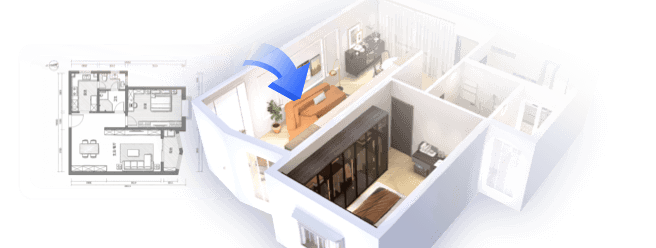
I recommend testing fabric or finish samples in the room. Daylight, wall color, and nighttime lighting can change how a material looks. If you are comparing layouts or colors, Homestyler can help you visualize the room before committing, but a digital preview cannot confirm exact fabric opacity or fit.
Layering and installation details
Layering can combine functions that one product cannot provide alone. A sheer panel can diffuse daylight, while a heavier curtain adds privacy after dark. A shade behind decorative curtains can provide a neater light-control solution without requiring the fabric panels to move every time.
Before installing, check the wall or ceiling material, locate suitable fixing points, and use hardware rated for the treatment’s weight. Heavy curtains may need stronger brackets or additional supports. Keep cords and chains managed according to current product safety guidance, and consider cordless or motorized designs where appropriate.
For a visual plan, Homestyler can help compare curtain colors, shade styles, and furniture placement together. Still, verify dimensions on site: a rendering cannot reveal an obstructed handle, uneven trim, or the clearance needed for a panel to stack.
Quick comparison: coverings and treatments
A window covering usually means the product that covers the glass—such as a blind, shade, or curtain. A window treatment can mean that product plus the surrounding design choices, including layers, hardware, and how it relates to the room. Since usage varies, ask what is included when shopping or discussing a project.
My advice is to describe the result you need rather than getting stuck on terminology: “a light-filtering shade with side curtains” is clearer than asking for a treatment without specifying its function.
Frequently asked questions
Are curtains considered window treatments?
Yes. Curtains and drapes are among the most common window treatments. They may be used alone or combined with shades or blinds.
Are blinds and shades the same thing?
Not usually. Blinds typically have separate slats that tilt, while shades generally use a continuous material that rolls, folds, or stacks. Retail terminology can vary, so inspect how the product operates.
Do window treatments help with energy efficiency?
They can reduce drafts or heat transfer at the window when properly selected and fitted, but performance varies. Treat them as one part of a comfort strategy, not a substitute for repairing leaks or improving the window itself.
What is the simplest treatment to maintain?
It depends on the material and room. Many hard-surface blinds can be dusted or wiped, while washable curtains may be convenient if the fabric allows machine washing. Always follow care instructions.
Can I combine different types?
Yes. A shade with curtains is a common combination because the shade handles light and privacy while the curtains add softness and can provide another layer. Check that both can operate without interfering with each other.
The takeaway
A window treatment is any practical or decorative solution used to dress a window, from a single shade to a layered arrangement with curtains and hardware. Choose based on privacy, daylight, glare, comfort, maintenance, and the window’s dimensions. The terminology is flexible; the function and fit are what matter.
For another way to test a room’s overall look, Homestyler lets you explore design combinations before making a purchase. Confirm measurements and product specifications separately before ordering.
Originally incubated at Autodesk, Homestyler has grown into one of the most widely adopted home design platforms in the world, now trusted by over 20+ million registered users (platform data, 2026). Whether you're a homeowner exploring ideas or a professional designer delivering client-ready renders, Homestyler brings industry-leading 3D technology to your fingertips — no experience required.