
The global landscape of interior design is undergoing a profound transformation. Driven by a post-pandemic shift in values, technological advancement, and a growing desire for self-expression, homeowners and designers are moving beyond rigid style definitions. Based on an analysis of over 18.48 million Homestyler user projects worldwide, this report uncovers the key forces shaping our living spaces in 2026.
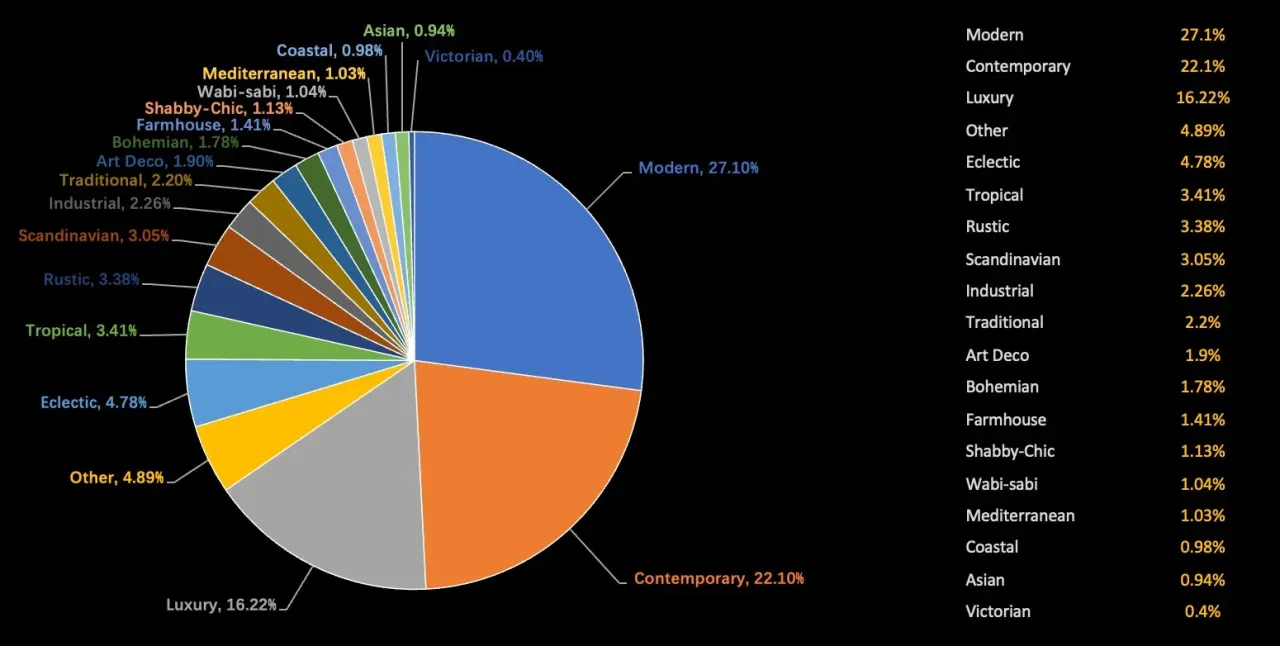
Global Design Style Distribution on Homestyler; Download Full PDF
Executive Summary: The New Design Paradigm
The era of a single dominant style is over. The future is defined by diversity, personalization, and smart functionality. While foundational styles like Modern, Contemporary, and Luxury continue to form a dominant core (65.42% of the market), we are witnessing a powerful surge in niche and hybrid aesthetics. The driving philosophy is shifting from “what style is my home?” to “how does my home reflect my lifestyle and values?”
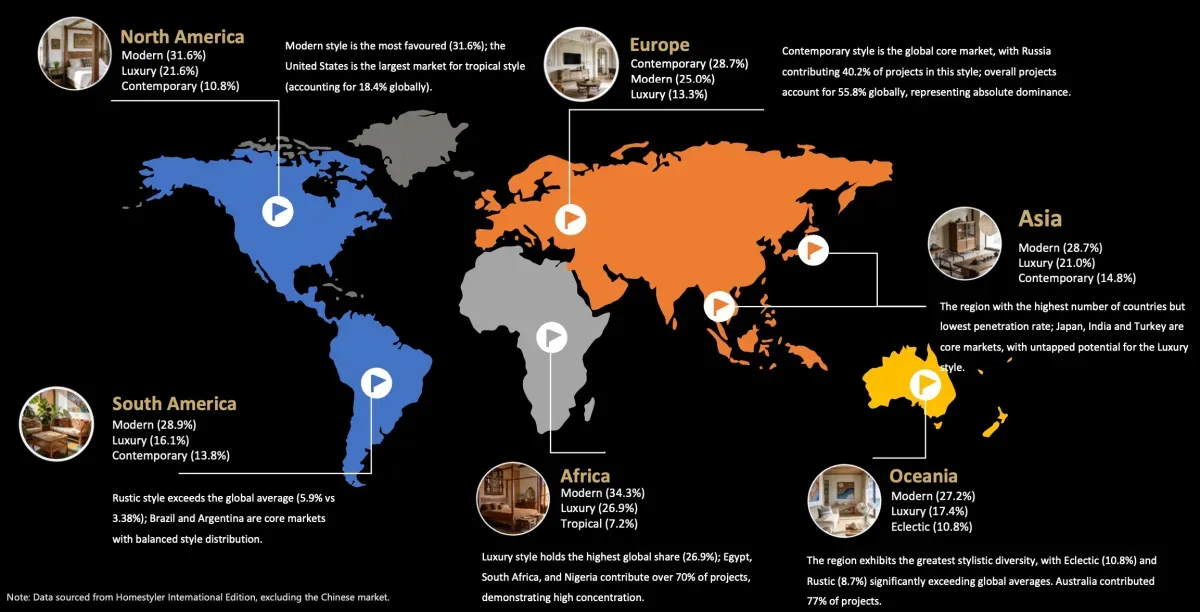
Design Style Distribution by Continent on Homestyler; Download Full PDF
Key Global Insights from the Data
1. The “Big Three” Remain, But the Gap is Closing: Modern, Contemporary, and Luxury styles are globally pervasive, but their collective dominance is slowly eroding as users experiment with more eclectic and personalized looks.
2. Regional Preferences are Pronounced: Design is not one-size-fits-all.
- Europe leads in Contemporary design, with Russia as its powerhouse.
- The Americas show a strong preference for Modern and Luxury, with the U.S. being the epicenter of Tropical style.
- Asia and the Middle East exhibit a strong affinity for Luxury, reflecting growing consumer affluence.
- Oceania stands out for its exceptional style diversity, with higher-than-average adoption of Eclectic and Rustic styles.
3. The Rise of the “Anti-Trend”: A global movement, led by younger generations, is rejecting conventional rules. This is seen in the skyrocketing social media engagement around topics like “#Anti-traditionalRenovation” and the conscious decision to forgo guest rooms in favor of personalized spaces like home offices and gyms.
The 2026 Trend Outlook: A Deep Dive
1. The Color Revolution: Tranquility and Comfort
Color is becoming a tool for emotional regulation. Following the warm, comforting “Mocha Mousse” of 2025, Pantone’s 2026 Color of the Year, “Cloud Dancer” (a soft, serene white), signals a collective yearning for calm and mental clarity. This shift towards soothing, neutral palettes provides a blank canvas for personal expression through textures and furnishings.
2. Material Trends: Texture, Sustainability, and Tech
Materials are the soul of the space, balancing aesthetic emotion with practical function.
- Natural & Warm: Wood, especially deeper tones like walnut, is making a strong comeback, bringing warmth and authenticity. Warm-tone metals (brushed brass, copper) are replacing cold industrial finishes.
- Sustainable & Innovative: Eco-materials have moved from niche to mainstream. Expect widespread use of recycled plastics, bio-based composites, and sustainably sourced natural fibers.
- Smart & Functional: Surfaces and fabrics are becoming smarter—think of stain-resistant, pet-friendly textiles and health-monitoring smart mattresses.
3. Furnishing & Soft Goods: The Age of Flexibility and Intelligence
Furniture is no longer just about style; it’s about adaptable performance.
- Modularity is King: Furniture that can be reconfigured to fit changing life needs is experiencing explosive growth (e.g., modular sofas, customizable shelving systems like USM Haller).
- The Smart Home Ecosystem: Furniture integrates seamlessly into the smart home. Multifunctional smart furniture is a rapidly growing segment, evolving from single-function items to interconnected pieces that act as “life assistants.”
- De-stylization & Pragmatism: There is a move away from overtly stylized furniture towards pieces prized for their utility, durability, and timeless neutrality, allowing for easy style shifts through accessories.
The Driving Forces Behind the Trends
1. Economic Factors: In uncertain times, design priorities shift from ostentatious displays to comfort, durability, and emotional well-being, explaining the rise of “healing” styles like Wabi-Sabi and the focus on multi-functional spaces.
2. Cultural Shifts (DEIA): Design is becoming more inclusive, considering diverse ages, abilities, and cultural backgrounds, moving from “design for the average” to “design for all.”
3. Technology: AI and IoT are transforming homes from static environments into dynamic, responsive ecosystems.
4. Social Media: Platforms like Pinterest, TikTok, and Instagram act as global trend accelerators, creating viral movements around DIY, maximalism, and personalized spaces.
Get the Full PDF: Data, Country Breakdowns & Design Playbooks
This summary only scratches the surface of the rich data and analysis contained in the full report. Download the complete PDF report to gain:
- Actionable strategic opportunities for designers, brands, and retailers to capitalize on these emerging trends.
- In-depth analysis of all 18 design styles, from Scandinavian to Art Deco, with detailed breakdowns of their core principles, color palettes, and material choices.
- Comprehensive regional deep-dives into key markets like the USA, Italy, and Russia, Brazil, showcasing local design heroes and specific trend adaptations.
- Extended data visualizations and charts for a clearer understanding of global market shares and style evolution.
- Practical 2026 design guidelines for colors, materials, furniture systems and spatial layout
CLICK HERE to download the complete PDF report and unlock all charts, regional insights and ready‑to‑use design frameworks for your 2026 projects.
