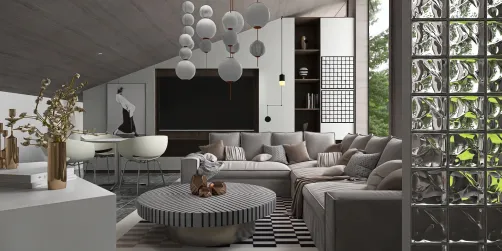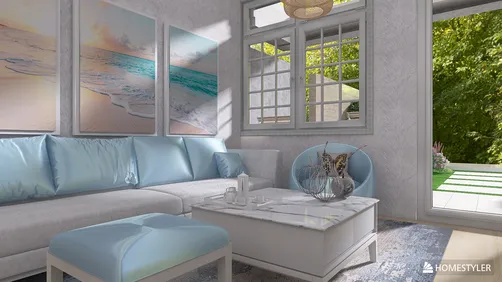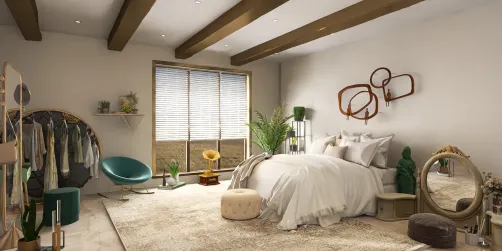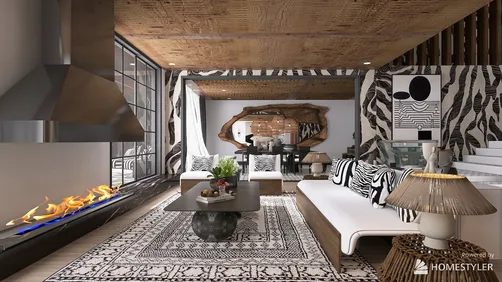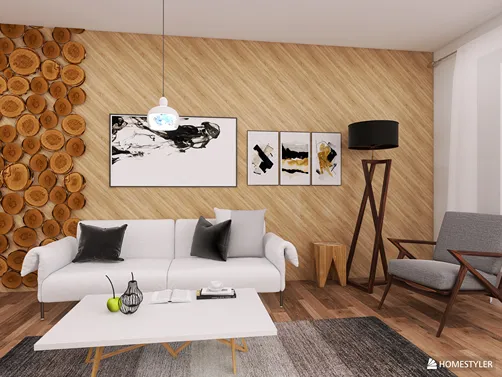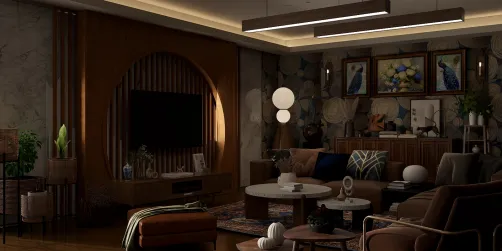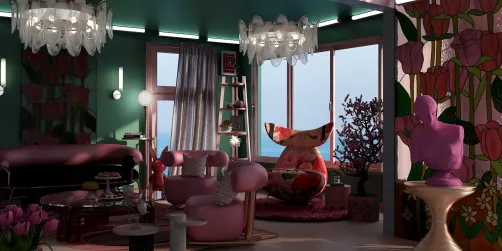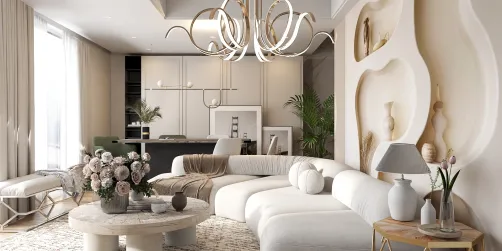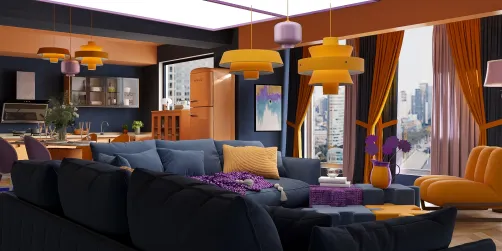
In recent years, the design trends for living rooms have been evolving toward unique, customized art displays, and I find this development exciting. Personally, I believe that smaller spaces kindle the most innovative solutions; while your wall may only span a few feet, it has the potential to narrate a significant story. In this piece, I’ll present ten creative art concepts for living rooms that I have implemented in actual homes, intertwining my insights with expert references along the way.
Gallery Wall with Mixed Frames
My Experience: I first experimented with a gallery wall in a compact apartment project, blending vintage gold frames with sleek black ones — this contrast made the artwork stand out immediately. It allowed the client's personality to shine through without appearing overcrowded.
Advantages: This approach adds layers of visual intrigue; you can integrate paintings, prints, and photographs. As noted by Architectural Digest, varied frame styles enhance depth in smaller living areas.
Disadvantages: If overdone, it may feel chaotic; achieving an even alignment of frames requires patience.
Advice: Begin with a central piece and expand outward for a balanced appearance.
Oversized Statement Artwork
My Experience: In my own living room, I installed a 150 cm wide abstract canvas — it firmly anchored the space and became a conversation starter.
Advantages: A single piece simplifies the styling process; it is excellent for renters who cannot drill multiple holes.
Disadvantages: It may dominate a very small wall; commissioning such pieces can often be costly.
Large dramatic art can also be virtually assessed using tools like Homestyler before making a purchase, saving both time and budget.
Floating Shelves for Rotating Art
My Experience: I once created a minimal oak shelf display for a client who enjoys changing her art seasonally — this kept her living room feeling fresh all year round.
Advantages: Easy updates can be made without creating new holes; art can be combined with small sculptures for added dimension.
Disadvantages: Requires frequent dusting; shelf styling can become cluttered if overcrowded.
Textile Wall Hangings
My Experience: I'm a big advocate of woven pieces to soften modern spaces — they bring texture and warmth without compromising style.
Advantages: They provide acoustic benefits in echo-prone environments; ideal for bohemian or eclectic aesthetics.
Disadvantages: Not suitable for humid environments; upkeep can be difficult.
Gallery-Style Lighting
My Experience: I installed picture lights above a client's art series — the illumination elevated even simple prints.
Advantages: It enhances colors and intricate details, adding sophistication to the room.
Disadvantages: Requires wiring or batteries, serving as another element to manage.
Layered lighting designs can help you visualize the ideal ambiance while utilizing tools like Homestyler before committing.
Leaning Art Against the Wall
My Experience: This is my preferred method for renters — simply place a framed print on a console table for an effortlessly relaxed look.
Advantages: No need for drilling; easy to replace artwork.
Disadvantages: Not ideal for high-traffic areas or homes with pets; less secure than hanging.
Diptych or Triptych Sets
My Experience: I love how a cohesive series creates flow — I once used a coastal-themed triptych in a beach condo, instantly unifying the space.
Advantages: Balanced composition that works beautifully above sofas or low storage solutions.
Disadvantages: Requires adequate wall space; can appear too uniform if not carefully selected.
Mirrored Art Pieces
My Experience: Mirrored frames or entirely reflective artworks beautifully capture light and can visually expand a small living area.
Advantages: Enhances the perception of space; adds a glamorous touch.
Disadvantages: Requires regular cleaning; may reflect clutter.
Sculptural Wall Decor
My Experience: Incorporating 3D elements like metal sculptures can transform an ordinary wall into an eye-catching focal point.
Advantages: Adds depth; tactile features draw viewer attention.
Disadvantages: More complex to install; can pose risks in narrow spaces.
Sculptural layout planning tools can assist in accurately measuring proportions, especially with the help of Homestyler.
Mixing Art with Functional Elements
My Experience: I once mounted a vintage clock among framed art — practical yet stylish.
Advantages: Merges aesthetics with function; tailored to your lifestyle.
Disadvantages: Can appear cluttered if mismatched; there is a risk of prioritizing functionality over visual cohesion.
Conclusion
For me, crafting a living room revolves around storytelling rather than merely filling wall space. Whether you opt for a striking oversized canvas or a delicate textile piece, a small living room presents an opportunity for more intelligent, thoughtful design rather than a limitation. As noted by Elle Decor, significant curation often outshines costly collections. So, which living room art concept will you explore first?
FAQ
Q1: How do I select the appropriate size art for my living room?
Aim for artwork that occupies two-thirds to three-quarters of the wall space above furniture; larger rooms handle oversized pieces more effectively.
Q2: What is the optimal way to organize a gallery wall?
Start with a central anchor piece, then arrange the other pieces around it. Using paper templates for layouts before hammering nails can be helpful.
Q3: How can art create the illusion of a more spacious living room?
Mirrors, light-toned frames, and vertical arrangements draw the eye upward, contributing to a sense of height and brightness.
Q4: Is it permissible to mix photography with paintings?
Certainly — mixing different mediums adds texture and intrigue. Maintain a unifying color palette for harmonious balance.
Q5: Are there economical art ideas for living rooms?
Indeed, printable digital art is an affordable option that allows for experimentation before investing in originals.
Q6: How crucial is lighting in relation to art?
It’s extremely important — appropriate lighting enhances colors. The Met Museum’s lighting guide recommends 50–150 lux for delicate artworks.
Q7: What options do I have if I rent and cannot drill holes?
Consider using leaning art, removable hooks, or floating shelves. Visual planning resources like Homestyler can aid in arranging art without causing damage.
Q8: How frequently should I update my living room art?
There’s no strict guideline — consider seasonal rotations for a refreshed feel or keep favorite pieces for years; just ensure they align with the evolving decor.
Homestyler is your go-to online platform for effortless home design. With its user-friendly design tool, stunning 3D renderings, and a wealth of inspiring design projects and video tutorials, transforming your space has never been easier. Unleash your creativity today!